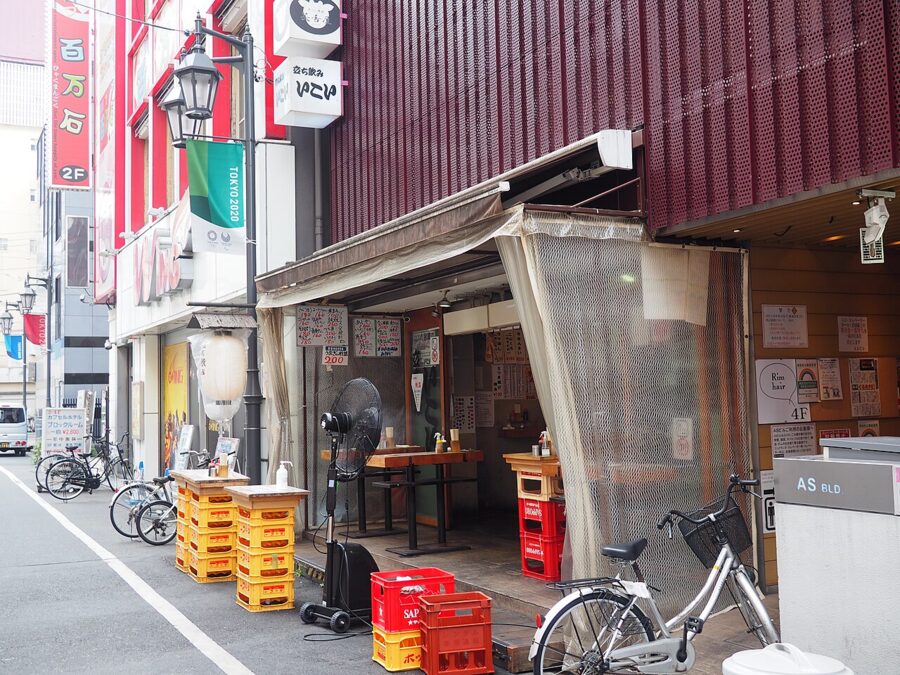
At New Kayaba, two minutes from Kayabacho Station, a shot of Kinmiya shochu costs two ¥100 coins fed into a machine on the wall (¥200, about $1.25, as of October 2026). Soda and ice cost extra, the food is ordered and paid for at the counter, and the doors close at nine. Nobody sits down. It is a bar built for one drink after work and a train home.
That is a tachinomi (立ち飲み), “standing drinking”: a bar with no stools, or so few that nobody counts on getting one. Tokyo has them near most busy stations, from a plank counter at the back of a liquor shop to a basement in Ginza where every drink costs the same ticket. The idea is always the same. You stand, you drink one or two, you eat something small, and you leave when you like.
They are cheap, they rarely charge you for a seat you are not using, and nobody minds if you stay twenty minutes. Japanese has a word for the cheapest of them, senbero (せんべろ), from sen, a thousand yen, and bero-bero, drunk. It spread after the writers Nakajima Ramo and Kobori Jun published a 2003 book about drinking their way round such places in Kitasenju, Akabane and other towns, and these days it means a couple of drinks and a snack for not much more than ¥1,000 (about $6).
In this article6 parts
How a tachinomi works
Walk in, catch someone’s eye and hold up fingers for how many you are, or say hitori desu (一人です, “just one”). If there is a gap at the counter, take it; if there is not, the staff or the regulars will usually shuffle along to make one. Order a drink straight away. The classic first order is toriaezu biru, “a beer to be going on with”, and nobody expects you to have chosen your food yet.
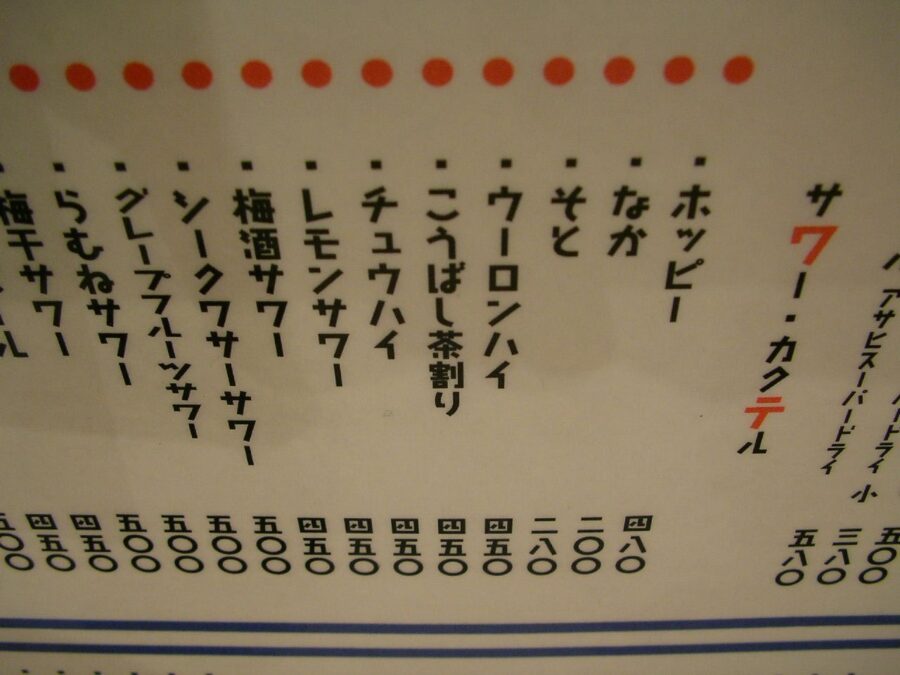
Menus are strips of paper on the wall, a whiteboard, or a laminated card, and in the older places they are in Japanese only. Each strip has the item at the top and the price underneath. A phone camera translation works, and pointing at what the person next to you is eating works better.
Paying as you go
Many standing bars run on what Japanese calls cash on (キャッシュオン), short for cash on delivery: you pay for each drink and each dish as it arrives. Ikoi in Akabane works this way and takes no cards. You can walk out at any moment without waiting for a bill.
Others sell tickets or use machines. Ginza 300 BAR sells drink tickets at ¥300 plus tax (¥330, about $2) and asks each person to buy at least three when they come in, as of June 2026. At New Kayaba the shochu comes out of a coin machine and you pay for food at the counter each time you order. The rest run an ordinary tab: say o-kaikei onegaishimasu (お会計お願いします) when you want the bill.
Sit-down izakaya usually bring an otoshi (お通し), a small dish you did not order that works as a table charge of a few hundred yen. Most standing bars skip it, and that is half their appeal for one drink; Ginza 300 BAR states outright that it charges no cover or service fee. A few old places still put a small plate in front of you, so assume the first dish you did not order is on the bill.
Carry cash. Cards and QR payments such as PayPay are spreading, but unevenly: Ginza 300 BAR takes cards, e-money and QR codes, Shinshu Osake Mura in Shimbashi takes PayPay but no cards, Ikoi takes neither, and New Kayaba takes no cards.
Counter manners
Keep your bag at your feet, stand side-on when it gets busy, and move along when someone new comes in. Pass your empty plates and glasses back over the counter when the staff are stretched. There is no tipping here, any more than anywhere else in Japan.
An hour is a normal stay, and two drinks is a normal visit. Nursing one glass at a prime spot for an evening is the one thing that gets you looks. Keep your voice at the level of the counter around you.
Smoke, age and closing time
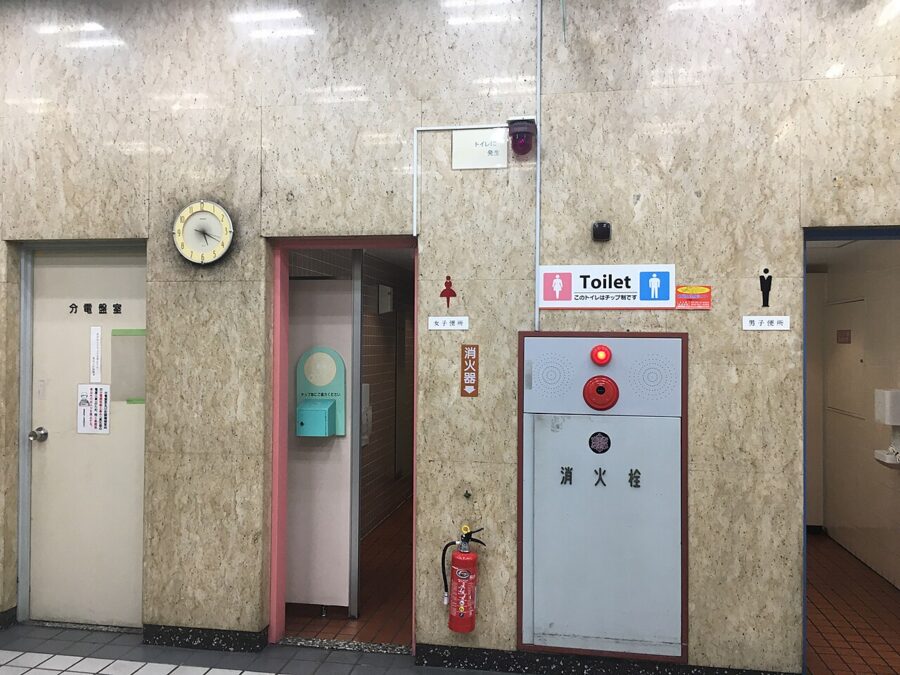
Tokyo’s passive smoking ordinance, in force since April 2020, bans smoking inside restaurants and bars that have employees. Small places that were already trading in April 2020, with a customer area of 100 m² or less and nobody working there but the owner’s family, may choose to allow it, and every venue must show at the door whether you can smoke inside. Nobody under 20 may enter a smoking area, and 20 is also the drinking age. In practice most standing bars are now non-smoking, and the sticker by the door settles it.
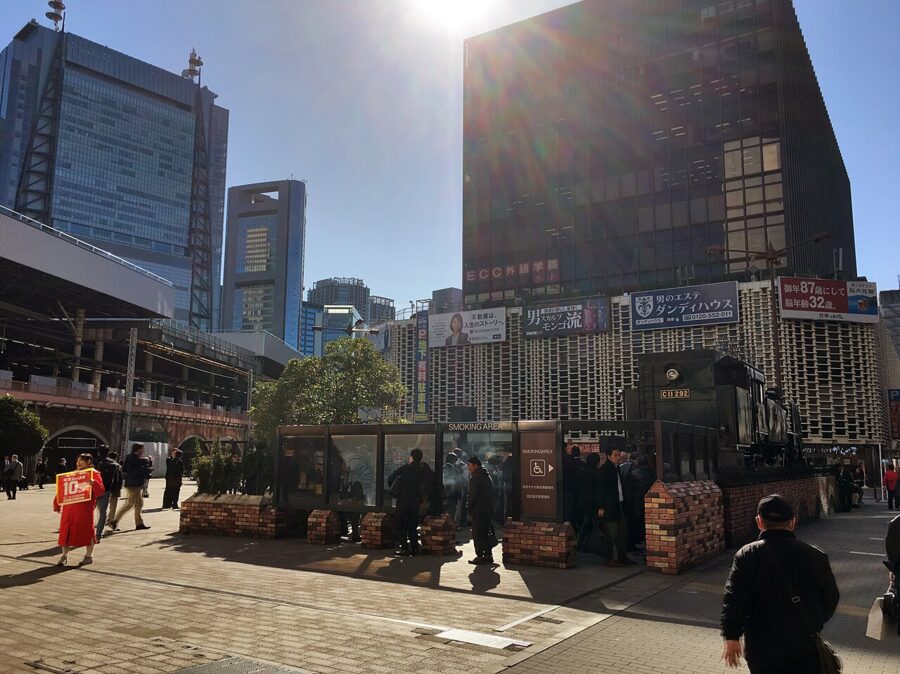
Standing bars also close early. Akitaya in Hamamatsucho stops serving at nine on weekdays, New Kayaba shuts at nine and does not open at weekends, and plenty of others are done by ten or eleven. They are built for the hour between the office and the train, not for the night.
The kinds of standing bar
All of these get called tachinomi, but the crowd, the drinks and the bill differ by kind.
Station-side bars and the cheap chains
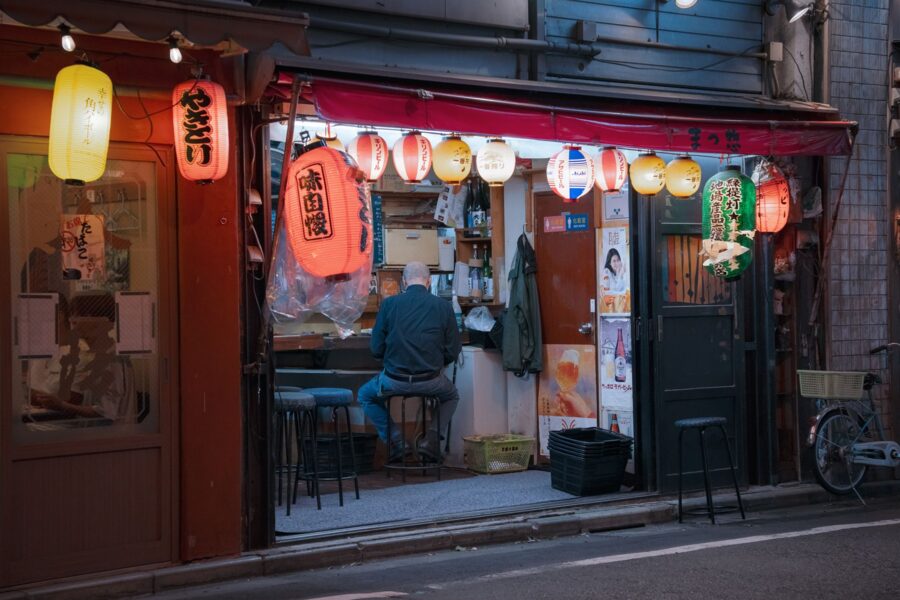
The most common kind sits right by a station, under the tracks or on the ground floor of an old station building. The drinks are sours, highballs, Hoppy and big bottles of beer. The food is simmered offal, fried things, a few slices of sashimi and potato salad, priced so that three plates and two drinks come to well under ¥2,000 (about $12).
Ikoi in Akabane is the type at its purest. A November 2026 bill lists pig’s uterus in ponzu at ¥200 (about $1.25) and a fried horse mackerel at ¥190 (about $1.20), with the whole bill around ¥1,000 a head; in February 2026 a glass of sake there was ¥390 (about $2.50). Lunchtime bills in May 2026 ran to about ¥1,500 (about $9) a head.
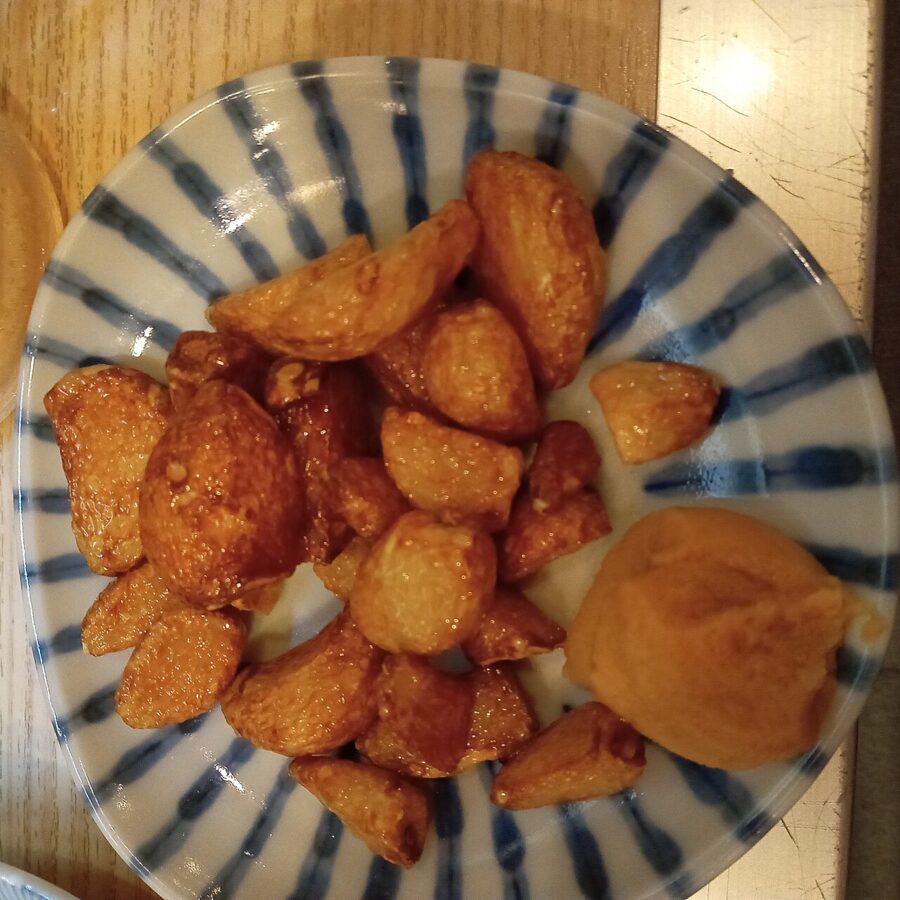
Then there are the chains, which took the old station-side formula and put it in clean, bright rooms by suburban stations. Banpaiya, now owned by the group behind the Marugame Seimen udon chain, has branches from Koenji to Ryogoku. A chain branch is the easiest first tachinomi if you read little Japanese: the menus are standard and the prices are printed.
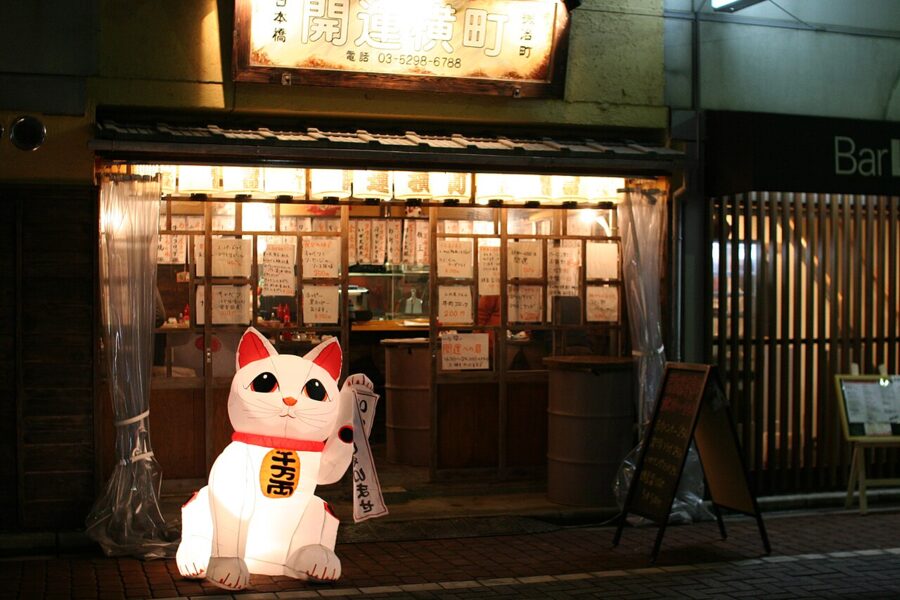
Kakuuchi: drinking in the liquor shop
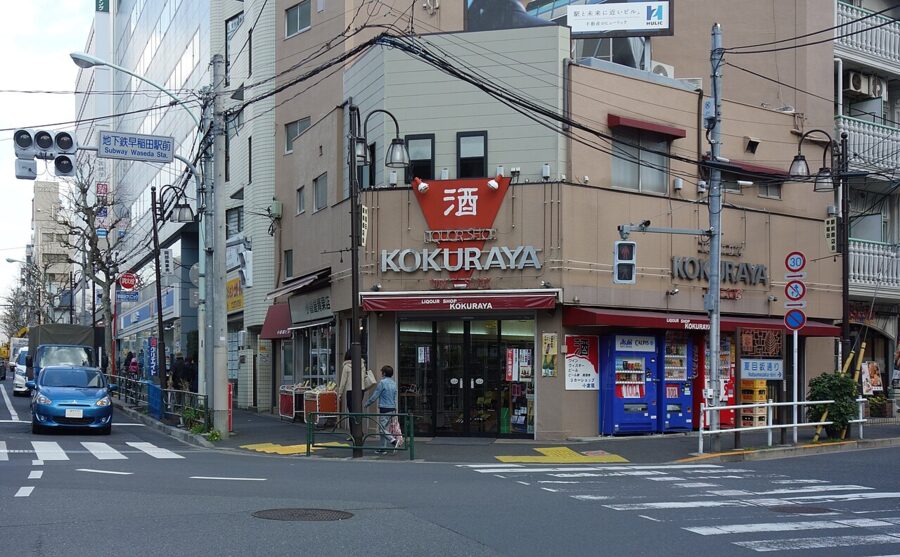
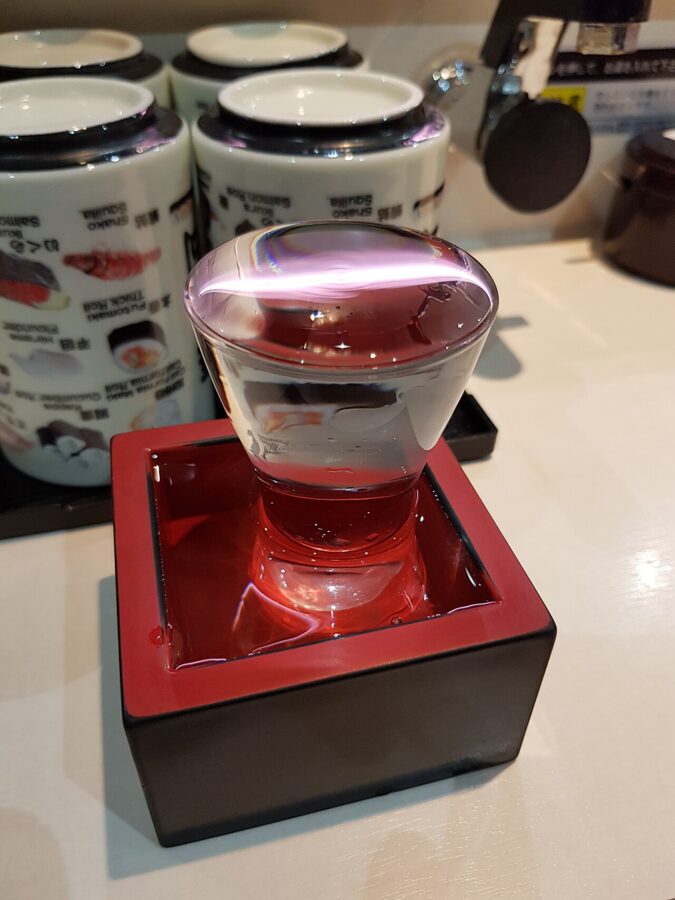
A kakuuchi (角打ち) is a liquor shop where you can drink what you have just bought, standing at a counter or an upturned crate. Japanese dictionaries define the word as drinking sake straight from the square wooden masu measure, and it is most at home in Kitakyushu, where it is still the ordinary name for an after-work drink. Tokyo has its share, usually in older shops on residential streets. The snacks are what the shop sells: tinned fish, dried squid, crisps, sometimes a pot of something simmered by the owner.
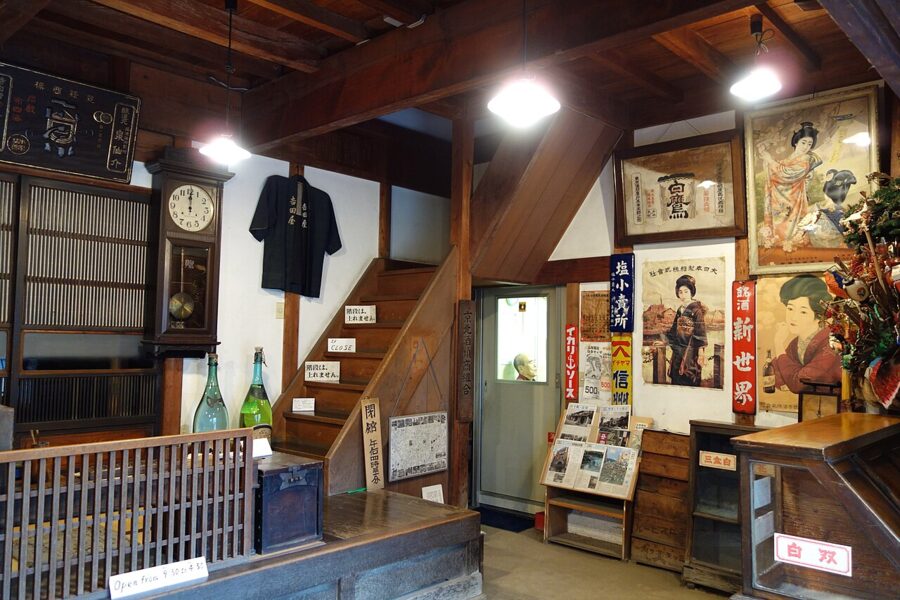
Fujiya Honten in Shibuya, often credited with starting the standing-bar habit in that part of town, began as a liquor shop, and its standing room in a basement off Sakuragaoka ran for more than forty years before it closed in October 2018. It came back in November 2022 on the ground floor of the same address, Sakuragaoka-cho 16-10. A listing updated in April 2026 gives its hours as 17:00 to 22:30 on weekdays, 16:00 to 22:00 on Saturdays and 16:00 to 21:00 on Sundays and holidays; it takes PayPay.
For the newer version of the idea, go to Ginza Kimijimaya, a sake shop at Ginza 1-chome, a minute from exit 3 of Ginza-itchome Station. It runs a standing bar inside the shop with more than ten sakes open and flights at weekends, and it keeps shop hours: 10:30 to 20:00 Monday to Saturday and until 19:00 on Sundays and holidays, as of November 2026. It takes cards. It does not publish its glass prices, so ask before you choose.
Standing wine and sake bars
The upmarket standing bar is a newer animal: good wine or carefully chosen sake, at prices well below a seated bar, because a room holds far more people standing than sitting. Ginza 300 BAR is the long-running Ginza example. Its 5-chome branch is in a basement at Ginza 5-9-11, two minutes from the Ginza exit of Shimbashi Station, and it is standing only, with room for about seventy.
Most drinks there cost one ¥330 ticket and some cocktails cost two, so a mojito is ¥660 (about $4). It opens at 16:30 every day and closes at 23:30 from Sunday to Thursday and at 2:00 on Fridays, Saturdays and the nights before holidays, as of June 2026.
Standing yakitori and yakiton
Tokyo’s after-work grill is as often pork as chicken. Yakiton (焼きとん) are skewers of pork and pork offal: liver, tongue, heart, cheek and the rest, with salt or the sweet soy tare. A standing yakiton bar is the place to try the parts you would not order sitting down, because each skewer costs a couple of hundred yen and comes on its own.
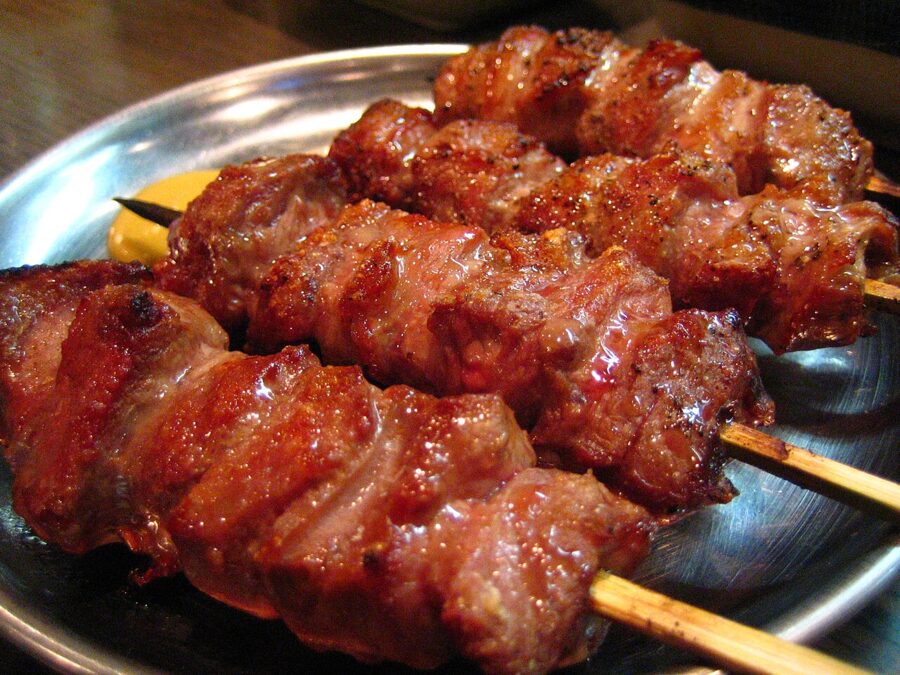
Saisei Sakaba in Shinjuku 3-chome is the model: a U-shaped counter round the kitchen, everyone standing, open every day from 15:00 to midnight. A customer’s March 2026 bill lists draft beer at ¥550 (about $3.50), a highball at ¥550, the simmered offal stew at ¥550, boiled tongue at ¥600 (about $4), liver with spring onion at ¥270 (about $1.70), plain liver at ¥220 (about $1.40) and pork belly at ¥260 (about $1.60). It takes PayPay and American Express.
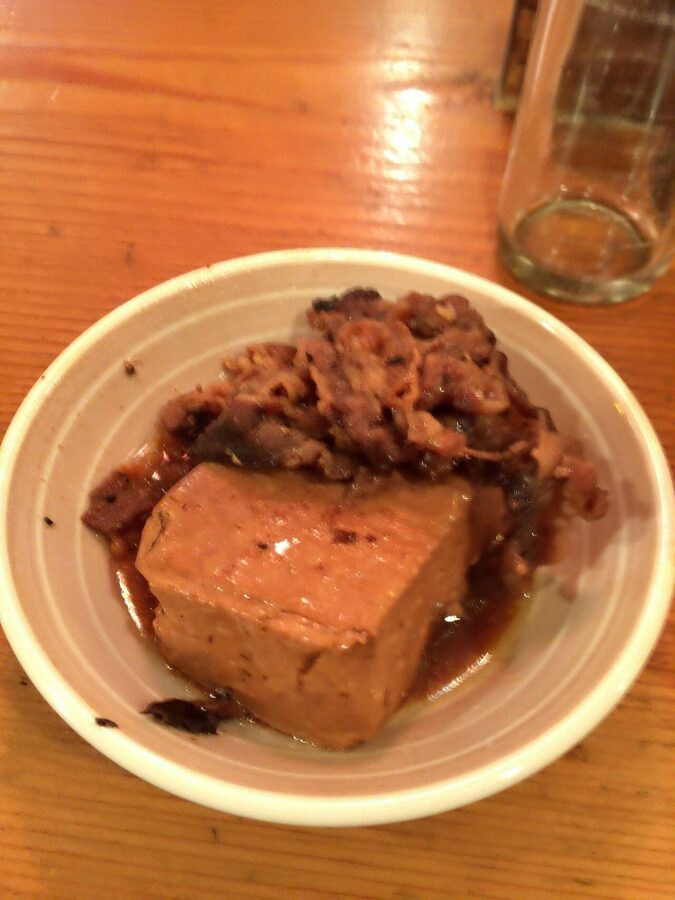
Akitaya by Daimon is older and only half a standing bar. It opened in 1929, and the front of the ground floor is standing room by the grill, with counter and table seats further in and upstairs. One October 2026 bill, for a bottle of beer, the house tataki skewer, a few more skewers and a bowl of beef offal stew with tofu, came to ¥2,590 (about $16) in total.
Standing sushi
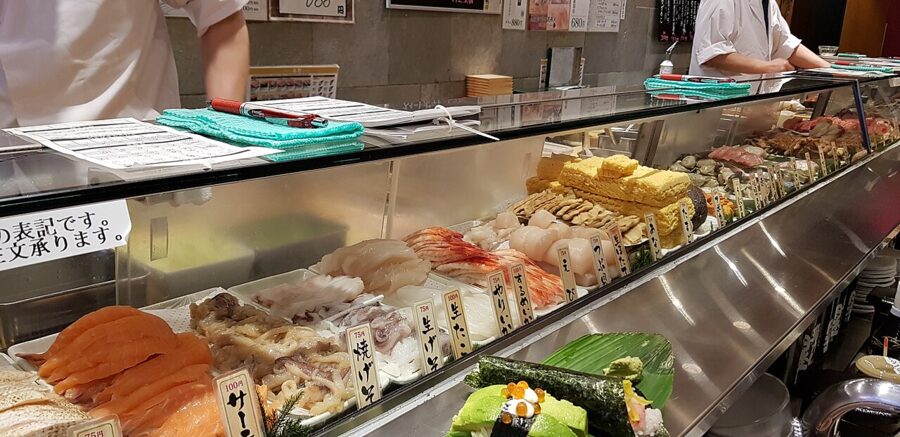
Yes, standing sushi bars really are standing. Tachigui-zushi (立ち食い寿司) counters put a chef in front of you who makes each piece to order, and you eat it within seconds. The usual way to order is two pieces at a time, several times over, and the whole visit takes twenty minutes.
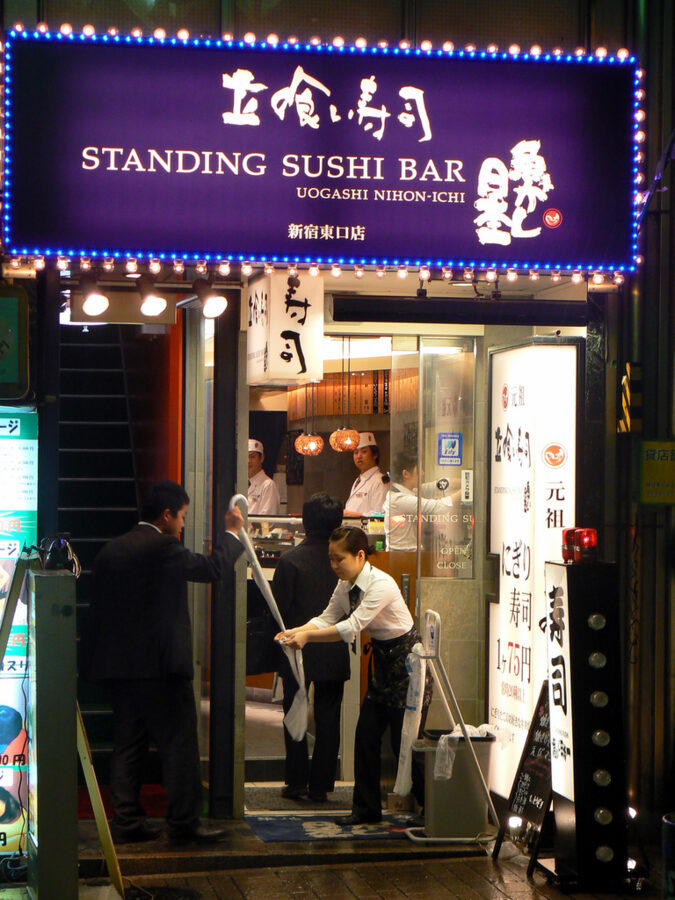
A beer with the sushi is fine, but the counter is for eating. Go at lunch, or for a quick plate before a train, rather than as a drinking stop.
Where to drink standing up after work
Standing bars follow offices and railway lines. These are the areas where I would start, as of November 2026.
Shimbashi
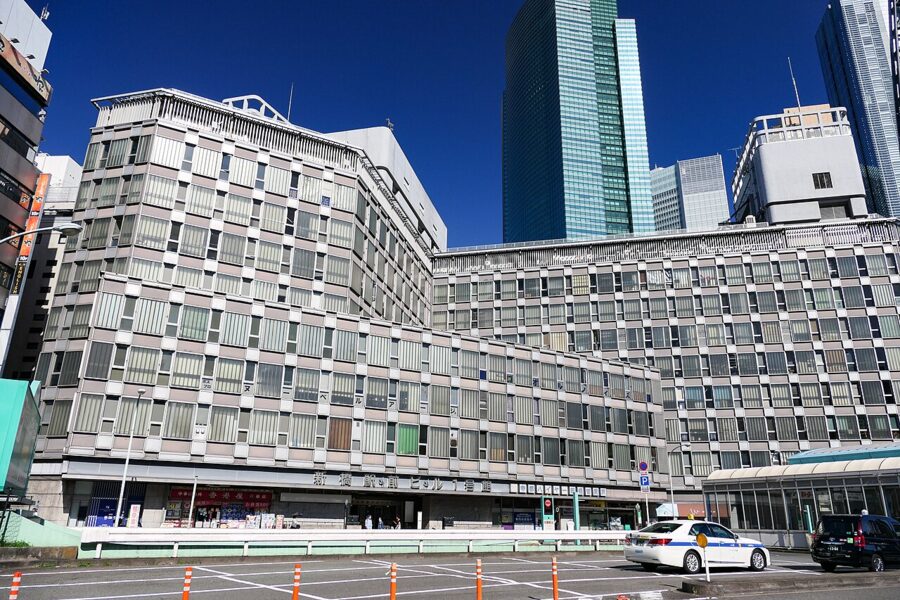
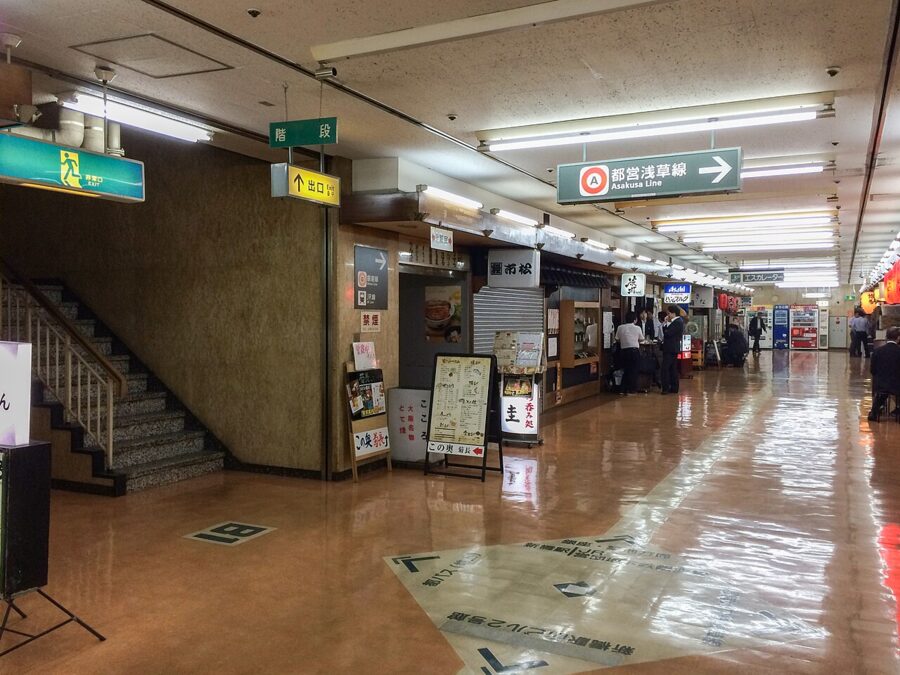
Shimbashi is the old salaryman capital, and it still earns the name between six and eight on a weekday. The heart of it is the pair of Shimbashi Ekimae Buildings, two blocks finished in 1966 on the site of a post-war black market and linked by a basement passage. Their ground floors and basements are full of small bars, many standing, and the whole complex connects underground to the Ginza and Asakusa subway lines.
Shinshu Osake Mura, on the ground floor of the first building, calls itself a local-sake museum: it pours sake, beer and wine from Nagano Prefecture, with sake flights, at about twelve standing places. It is non-smoking and closed on Sundays, public holidays and the second and third Saturdays of the month. Pay in cash or with PayPay.
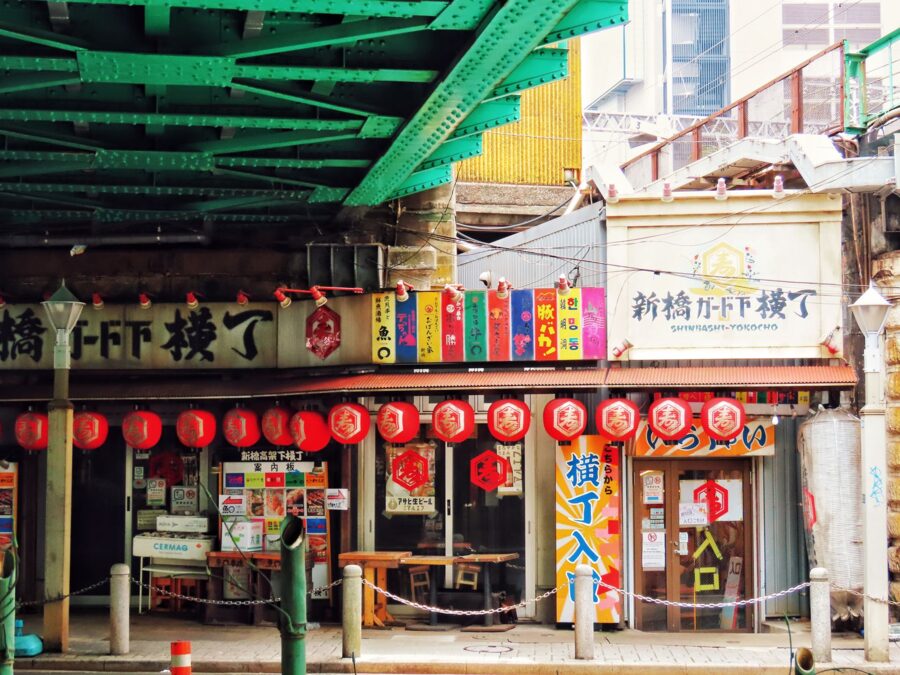
Under the tracks, Shimbashi Gado-shita Yokocho and the alleys round it are lanterns, smoke and folding tables. I would walk through first and pick the counter with room, rather than aim for one name.
Yurakucho, Hibiya and the Ginza side
The railway between Yurakucho and Shimbashi runs on brick arches that came into use in 1910, and for most of the century since, the spaces under them have been bars. The old gado-shita (ガード下, “under the girders”) at Yurakucho is grimy and loud, and it fills with office workers from Marunouchi and Hibiya as soon as the working day ends.
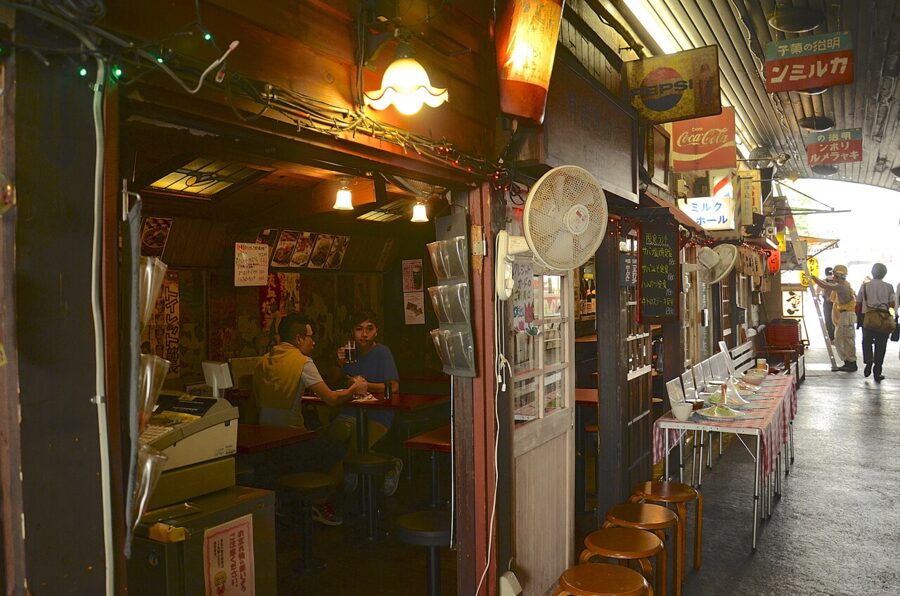
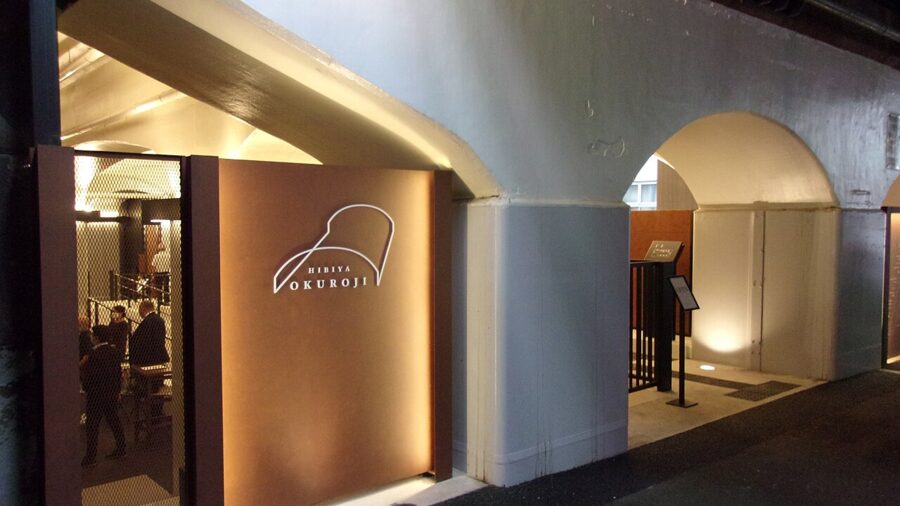
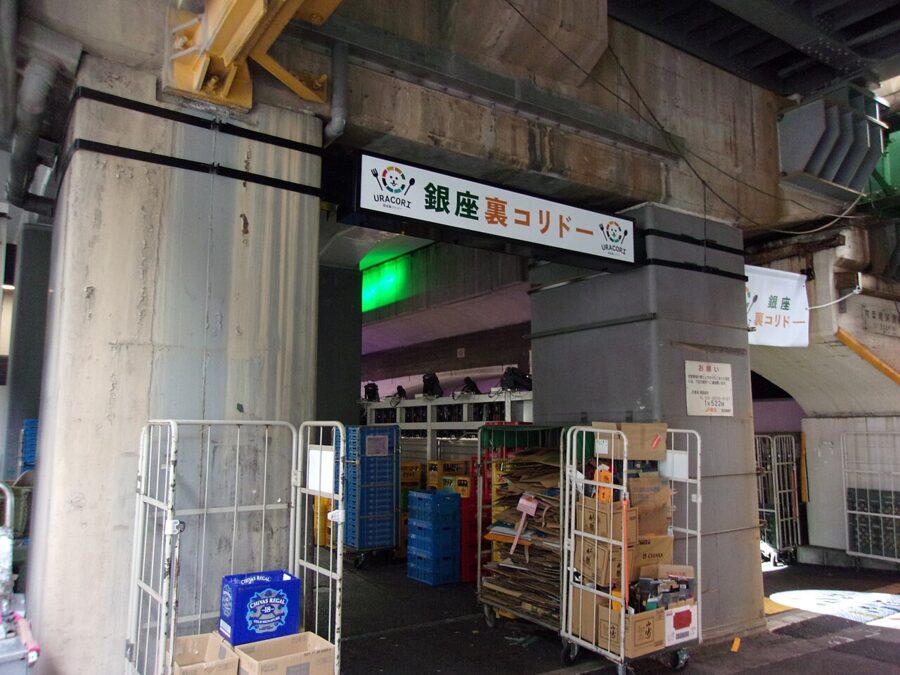
A few minutes south, Hibiya OKUROJI opened on 10 September 2020 in about 300 metres of the same arches, between Yurakucho and Shimbashi. It is the tidy version: restored brick, proper doors and newer bars and restaurants. On the Ginza side, the Ura-corridor under the Shinkansen viaduct does the same thing on a smaller scale.
Ginza 300 BAR is two minutes from the Ginza exit of Shimbashi Station, and Ginza Kimijimaya’s sake bar sits at the 1-chome end of the district, near Ginza-itchome Station.
Hamamatsucho and Kayabacho
These two office districts are quieter than Shimbashi and better for it. Akitaya is a minute’s walk from Daimon Station on the Asakusa and Oedo lines, or about three from JR Hamamatsucho. On weekdays it opens at 15:30 and closes at 21:00, on Saturdays at 20:30, and it is shut on Sundays, holidays and the third Saturday of each month. It takes no cards.
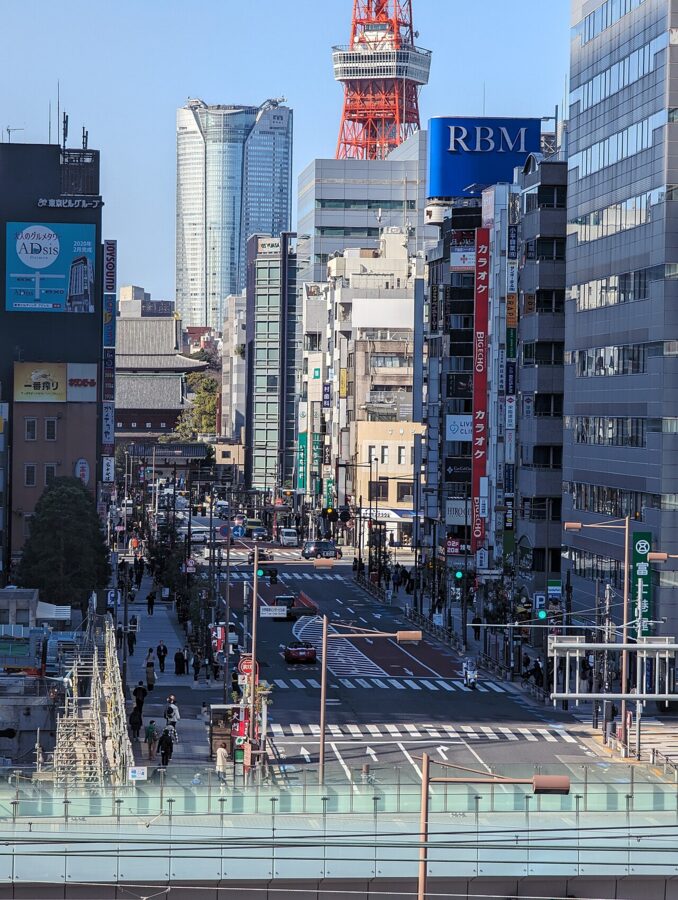
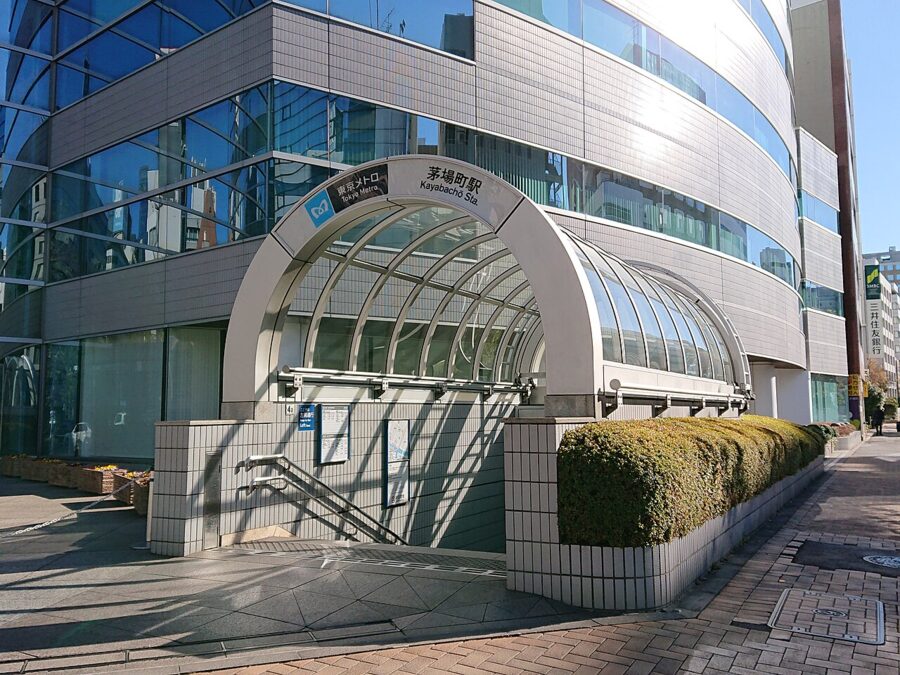
New Kayaba is two minutes from Kayabacho Station on the Tozai and Hibiya lines, open 17:00 to 21:00 on weekdays only. Every customer is expected to order at least one dish. It is non-smoking, it holds about thirty standing, and it is the most old-fashioned bar on this list.
Shinjuku Sanchome
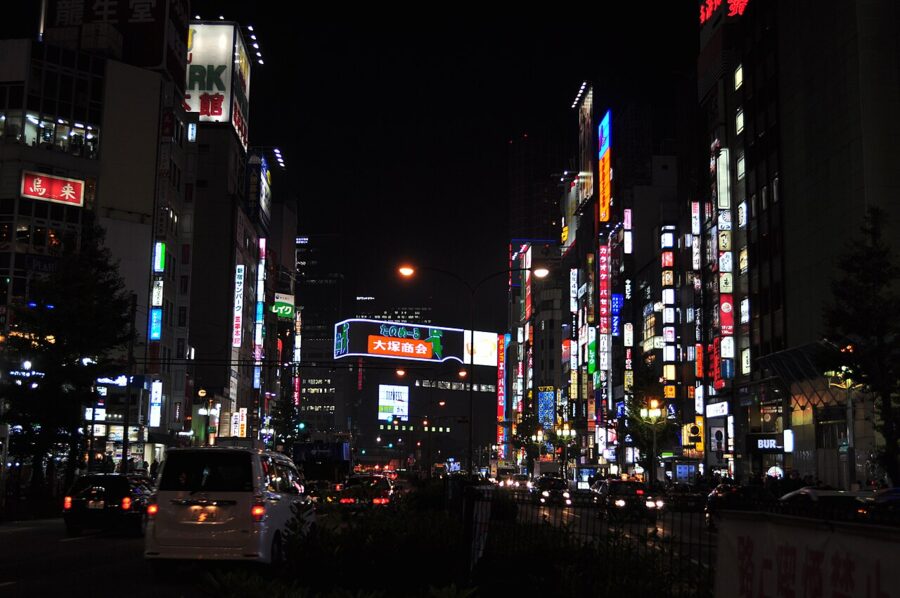
Shinjuku-sanchome Station, on the Marunouchi, Fukutoshin and Toei Shinjuku lines, sits in a grid of narrow streets around the department stores, packed with small bars. I find it younger and less touristy than Omoide Yokocho by the west exit. Saisei Sakaba is a minute from the station.
Shibuya
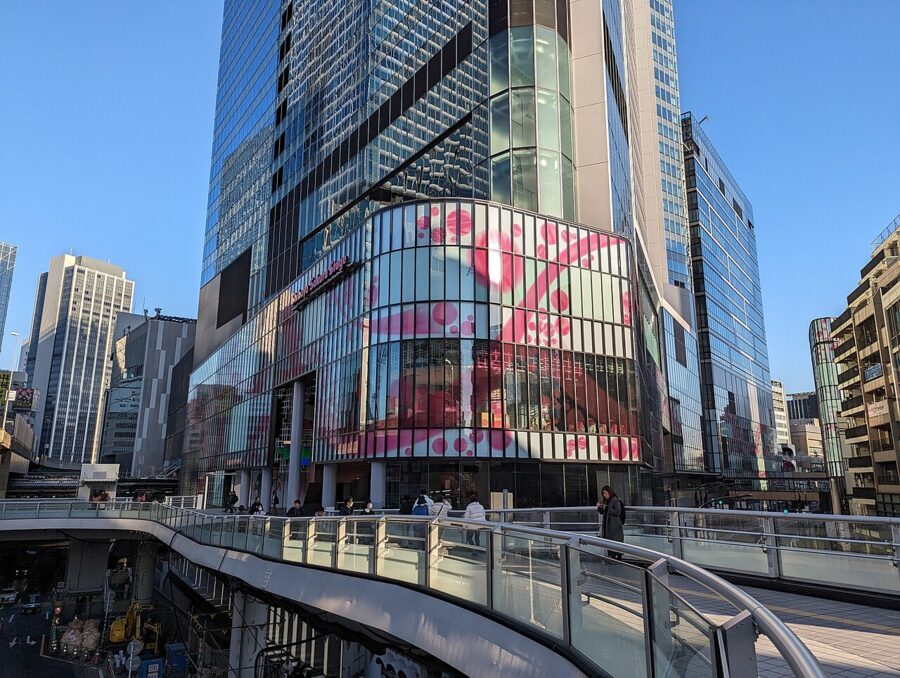
The Sakuragaoka side of Shibuya has been rebuilt around the Sakura Stage towers, and Fujiya Honten came back to its old address in the middle of it all. It is a few minutes’ walk from the south side of the station. I would go soon after it opens on a weekday.
Akabane
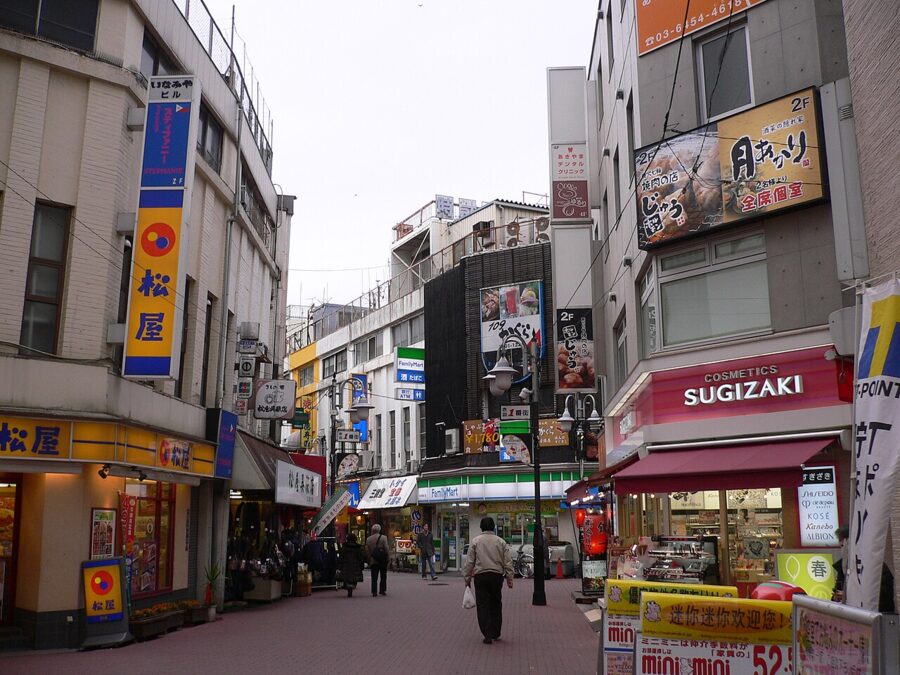
Akabane, in Kita ward on the Saikyo, Keihin-Tohoku and Utsunomiya lines, is the town that the word senbero belongs to. The streets off the east exit, around the Ichibangai shopping street, are packed with cheap bars, and some, Ikoi among them, open before noon. Ikoi is a couple of minutes from the station at Akabane 1-3-8.
What to drink, and what to eat with it
Drinks
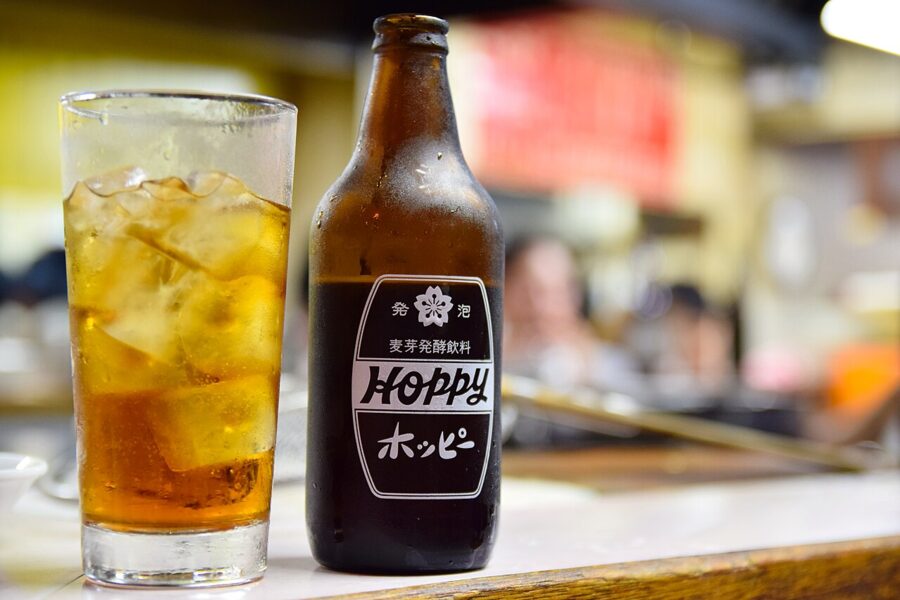
Hoppy. A beer-flavoured soft drink first sold in 1948, mixed with shochu over ice. The bottle is the soto (“outside”) and the shochu is the naka (“inside”); when your glass runs low you order another naka and top it up with what is left in the bottle.
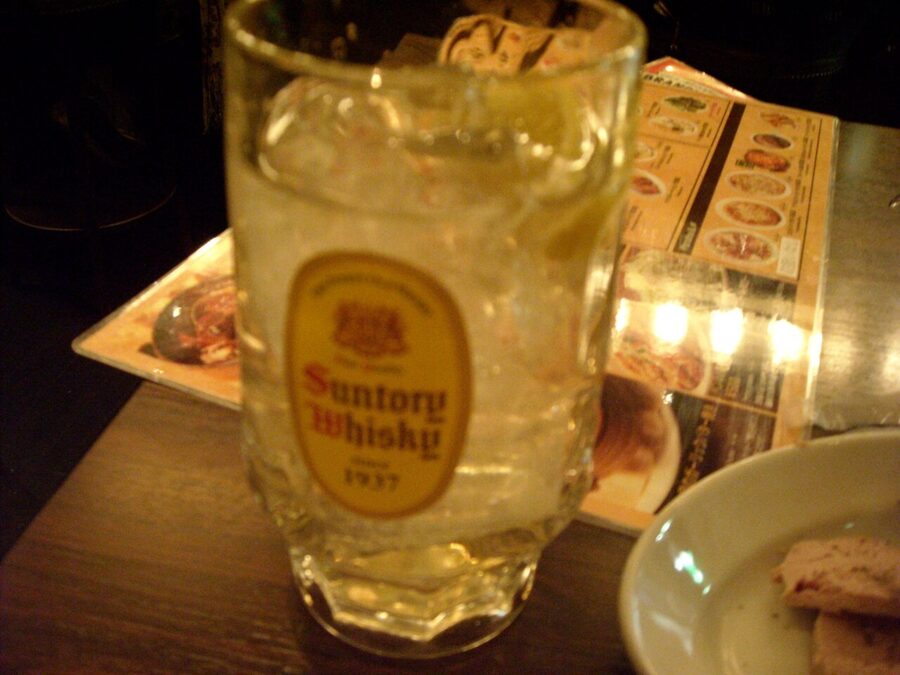
Sours and highballs. A sawa (sour) is shochu, soda and a flavour, lemon above all; a chuhai is the same family. A highball is whisky and soda, often with a squeeze of lemon. They are cheap and light, and after the first round you will see more of them on the counter than beer.
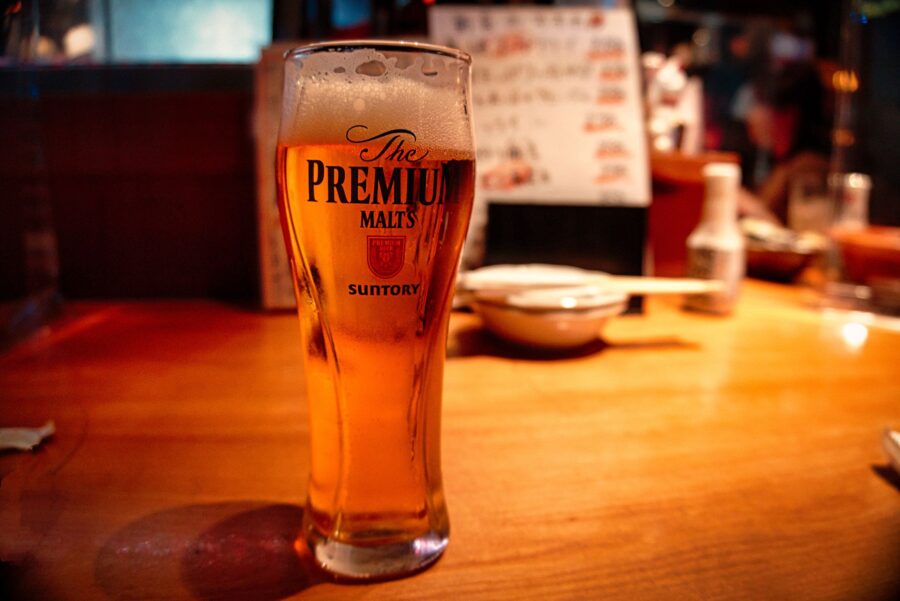
Beer and sake. Beer in the older bars comes in large bottles meant for sharing, with small glasses, so order one bottle for two and pour for each other. Sake comes by the glass, often as mokkiri, and the better places list the brewery and prefecture.
Food
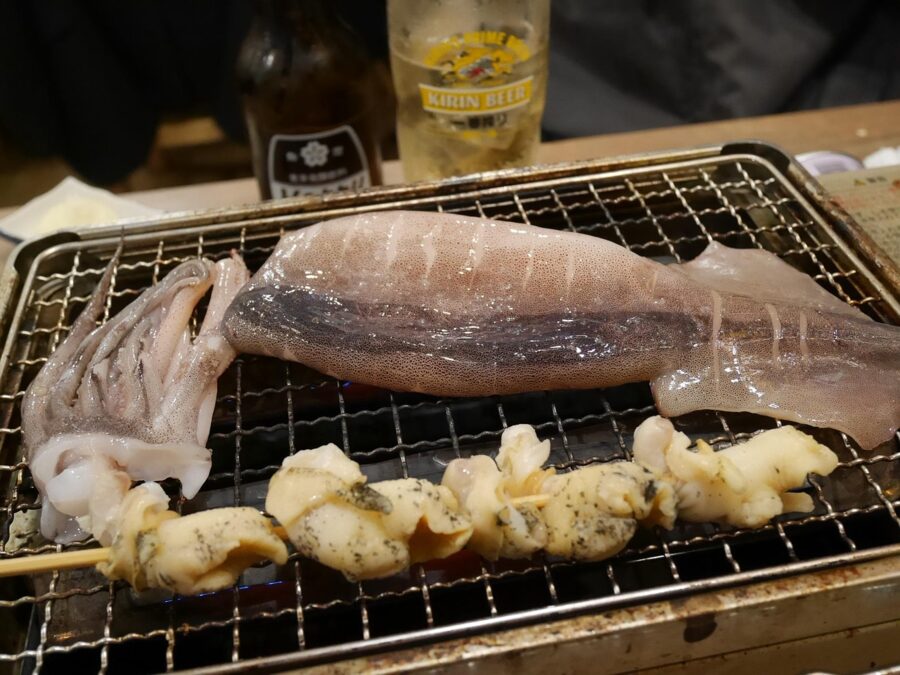
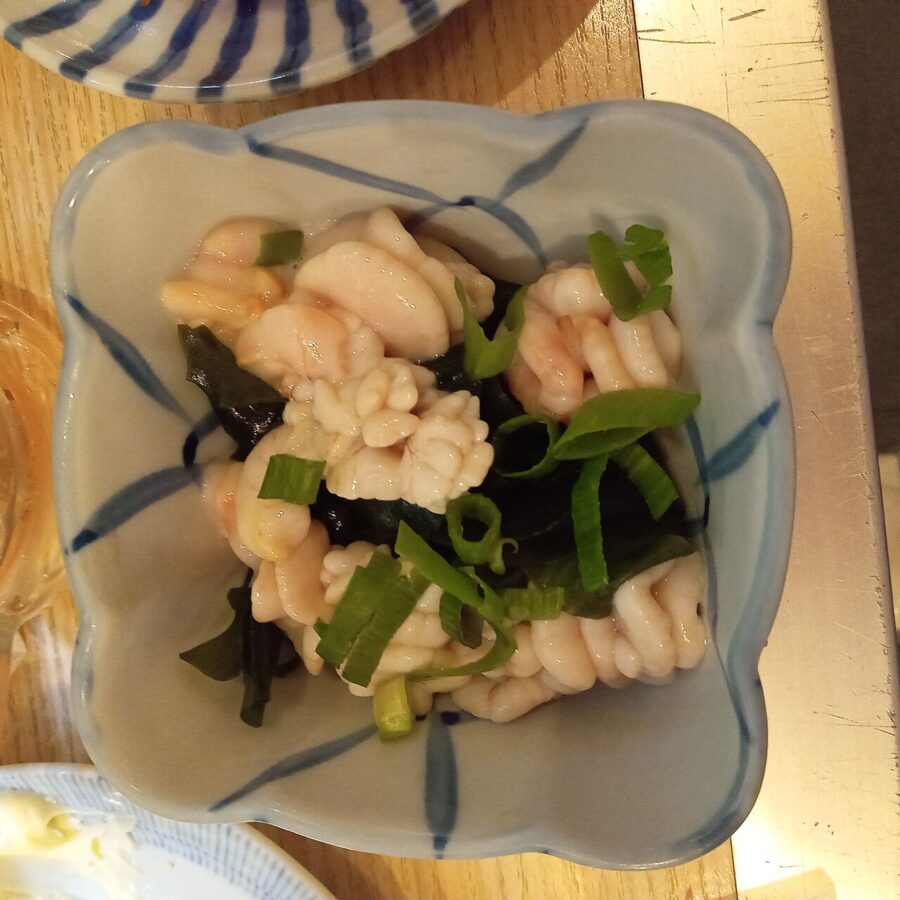
The dish to know first is nikomi (煮込み), offal simmered for hours in miso or soy with konnyaku and daikon, a different recipe in every bar. Then come skewers, fried things, small cuts of sashimi, potato salad, tofu dishes and pickles.
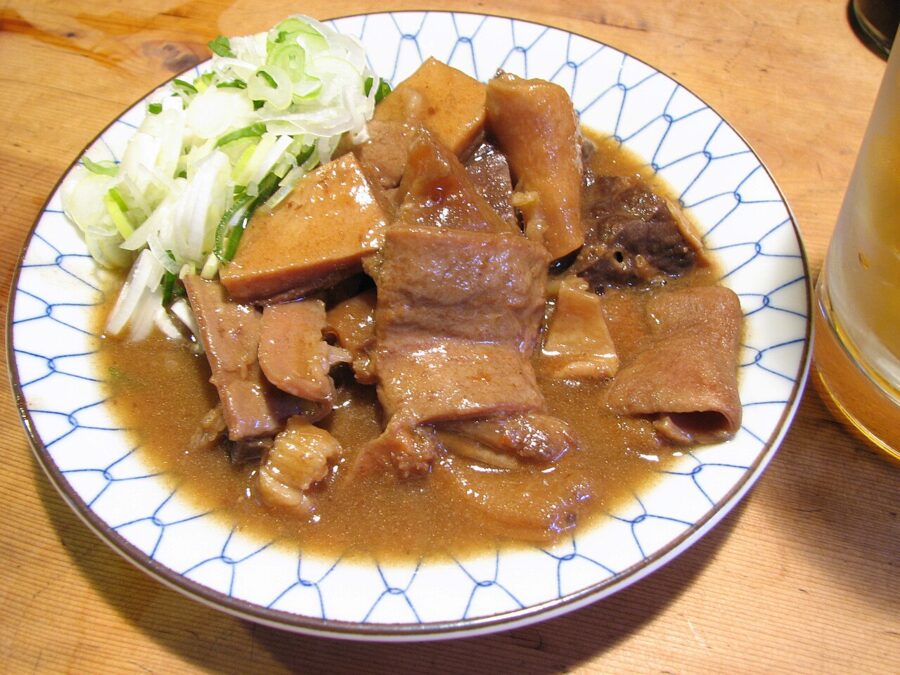
Order one or two plates at a time and order again when they are gone. At Ikoi the small plates were around ¥200 in November 2026, and nobody expects you to eat a meal.
With colleagues, or on your own
Going with colleagues
A standing bar is the low-commitment version of the office drink. When someone senior says chotto ippai (“just the one”), this is often where they mean, and it does mean one or two. It is also where a lot of informal reporting to your manager happens, the conversational end of ho-ren-so, so it is worth saying yes now and then.
The basic manners hold even standing up. Wait until everyone has a drink before anyone sips, and let the most senior person, by age or by job title, lead the kanpai. When you touch glasses with a senior colleague, hold yours a little lower than theirs. With bottled beer, pour for others with the label facing up, both hands on the bottle, and let someone else top up your glass rather than pouring your own.
Who pays depends on the company and the people. In many teams the senior person pays or pays the larger share, and in others everyone splits it evenly, which Japanese calls warikan (割り勘). A cash-on bar settles the question for you, because everyone pays for each round as it arrives. If the boss reaches for the bill at the end, say gochisosama deshita (“thank you for the meal”) before you leave, and thank them again the next morning.
Going on your own
Drinking alone at a counter is completely normal in Tokyo, and standing bars are the easiest place to start. Japanese calls it hitori-nomi. A single person nearly always fits somewhere, even when a group of four would be turned away.
Regulars often talk to newcomers, especially once you have tried to order in Japanese. If you want to be left alone, a phone on the counter and a short nod is enough. When you go, say gochisosama to the staff on your way out.
The bars named here, at a glance
Hours and prices change, and the older bars do not publish theirs, so treat these as a starting point and check before you go.
| Bar | Nearest station | Kind | What it costs | Hours |
|---|---|---|---|---|
| New Kayaba | Kayabacho | Old standing bar, coin machines | Shochu shot ¥200 (Oct 2026) | Weekdays 17:00 to 21:00 |
| Ikoi (main shop) | Akabane | Station-side, cash on | Small plates ¥190 to ¥200, sake ¥390 (Feb to Nov 2026) | From 11:00 |
| Saisei Sakaba | Shinjuku-sanchome | Standing yakiton | Beer ¥550, skewers ¥220 to ¥270 (Mar 2026) | Daily 15:00 to 24:00 |
| Akitaya | Daimon, Hamamatsucho | Yakiton, standing at the front | ¥2,590 for beer, stew and skewers (Oct 2026) | Weekdays 15:30 to 21:00, Sat to 20:30 |
| Ginza 300 BAR, 5-chome | Shimbashi (Ginza exit) | Standing bar, tickets | ¥330 a drink, three tickets minimum (Jun 2026) | From 16:30 daily |
| Fujiya Honten | Shibuya | Former liquor-shop standing bar | Ask at the bar | 17:00 to 22:30 weekdays (Apr 2026) |
| Ginza Kimijimaya | Ginza-itchome, exit 3 | Sake shop with standing bar | Ask at the bar | 10:30 to 20:00, Sun to 19:00 |
| Shinshu Osake Mura | Shimbashi | Nagano sake, all standing | Ask at the bar | Closed Sun, holidays, 2nd and 3rd Sat |
Start at the counter with room, order a drink before you have read the menu, and pay as it comes. Two ¥100 coins in Kayabacho buy the whole idea, and the train home leaves before nine.