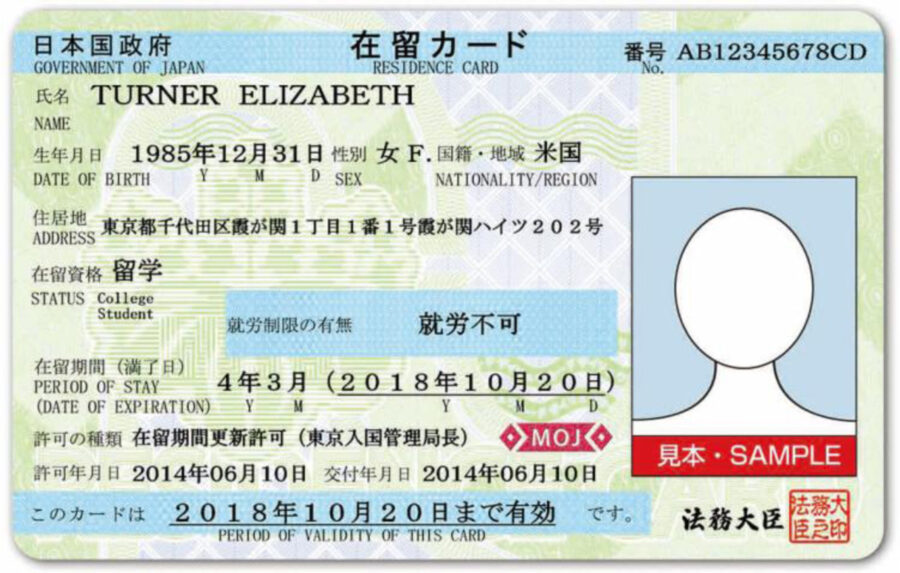
Before a Tokyo recruiter reads a word of your CV, they will want to know what one line on your residence card says. It is the box marked 就労制限の有無, “work restrictions”, and it settles which jobs you can take before your experience or your Japanese come into it at all.
Plenty of people get past that box. At the end of October 2025, employers in Tokyo reported 652,251 foreign workers to Hello Work, the most since reporting became compulsory in 2007, and 276,165 of them held one of the professional and technical statuses. The jobs exist. What trips people up is doing things in the wrong order: chasing an offer for a role their visa will not cover, sending a Western CV to a company that expects a form, or signing a contract without asking what “fixed overtime” means.
So take it in order: the visa, the sectors that hire people like you, where jobs are posted, the documents, the interviews, the contract, and the deadline that comes with changing jobs later. Rules and fees below are as of November 2026.

In this article7 parts
Start with the visa, not the job
Japan has no general “work visa”. It has statuses of residence, each tied to a type of activity, and the Immigration Services Agency (ISA) judges whether the job you will actually do fits the one you hold or are applying for. The title on your contract matters far less than the duties. A “marketing coordinator” who spends the day on the shop floor selling is, as far as immigration is concerned, a shop assistant.
The one most office jobs use
Most foreigners in Tokyo offices hold Engineer/Specialist in Humanities/International Services, which everyone shortens to gijinkoku (技人国). It covers engineers and programmers, marketing and sales staff, designers, interpreters and translators, and language teachers at private schools. You generally need a university degree related to the work, or ten years of relevant experience; jobs that draw on a foreign culture, such as translation or overseas marketing, need three years’ experience instead, unless you are a graduate doing translation, interpreting or language teaching. You must also be paid at least what a Japanese employee doing the same work would get.
One rule changed in April 2026 and the job boards have been slow to mention it. For applications filed from 15 April 2026, if the employer is a smaller company (ISA’s category 3 or 4, which in practice means anything that is not listed, public or a large taxpayer) and the job mainly uses a language to deal with people, such as interpreting or a hotel front desk, you must show that language at CEFR B2. For Japanese that means JLPT N2 or above, 400 or more on the BJT business Japanese test, a degree from a Japanese university, or one of a few other equivalents.
The categories matter for another reason. A listed company (category 1) attaches almost no paperwork; a first-year start-up (category 4) sends its business plan, accounts and more. That is why some small firms go quiet when the visa comes up.
The other doors
- Highly Skilled Professional. A points system (education, experience, salary, age, Japanese ability) with 70 as the pass mark. Holders can apply for permanent residence after three years at 70 points, or one year at 80. The J-Skip route skips the points: a master’s degree or ten years’ experience plus an annual salary of ¥20 million (about $125,000) or more.
- Intra-company Transferee. For people moved to a Tokyo office by their overseas employer, after at least a year with the company abroad.
- Specified Skilled Worker (tokutei gino, 特定技能). For named fields with labour shortages, from nursing care and building cleaning to food service, with a skills test and a Japanese test. Food service reached its numerical cap this year: new certificates of eligibility for it have been suspended since 13 April 2026, and ISA has not said when they will restart.
- Designated Activities 46. For graduates of Japanese universities with JLPT N1 or a BJT score of 480. It allows customer-facing and shop-floor work that gijinkoku does not.
- J-Find. For graduates of highly ranked universities abroad within five years of graduating, with ¥200,000 (about $1,250) in savings. It lets you stay up to two years to look for work or plan a start-up.
- Working holiday, spouse and permanent resident visas. The first allows most work for a limited period, depending on your nationality’s agreement with Japan. The other two carry no work restrictions at all, which is why employers love them.
Two more changes. Business Manager, the start-your-own-company status, was tightened on 16 October 2025: capital of ¥30 million (about $190,000), at least one full-time employee and a Japanese-language requirement. And the technical intern system is being replaced by a new one, ikusei shuro (育成就労, “employment for skill development”), from 1 April 2027.
What the employer sponsors
If you are abroad, the company (or a lawyer or gyoseishoshi, 行政書士, a licensed filer of official paperwork) applies to ISA for a Certificate of Eligibility on your behalf. You take that to a Japanese embassy for the visa stamp and collect your residence card at the airport. For permits granted in August 2026, a certificate for gijinkoku took 47.1 days on average, and a change of status for someone already in Japan took 51.3. ISA updates those figures every month.
Fees rose sharply on 1 October 2026 and now depend on the length of permit you are given. Online, a change of status or extension costs ¥27,000 (about $170) for one year, ¥56,000 (about $350) for a three-year permit, and ¥65,000 (about $410) for five years, plus a settlement fee of a few hundred yen. At the counter you pay in revenue stamps, cash only, and the bureau’s shops run short, so buy them at a large post office first. Ask whether the company pays, and get the answer in writing.
Who hires foreigners in Tokyo
The Tokyo Labour Bureau’s figures undo the idea that everyone works in tech. Hotels and restaurants employ the most foreign workers in the capital, 131,080, then wholesale and retail with 108,878, then information and communications with 77,924. And 35% work at places with fewer than 30 staff, so your employer is as likely to be a small trading company in Kanda as a tower in Roppongi.
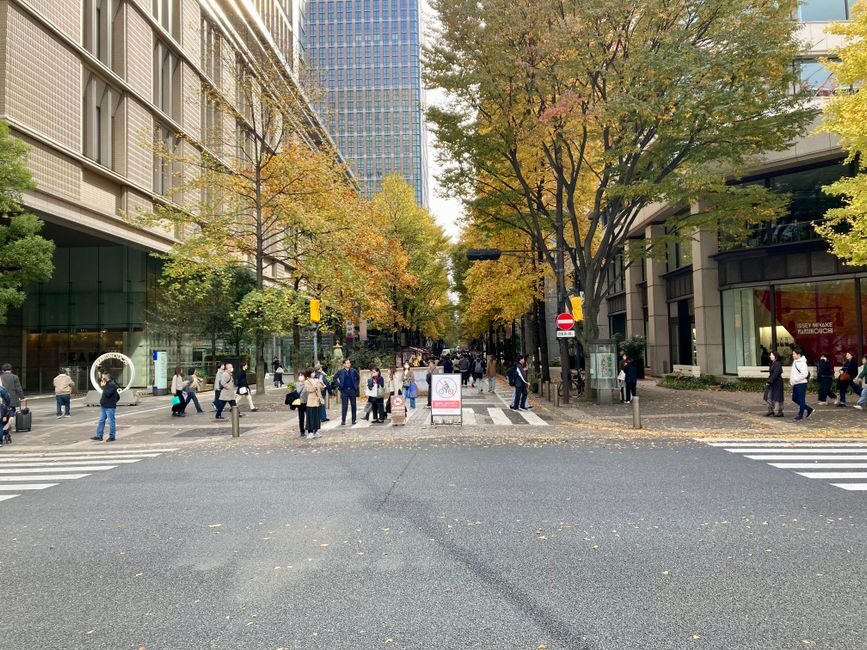
IT and software. The easiest way in for people without much Japanese. Product companies and start-ups hire engineers, designers and data people in English, and Indian nationals in Tokyo work in IT more than in any other sector (32% of them). The catch is the team around you: an “English-speaking” engineering floor may still hold its sales and support meetings in Japanese, and promotion to lead or manager often depends on joining them.
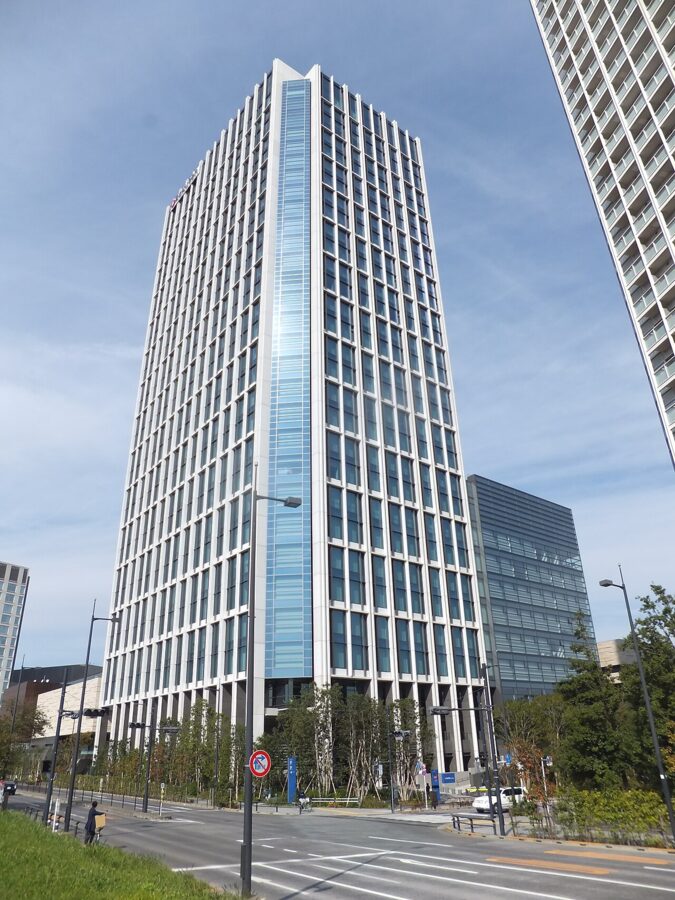
Foreign firms, finance and consulting. Banks, asset managers, consultancies and the Japan offices of overseas brands. English is the baseline and Japanese a strong plus, since the clients are Japanese. Pay is higher, hiring goes through recruiters, and job security is closer to London than to a Japanese firm.
English teaching. Conversation schools (eikaiwa, 英会話), assistant language teachers placed in public schools by dispatch companies, and international schools for those with teaching qualifications. It is the sector with the lowest language barrier, which is also why the pay is modest. People from the G7 countries who work in Tokyo are more likely to be in education than in any other industry.
Hotels, retail and tourism. Front desks, duty-free counters and travel firms want guests’ languages, and visitor numbers have kept them hiring. This is exactly the customer-facing work the April 2026 B2 rule targets at smaller employers, so a JLPT N2 certificate now does more than impress.

Japanese companies proper. The manufacturers, trading houses, banks and service firms that make up most of the economy. N2 is the floor and N1 gets you the job, because the work, the email and the meetings are all in Japanese. At that level the field is wide open: these companies struggle to hire, and a foreigner who works in Japanese stands out.
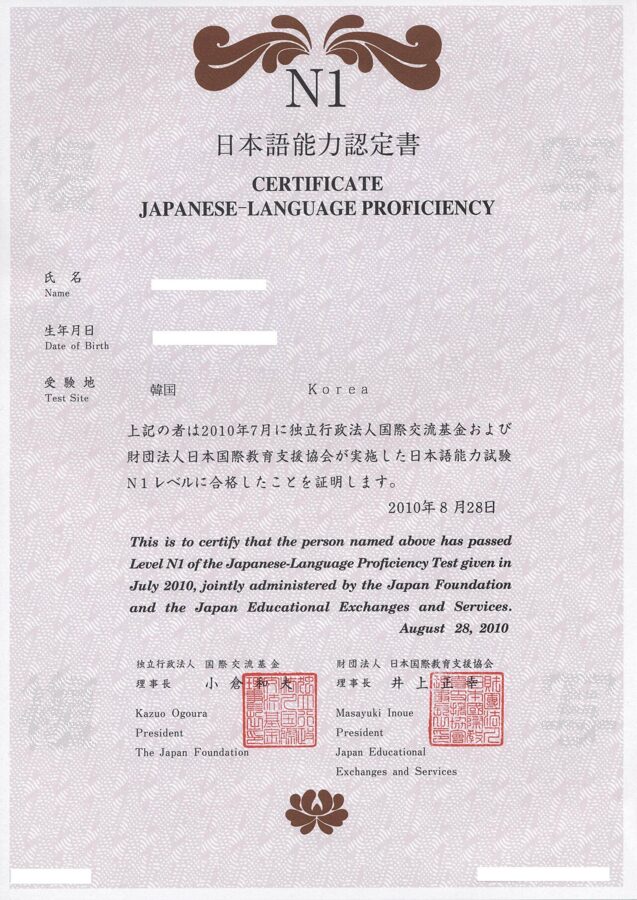
A word on job ads that say “Japanese not required”. Often true on the day you start, and less true by month three. I would read it as “nobody will test you”, not “you will not need it”, and keep studying.
Where the jobs are posted
No single site has everything, and the people who find work fastest use four or five channels at once.
- Bilingual job boards. Sites for foreign and bilingual candidates. Good for teaching, IT, hospitality and junior office roles; thin on senior ones.
- Recruitment agencies. Much bigger in Japan than in many countries, especially for mid-career and bilingual roles. Licensed agencies are paid by the employer and in principle cannot charge you, the job seeker. A good one will tell you, before you apply, whether the company has sponsored a visa before.
- Scout services. Japanese career sites where you post a profile and companies message you. Worth it once your Japanese is good enough to reply.
- Company career pages. Large Japanese firms often post mid-career jobs only on their own sites, and graduate hiring runs through them and the big graduate job sites.
- Hello Work. The national public employment service, free, and better for foreigners in Tokyo than its reputation (see below).
- People. University alumni groups, chambers of commerce, industry meetups and former colleagues. Introductions carry real weight here, and a referral can skip the document screening altogether.
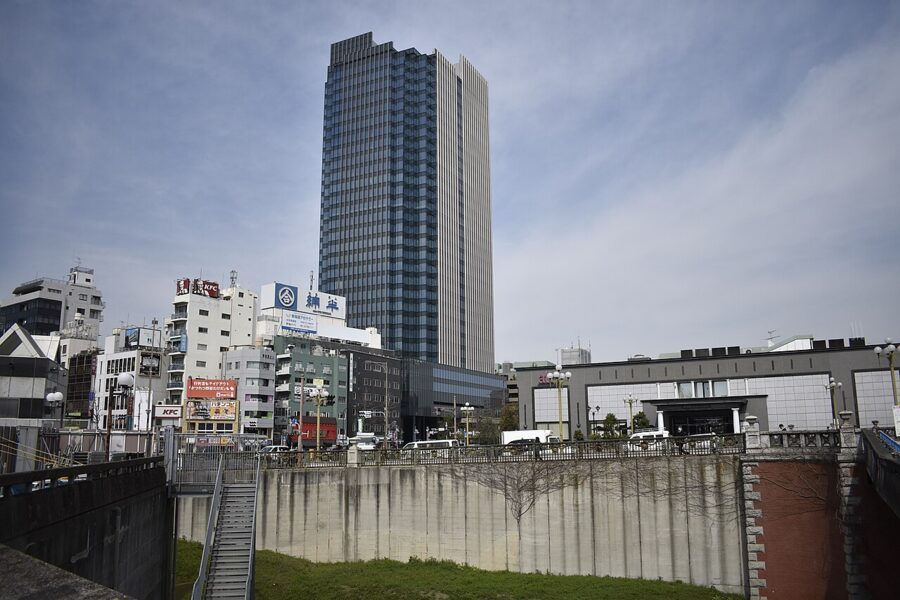
Hello Work’s two Tokyo desks for foreigners
Most newcomers never set foot in Hello Work, which is a mistake if you are already in Tokyo. The labour ministry runs two centres for foreign job seekers here, split by status.
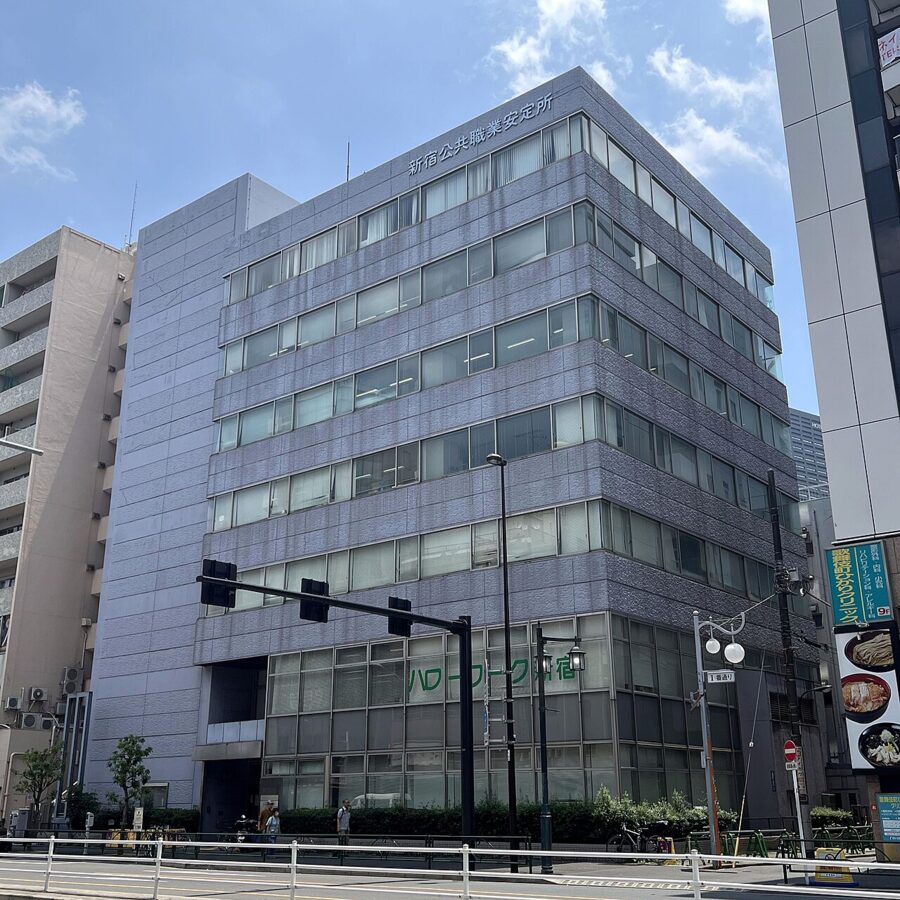
The Tokyo Foreign Employment Service Center is for international students and for anyone holding a professional or technical status. It is on the 13th floor of the Yotsuya Tower in the CO-MO-RE Yotsuya complex, one minute from Yotsuya Station (JR Chuo and Sobu lines, Marunouchi Line) and three from the Namboku Line station. It opens 9:00 to 17:00 on weekdays, as of November 2026, with counsellors who work only with job seekers on those statuses.
The Shinjuku Foreign Employment Support Center is for people whose status carries no work restriction (spouses, long-term and permanent residents) and for students looking for part-time work. It is on the ground floor of Hello Work Shinjuku’s Kabukicho building, at Kabukicho 2-42-10.
So, can you get a job in Tokyo easily? With a degree, a few years in a field that hires foreigners and some Japanese, yes, though I would budget three to six months for it. Without the degree, without the Japanese, or in a field like journalism or the arts, it is a long road, and the visa rules are usually the reason rather than the employers.
The two documents: rirekisho and shokumu keirekisho
Japanese companies ask for two documents and read them together. Foreign firms usually take an English CV instead.
The rirekisho
The rirekisho (履歴書) is a standard form, not a free-form CV, and it exists to show you are accurate and complete: a typo or an unexplained gap does more harm than modest achievements. The labour ministry’s model form made the gender box optional and dropped the old boxes for commuting time, dependants and spouse.
What goes on it:
- Name, with the reading in katakana or hiragana above it, date of birth, address and contact details.
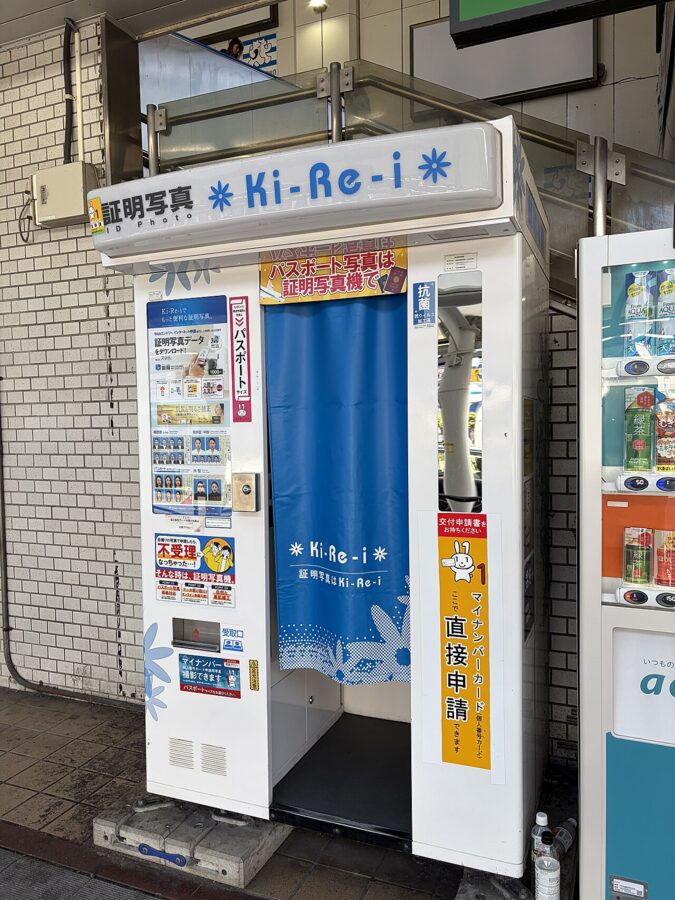
- A photo, usually 4cm tall by 3cm wide, taken in a suit against a plain background. ID photo booths at stations print the right size.
- Education and employment history in date order, with each school and company on its own line. Use one calendar throughout, Western years or Japanese era years, not a mix.
- Licences and qualifications: your JLPT level, a driving licence, professional certificates.
- Your reason for applying (shibo doki, 志望動機) and a short self-introduction. Keep both specific to this company.
- A box for your own requests. Unless something is truly fixed, such as your start date, the convention is to write kisha no kitei ni shitagaimasu, “I will follow your company’s rules”.
If you are already in Japan, add your status of residence and its expiry date; it answers the first question before anyone asks. Typed forms are now normal.
The shokumu keirekisho
The shokumu keirekisho (職務経歴書), or work history, is where you make the case. It has no fixed format, and two A4 pages is the usual length for a mid-career candidate. Open with a three- or four-line summary, then list each employer with a line on what the company does and how big it is, because a Tokyo reader will not know your old firm in Lyon or Pune.
Under each job, say what you were responsible for, what you changed and what it led to, with numbers where you have them. End with your skills and a short paragraph on what you would do for this employer. Vague lines like “responsible for client relations” read as filler; “kept 14 corporate accounts, renewed all but one” reads as a person.
How hiring runs, and the interview itself
Japan runs two hiring systems side by side, and it helps to know which one you are in.
The graduate cycle
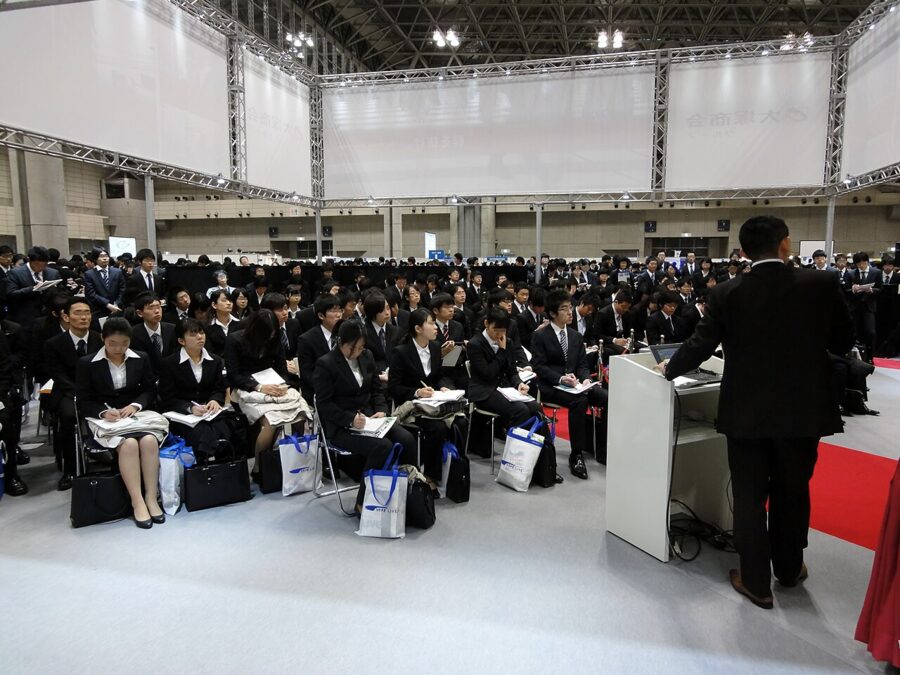
Large Japanese employers still hire most of their staff in one annual intake of new graduates, shinsotsu ikkatsu saiyo (新卒一括採用), who all start on 1 April. The government asks employers to keep to a timetable: publicity from 1 March in the year before graduation, selection from 1 June, and formal job offers, naitei (内定), from 1 October. For students graduating in March 2028, the government repeated that request in March 2026.
In practice many companies start earlier, through internships and early “information sessions”, and the government’s own request complains about exactly that. If you are studying at a four-year Japanese university, start in the summer of your third year. The process runs through an online entry sheet, an aptitude test (often SPI, which mixes maths, Japanese reading and a personality section), group discussions and two to four interviews, all in the dark “recruit suit” every applicant wears.
Mid-career hiring
Everyone else is in chuto saiyo (中途採用), mid-career hiring, which runs all year. The usual pattern is a document screening, sometimes an online aptitude test, a first interview with the team or HR, and a final interview with a department head or director. From application to offer often takes a month or two, and then the visa time goes on top if you are abroad.
Offers come by phone or email, then in writing with the working conditions. Companies treat an acceptance as a commitment, so if you must back out, do it quickly and by phone, not in a two-line email.
In the room
Japanese interviews are more formal than most Western ones, and the formality starts at the door. Knock, wait for dozo, say shitsurei shimasu as you enter, and stay standing until you are asked to sit; your bag goes on the floor beside the chair, not on your lap or the table. The interviewer’s business card tells you where they sit in the company, which helps you pitch your answers; Japanese job titles follow a ladder worth learning before you go.
Expect “Why Japan?”, “Why this company?”, “How long do you plan to stay?” and a walk through your CV line by line. The staying question is real, because firms invest years in training, so answer it plainly. At the end comes the gyaku shitsumon, the “reverse question” round, and having nothing to ask reads as lack of interest.
Pay, contracts and probation
Tokyo’s minimum wage rose to ¥1,280 (about $8) an hour on 1 October 2026, and it applies during probation and training too. Office salaries are advertised as annual figures but paid monthly, and the structure is worth unpacking before you compare offers.
How a Japanese salary is built
- Base salary (kihonkyu, 基本給). Bonuses and overtime are often calculated from this, not from the total.
- Bonuses. Many Japanese companies pay them twice a year, in early summer and December, as so many months of base salary. They depend on company results and can shrink.
- Fixed overtime (kotei zangyodai, 固定残業代). A set payment for a set number of overtime hours, folded into the salary figure. It is legal if the contract states the hours and the amount, and anything beyond those hours must be paid extra. A high salary that turns out to include 45 hours of overtime is not a high salary.
- Allowances. Commuting costs are nearly always covered and, for public transport, tax-free up to ¥150,000 (about $940) a month. Housing and family allowances vary by company.
Then come the deductions. The employee’s share of the employees’ pension is 9.15% of pay, with health insurance, employment insurance and income tax on top. Resident tax arrives in your second year and is based on the year before, so the second year can feel poorer than the first. Your first payslip will be a shock; it is supposed to be.
The contract and the probation period
By law your employer must give you the main working conditions in writing, usually as a rodo joken tsuchisho (労働条件通知書): pay, hours, place of work, duties, holidays and how the contract ends. Since April 2024 it must also say how far your place of work and duties could change, so this is where you find out whether you might be transferred to Osaka. On a fixed-term contract it must show whether and how it can be renewed, and after five years of renewals you can ask to convert to an indefinite one.
Most full-time jobs start with a probation period (shiyo kikan, 試用期間), commonly three to six months, sometimes at slightly lower pay. Dismissal in probation is easier for the employer but not free: after the first 14 days, the company must give 30 days’ notice or pay in lieu, as for anyone else. Paid leave starts at ten days after six months if you have attended 80% of working days, and employers must make sure you take at least five of them each year.
Overtime is capped in principle at 45 hours a month and 360 a year, under the workplace agreement an employer needs before asking for any at all.
Questions to ask before you sign
- Which status of residence will this job be filed under, and will the company file and pay for it?
- Is this a permanent post (seishain), a fixed-term contract, or a dispatch job through an agency?
- Does the salary include fixed overtime? For how many hours?
- How are bonuses calculated, and what were they last year?
- How long is probation, and does pay change during it?
- Could I be transferred to another city?
- Will I be enrolled in the employees’ health insurance and pension from day one?
- How much notice do I need to give if I leave?
If something goes wrong later, the Tokyo Metropolitan Government’s labour consultation centre takes questions in English on weekdays from 14:00 to 16:00, on the ninth floor of the Tokyo Shigoto Center in Iidabashi, as of November 2026. The Labour Standards Inspection Office for the ward where you work handles unpaid wages and overtime.
Changing jobs on a work visa
Moving companies is normal in Tokyo now, and your visa does not stop you. It does give you a deadline. On most work statuses, including gijinkoku, Highly Skilled Professional, Specified Skilled Worker and Skilled Labour, you must tell ISA within 14 days when your contract ends and again within 14 days when you sign with a new employer.
The easiest way is ISA’s online notification system, open around the clock once you have registered, with no documents to attach. You can also hand the form in at an immigration office or post it, with a copy of your residence card, to the Tokyo bureau’s notification desk in Yotsuya. One combined form covers leaving and joining if both fall within 14 days.
The notification does not check whether the new job fits your status. That comes at your next renewal, when ISA looks at what you have actually been doing. If the new role is clearly a different kind of work, say an engineer moving into store management, you need a change of status before you start it, not after.
If the fit is borderline, you can ask ISA for a shuro shikaku shomeisho (就労資格証明書), a certificate of authorised employment, which states that the new job falls within your status. It costs ¥1,600 (about $10), plus a ¥220 (about $1) settlement fee online. It is optional, and the law forbids employers from treating you worse for not having one, but it removes the risk of a nasty surprise at renewal.
- Gaps between jobs. Your status can be cancelled if you go three months without doing the work it covers, unless you have a good reason. Actively looking for a job counts; keep records of applications and interviews.
- Side jobs. A second job outside your status, even a weekend one, needs permission for activities outside your status (shikakugai katsudo kyoka, 資格外活動許可) first. Students and dependants have a general 28-hours-a-week allowance; people on work visas usually need individual permission.
- Resigning. On a permanent contract the law lets you leave two weeks after giving notice, though company rules often ask for a month. Hand over properly; Tokyo industries are smaller than they look.
Once you are in, the job itself takes over. You will learn the reporting habits that hold Japanese teams together, ho-ren-so in office shorthand, and after your first holiday you will find out why a box of biscuits on the shared table matters in the office gift-giving calendar.
But it all starts with that one box on the residence card. Read yours, find out which jobs it opens, and apply for those first.