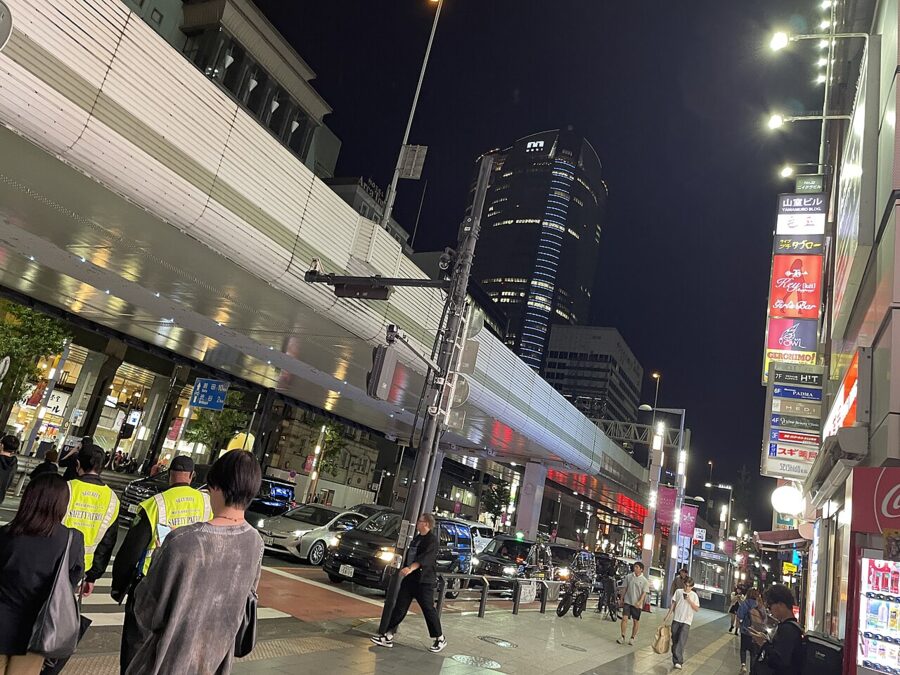
On the last night of October 2026, the Mori Art Museum, on the 53rd floor of a tower a few minutes from Roppongi Crossing, stayed open until six in the morning for Roppongi Art Night. Down at street level, the touts on Gaien-higashi-dori were working too, as they are on most weekend nights. Roppongi (六本木) has run on both shifts for decades. The people who live and work around it learn to use one and step around the other.
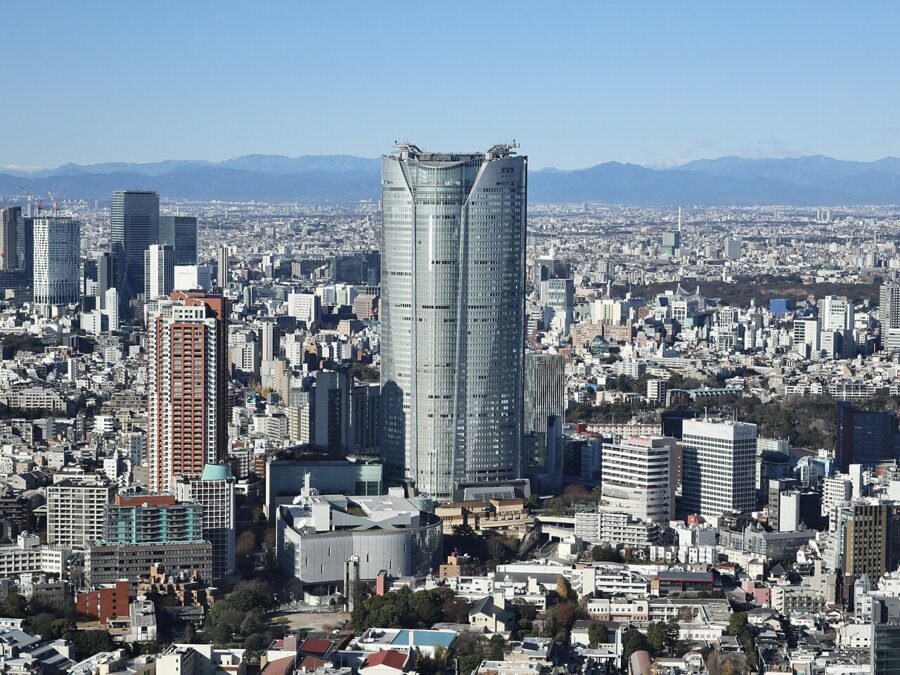
The daytime shift is the one people undersell. Three major art museums sit within a fifteen-minute walk of each other. Roppongi Hills, Tokyo Midtown and Azabudai Hills have turned a district of bars and wooden houses into one of Tokyo’s main office addresses, with gardens you can actually sit in, and embassies, international schools and very expensive flats fill the slopes between.
It is nine minutes from Shinjuku on the Oedo Line and sits on the Hibiya Line between Ebisu and Ginza, which makes it an easy place to end up after work. Used well, it gives you late museums, three gardens and a good walk downhill to Azabu-Juban. Used badly, it gives you a bar bill you will be disputing with your card company in January.
In this article8 parts
- How Roppongi is laid out, and which exit to use
- The art triangle: three museums and what each is good for
- Roppongi Hills, Tokyo Midtown and Azabudai Hills, beyond the shops
- Nights out: what the nightlife is like now
- Living or working nearby
- A weekday evening and a weekend day
- Quieter streets close by
- Dates for the calendar
How Roppongi is laid out, and which exit to use
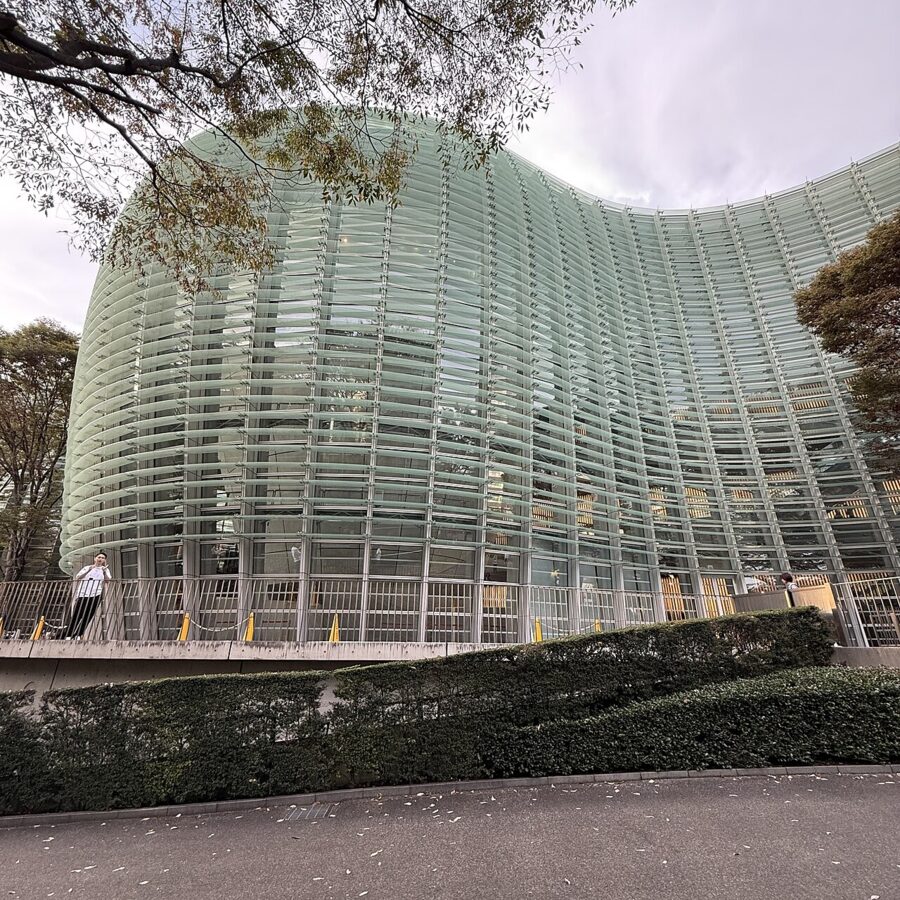
Everything hangs off Roppongi Crossing, where Roppongi-dori, with the Shuto Expressway on top, meets Gaien-higashi-dori. Roppongi Hills is a few minutes south-west. Tokyo Midtown is just north, technically in Akasaka 9-chome, and the National Art Center is north-west, nearer Nogizaka Station than Roppongi. Azabudai Hills is about ten minutes east toward Tokyo Tower, and Ark Hills is north-east at Roppongi 1-chome.
Downhill to the south is Azabu-Juban, and Nishi-Azabu lies west along Roppongi-dori. Tokyo’s official tourism guide puts Roppongi Hills and Midtown about a kilometre apart, a fifteen- to twenty-minute walk. That is the whole district: walkable, but all hills.
Stations and exits
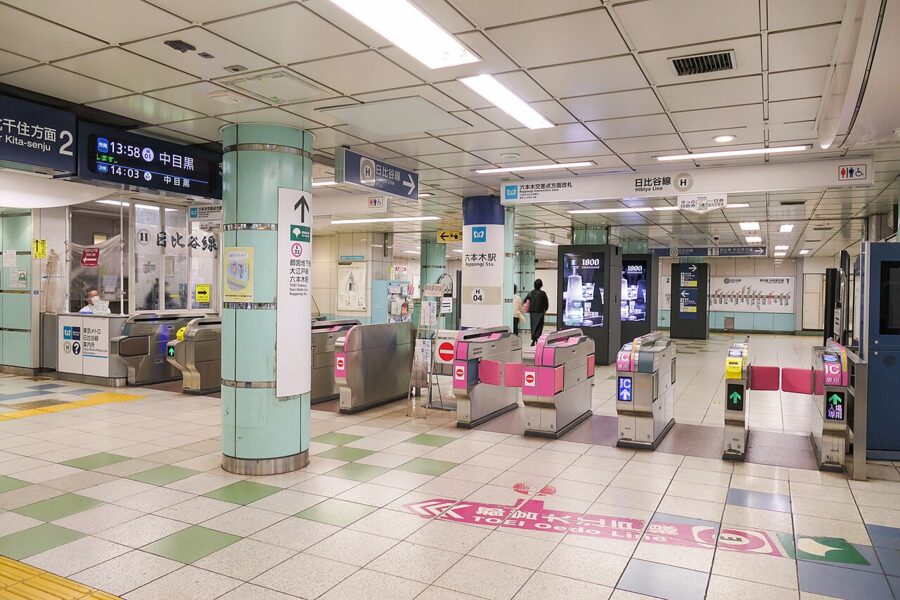
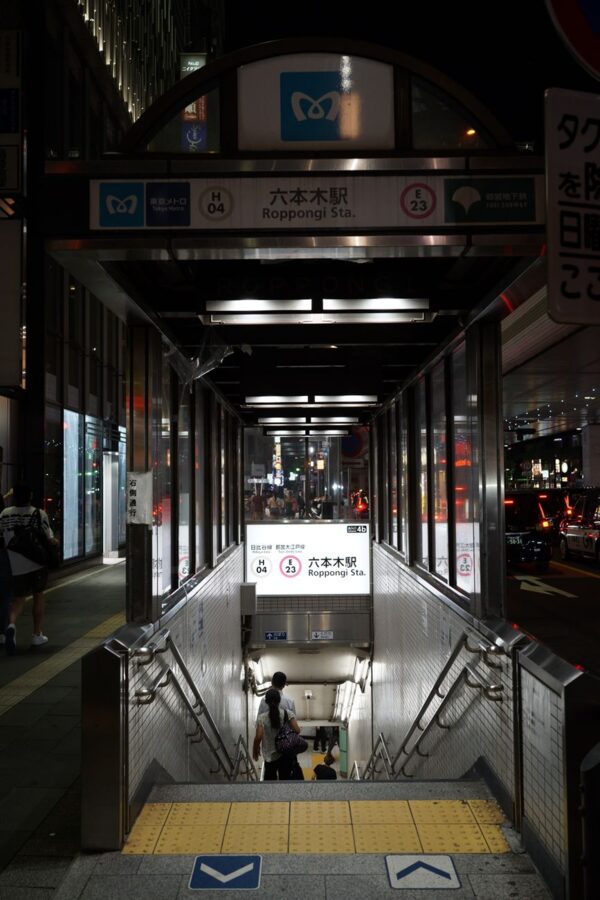
Roppongi Station is two stations sharing a name. The Tokyo Metro Hibiya Line (H04) and the Toei Oedo Line (E23) have different operators, separate gates and exits, and the Oedo platforms are far deeper. The venues’ own access pages give these exits as of November 2026:
| Going to | Station, line and exit | Walk |
|---|---|---|
| Roppongi Hills, Mori Art Museum, Tokyo City View | Roppongi (Hibiya Line), exit 1C | 3 minutes, through a concourse |
| Roppongi Hills | Roppongi (Oedo Line), exit 3 | 6 minutes |
| Tokyo Midtown, Suntory Museum of Art, 21_21 Design Sight | Roppongi (Oedo Line), exit 8 | Direct |
| Tokyo Midtown | Roppongi (Hibiya Line), underground passage | Direct, with stairs |
| National Art Center, Tokyo | Nogizaka (Chiyoda Line), exit 6 | Direct |
| National Art Center, Tokyo | Roppongi (Oedo Line), exit 7, or (Hibiya Line), exit 4a | 4 to 5 minutes |
| Azabudai Hills | Kamiyacho (Hibiya Line), exit 5, or Roppongi-itchome (Namboku Line), exit 4 | Direct |
With a pushchair or a heavy case, use the Oedo Line and exit 8 for Midtown, because the Hibiya Line passage has stairs. From Tokyo Station, change from the Marunouchi Line to the Hibiya Line at Kasumigaseki; the official guide gives 26 minutes. Haneda is about 50 minutes by train and Narita about an hour.
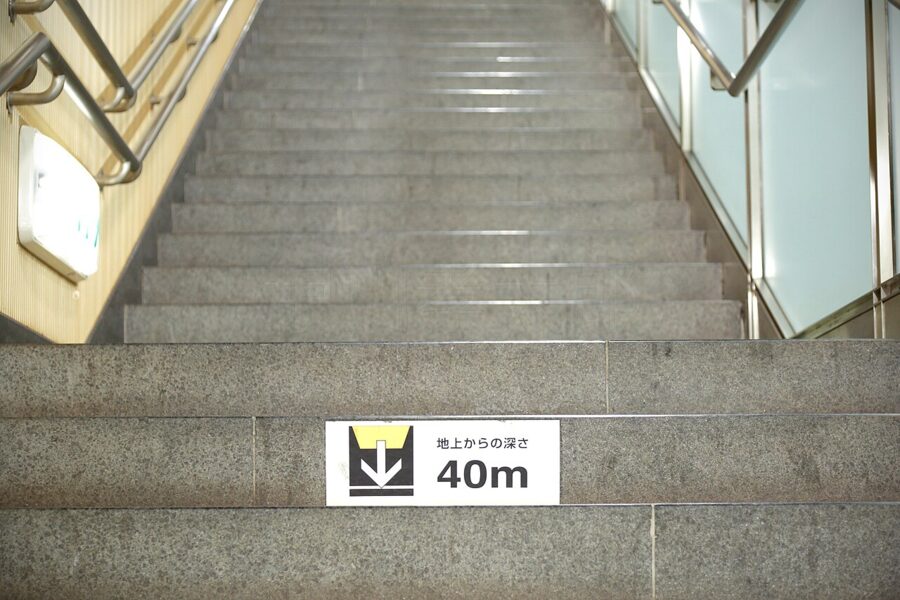
If you are meeting someone “at Roppongi Station”, agree which line and which exit. Otherwise one of you will be waiting at the wrong end of a long underground walk.
The name, and how to say it
Say it rop-pon-gi, with a small catch on the doubled p. The characters mean “six trees”, and there are two stories. One says the area once had six notable pines; the other points to six nearby daimyo estates whose family names each contained a tree (Aoki, Ichiyanagi, Uesugi, Katagiri, Kutsuki and Takagi). Nobody has settled it, and none of the trees survives.
The art triangle: three museums and what each is good for
The Mori Art Museum, the National Art Center, Tokyo and the Suntory Museum of Art are promoted together as the Roppongi art triangle. Mori is contemporary art and stays open late, the National Art Center is a huge hall with no collection of its own, and Suntory is Japanese art and craft in a quieter room.
| Museum | Hours | Closed | Adult ticket |
|---|---|---|---|
| Mori Art Museum (Mariko Mori show) | 10:00 to 22:00; Tuesdays to 17:00 | Open daily during this show | ¥2,800 (about $18) weekdays, ¥3,000 weekends, ¥200 less online |
| National Art Center, Tokyo | Special exhibitions 10:00 to 18:00; Fridays and Saturdays to 20:00 | Tuesdays | Set by each exhibition |
| Suntory Museum of Art (Lotus Sutra show) | 10:00 to 18:00; Fridays to 20:00 | Tuesdays | ¥1,800 (¥1,600 in advance) |
Prices and hours are as of November 2026 and change with every exhibition. Mori and Suntory let children through junior high school in free for these shows, and both stop admitting people 30 minutes before closing. Keep your stub: Suntory takes ¥100 off if you show a ticket for a themed exhibition at either of the other two.
Mori Art Museum
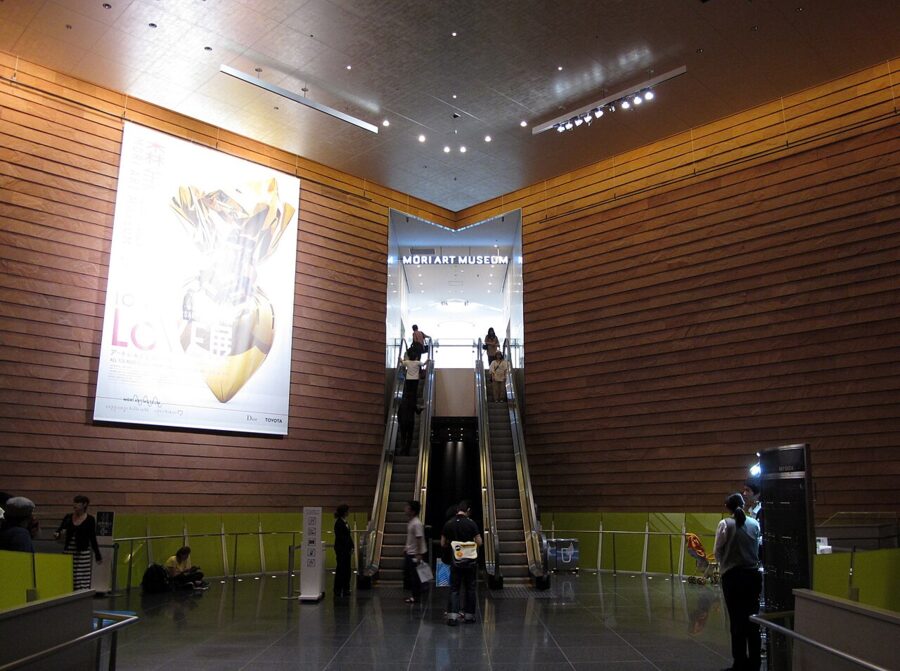
The Mori Art Museum is on the 53rd floor of Roppongi Hills Mori Tower and shows contemporary art, with a strong line in artists from Japan and the rest of Asia. Its great advantage for anyone with a job is the hours: 10:00 to 22:00, except Tuesdays, when it closes at 17:00. Leave the office at seven and you still have two unhurried hours.
The current show, Mariko Mori: All That Shines, runs from 31 October 2026 to 28 March 2027. Organised with the Guggenheim, it is her first large survey in Japan since 2002, with about forty works from the 1990s “Cyborg” photographs to light pieces about neutrinos and supernovae. There is an evening price of ¥2,400 after 17:00 on weekdays, and a combined ticket with the observation deck costs ¥4,900 on site or ¥4,500 online.
Plan around one date: the museum will close for renovation from September 2027 to April 2028.
National Art Center, Tokyo
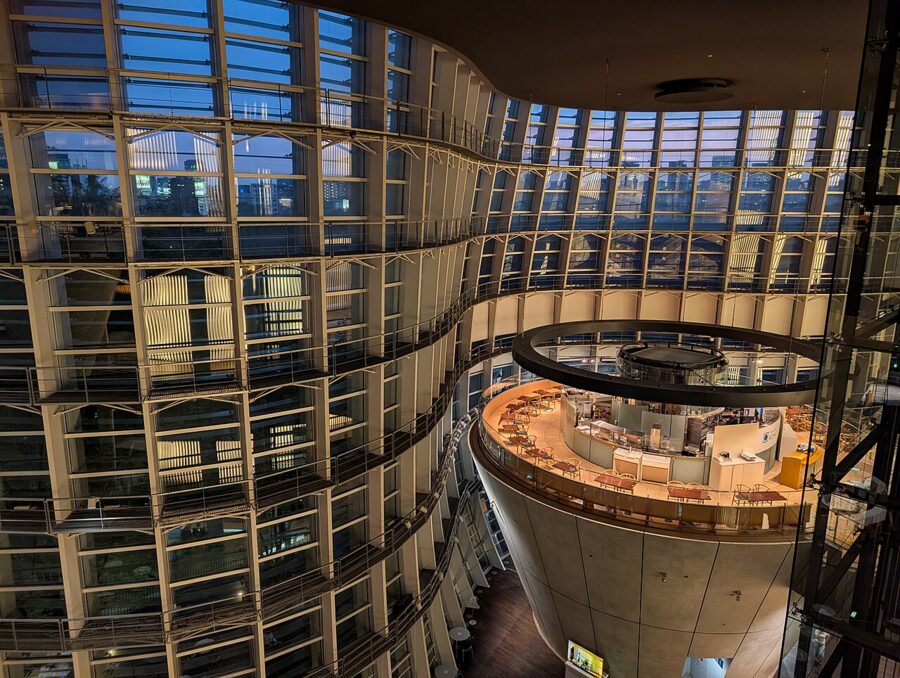
The National Art Center, Tokyo (国立新美術館) opened in 2007 and is the only national art centre in Japan without a collection. Its 14,000 square metres of galleries are filled two ways: special exhibitions it organises itself, and shows by artists’ associations that rent its ten big galleries. The association shows are what newcomers miss, whole floors of painting, calligraphy and sculpture with a small ticket at each door; the 119th Nitten runs until 22 November 2026.
Of the special exhibitions, Masterpieces of the Renaissance from the Musée du Louvre runs until 13 December, and Shojo Manga Infinity, on the girls’ comics of Moto Hagio, Ryoko Yamagishi and Waki Yamato, until 8 February 2027. Go on a Friday or Saturday evening, when they stay open until 20:00.
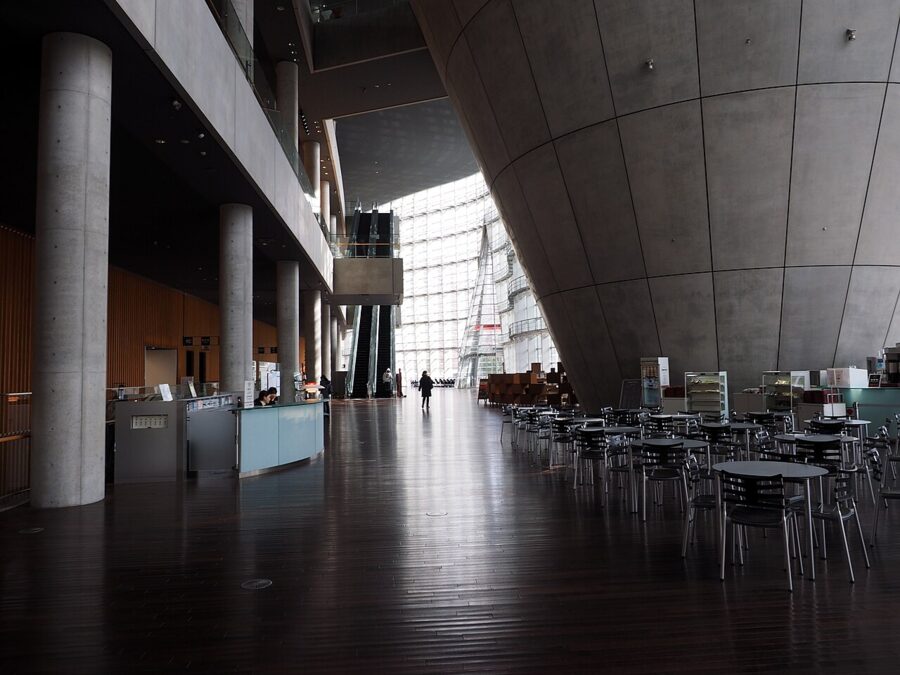
The third-floor art library is free, with about 140,000 Japanese publications and 26,000 in other languages. It opens 11:00 to 17:00 and does not lend, but on a wet Sunday it is one of the better free rooms in the city.
Suntory Museum of Art
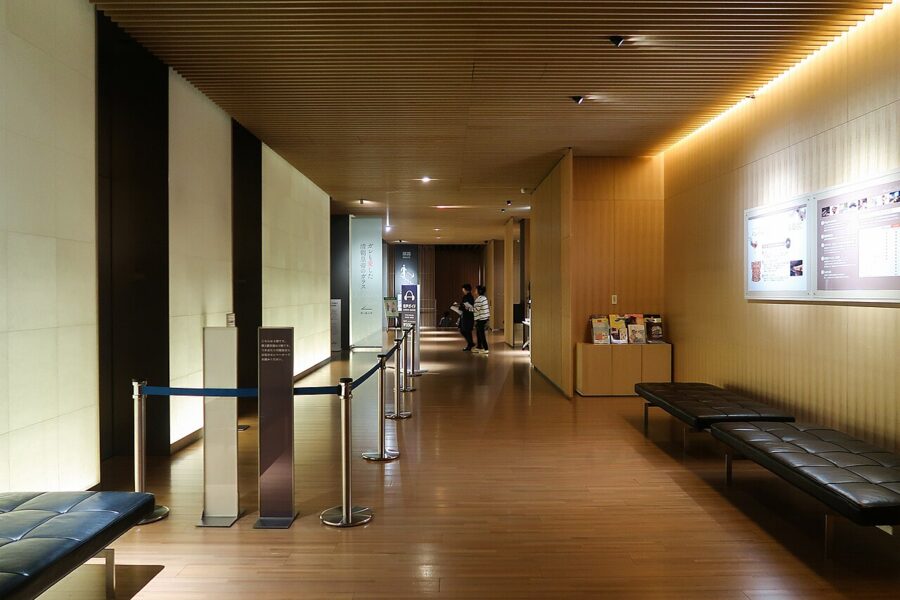
The Suntory Museum of Art opened in Marunouchi in 1961 and moved into Tokyo Midtown in 2007. Its subject is art in daily life: screens, lacquer, ceramics, glass and textiles. The shows are smaller than the other two, and so are the crowds.
The next exhibition, The Art of the Lotus Sutra: To Create Is to Pray, runs from 12 December 2026 to 7 February 2027. For its twentieth year in Roppongi, the museum has pencilled in the National Treasure scroll Frolicking Animals (Choju-giga) for September and October 2027, its first showing there since the 2007 opening.
The smaller rooms worth knowing
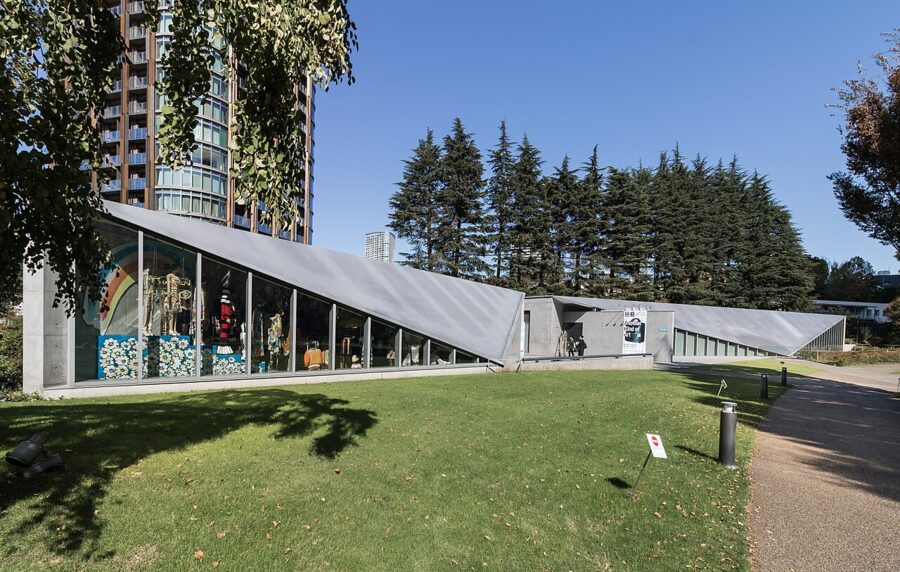
21_21 Design Sight, the low Tadao Ando building in the Midtown garden, runs design exhibitions from 10:00 to 19:00, closed Tuesdays; its show on the 13th-century essay Hojoki and small buildings runs until 11 January 2027. Fujifilm Square, the company’s showroom in Midtown since 2007, has photography exhibitions and a small photo history museum.
Sen-oku Hakuko Kan Tokyo, a quiet museum at Roppongi 1-chome, needs no booking; its exhibition on the origins of tea-ceremony objects runs until 13 December 2026. On the 52nd floor of Mori Tower, the Mori Arts Center Gallery takes the big popular shows, currently one on the volleyball manga Haikyu!!.
Roppongi Hills, Tokyo Midtown and Azabudai Hills, beyond the shops
All three have luxury shops, and you can skip that part. What makes them useful if you live or work nearby is the gardens, the views and the free places to sit. Two are by Mori Building and one by Mitsui Fudosan, and the two older ones stand on Edo-period estates of two branches of the Mori (毛利) clan, no relation to the developer’s Mori (森).
Roppongi Hills
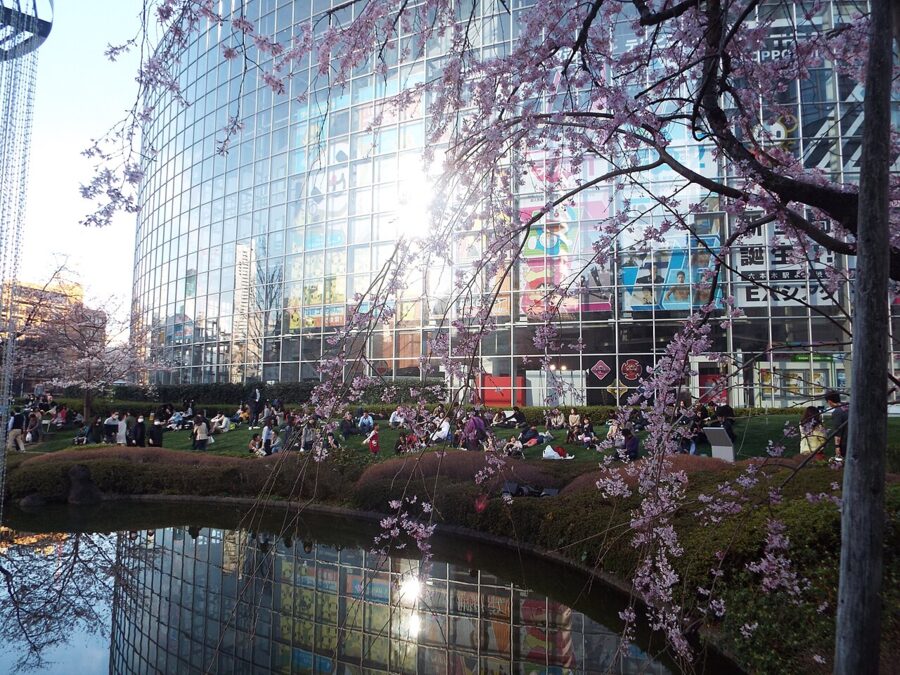
Roppongi Hills opened in April 2003 after about seventeen years in the making. At its centre is Mori Tower, 54 floors and 238 metres, Mori Building’s own head office. Around it are the TV Asahi headquarters by Fumihiko Maki, the Grand Hyatt Tokyo, a cinema, residential towers and Roppongi Hills Arena, an open-air stage for free events.
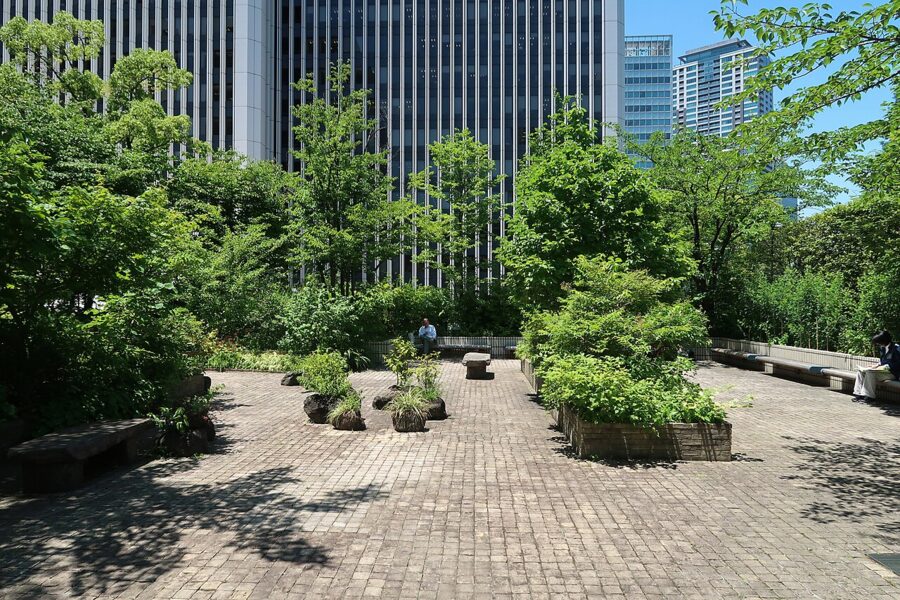
The quiet part is Mohri Garden, about 4,300 square metres behind the tower. This was the residence of the Mori lords of Chofu, and General Nogi Maresuke was born on the estate; later came a lawyer’s mansion, a whisky factory and TV Asahi’s offices. Go on a weekday morning, when it is office workers with coffee.
Out front on 66 Plaza is Maman, Louise Bourgeois’s giant bronze spider, where half of Tokyo seems to arrange to meet. Keyakizaka-dori, 400 metres of zelkova trees down the south side, carries the winter illuminations.
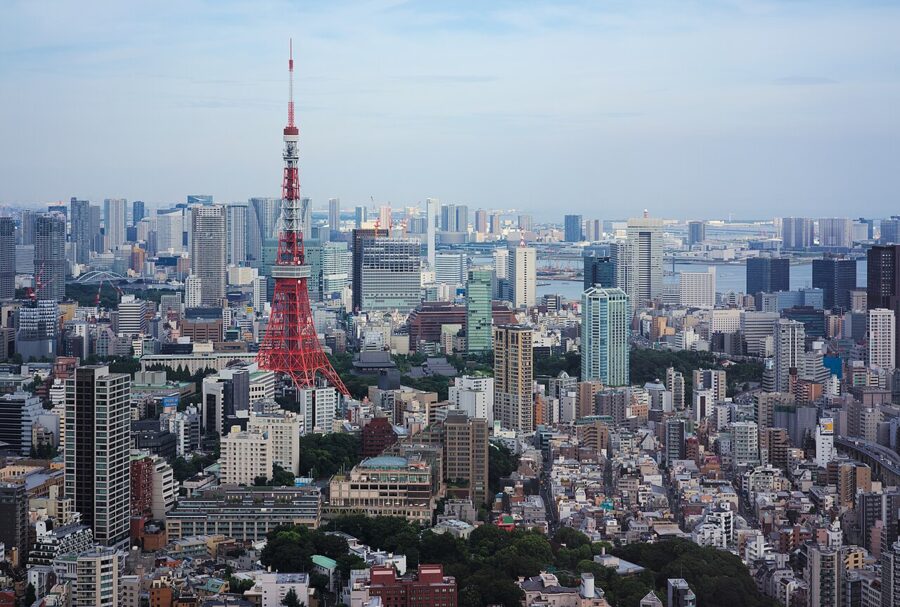
Tokyo City View, the indoor deck on the 52nd floor, is about 250 metres above sea level and open 10:00 to 22:00. As of November 2026 an adult ticket is ¥2,400 at the counter or ¥2,200 online, with a Le Petit Prince exhibition until 14 February 2027. The rooftop Sky Deck is closed “until further notice”, whatever older guides say.
Tokyo Midtown
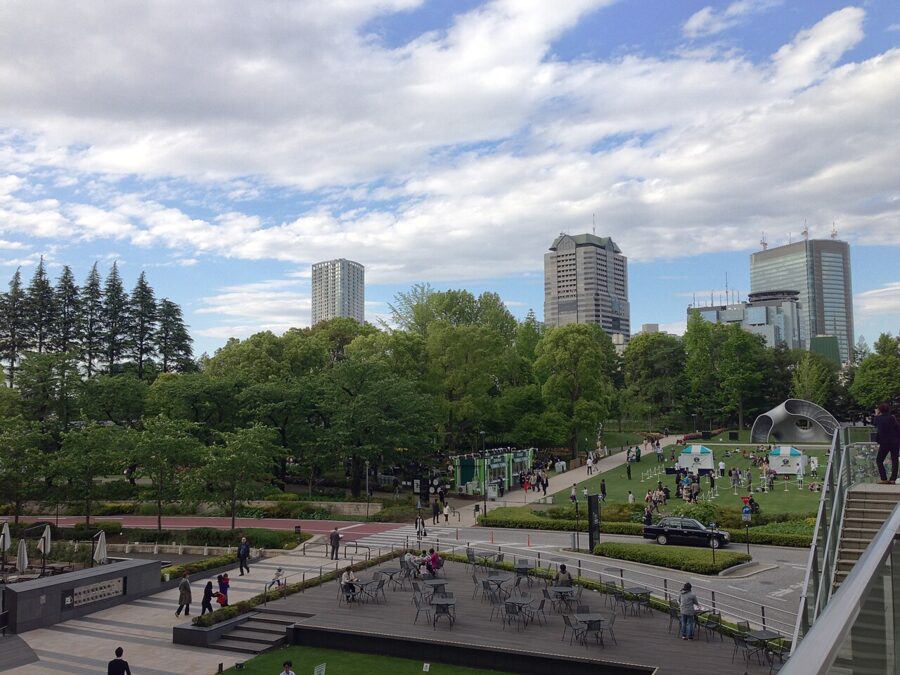
Tokyo Midtown opened on 30 March 2007 on the old Defense Agency headquarters site, vacated in 2000. Before that the land was the estate of the Mori lords of Hagi from 1641 to 1871, then army barracks, then housing for American officers. Midtown Tower, 248 metres, has offices below and The Ritz-Carlton, Tokyo at the top.
What matters for daily life is the garden, with cherry trees moved here during construction, which is the best place in Roppongi to eat a lunch bought downstairs. Downstairs includes a Toraya shop and cafe; Toraya was founded in Kyoto in the sixteenth century, and a box of its yokan is the safe answer to most questions of office gift giving.
From 5 December 2026 to 23 February 2027, Midtown runs its outdoor ice rink, billed as Tokyo’s largest. Billboard Live Tokyo, on the fourth floor of the Garden Terrace, is a dinner-and-concert venue.
Azabudai Hills
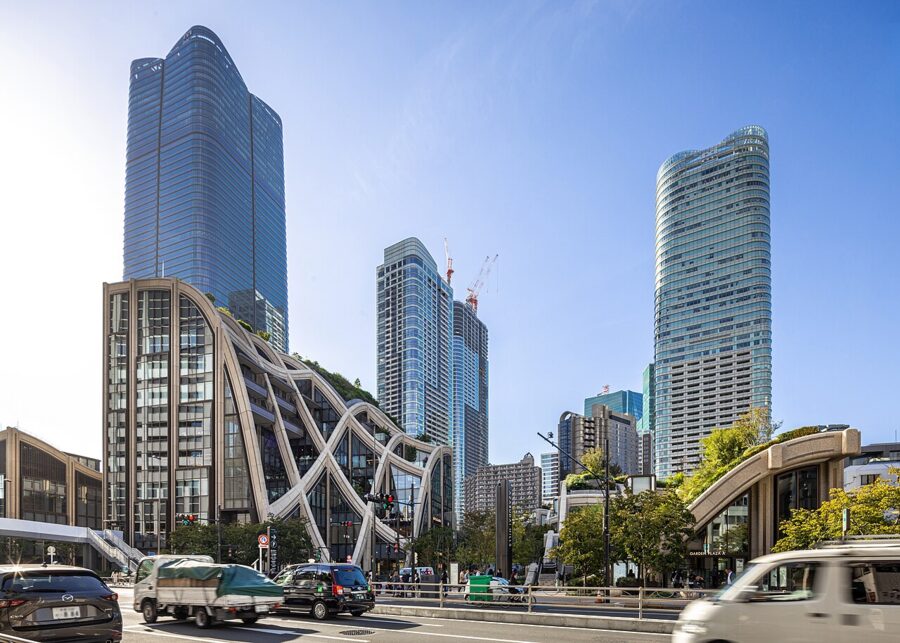
Azabudai Hills opened on 24 November 2023. The 8.1-hectare site has about 24,000 square metres of planting, five times what was there before, according to the developer. At its centre is a plaza of about 6,000 square metres with a lawn, water and an orchard slope of satsuma mandarins and blueberries.
Above it rises Mori JP Tower, 64 floors and about 330 metres, the tallest building in Japan when it opened. Below are the Azabudai Hills Market of food shops, a gallery showing a Kojima Productions anniversary exhibition until 20 December 2026, the Janu Tokyo hotel and a Keio University preventive medicine centre.
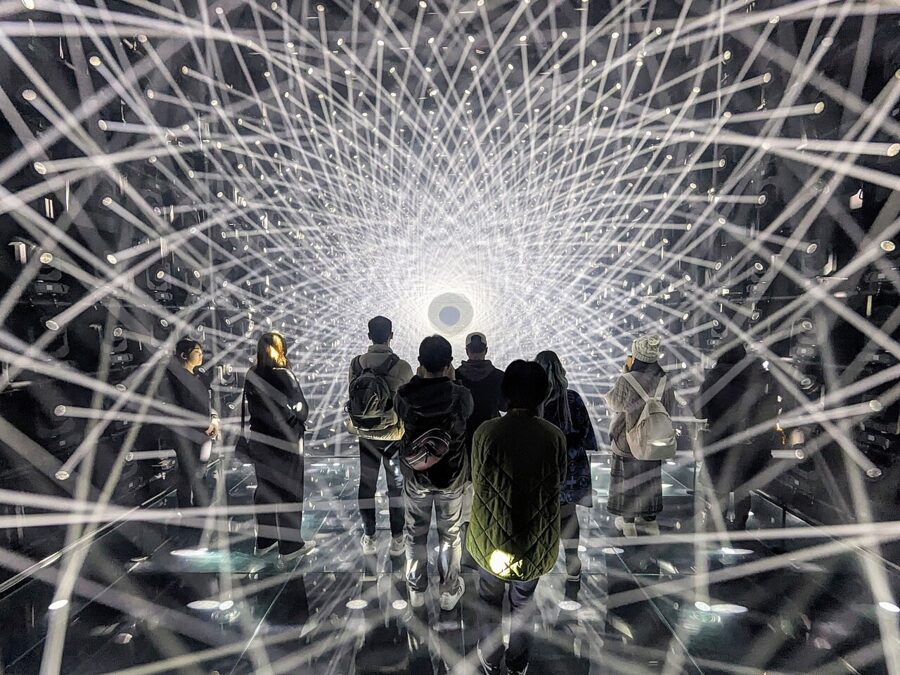
teamLab Borderless tickets are for a set date and time, sold online only, with dynamic pricing for adults, so check the official site rather than any figure you read. When visitors come, book them a weekday morning slot weeks ahead and send them while you are at work.
Nights out: what the nightlife is like now
Roppongi’s reputation was made after the war, when bars and shops for the occupation forces grew up around the old barracks. In the 1960s celebrities came to eat, in the 1980s there were dozens of discos, and after the bubble many became karaoke bars and hostess clubs. The developments of 2003 and 2007 changed the day far more than the night.
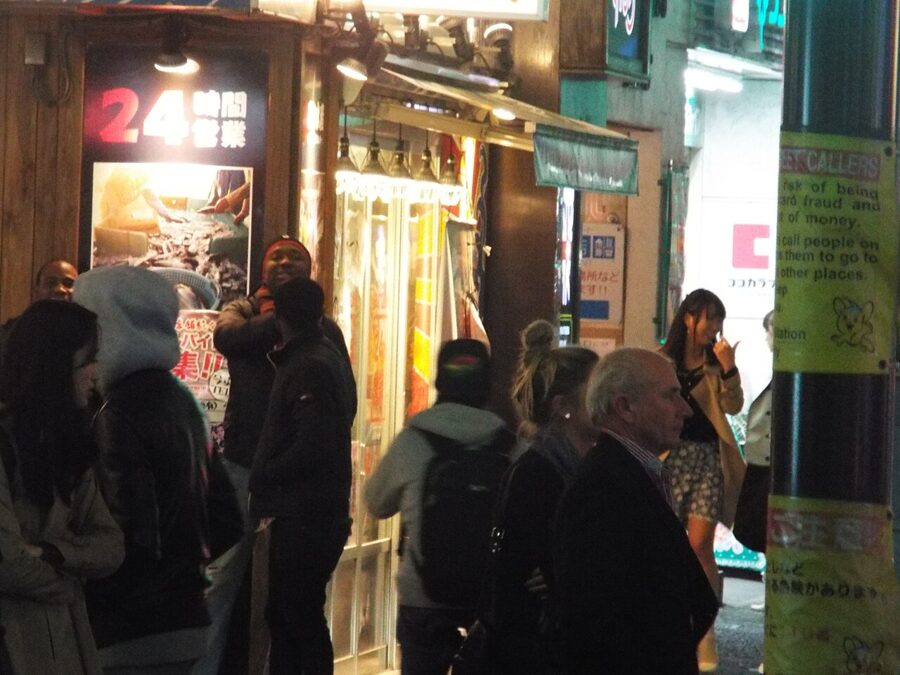
Today the nightlife splits in two. In and around the three developments, a night out means hotel bars, restaurants, concerts and museums open until ten. On Gaien-higashi-dori south of the crossing and the lanes off it, it means clubs, bars aimed at foreigners, hostess clubs and the touts who work the pavements for them, busiest on Friday and Saturday.
What to avoid
Is Roppongi safe? By world-city standards, yes, at any hour on the street. The risk is specific: being separated from your money in a bar. The UK government’s travel advice for Japan, updated in August 2026, says Japanese police treat Roppongi, with Kabukicho, Shibuya and Ikebukuro, as a high-risk area for drink spiking and credit card fraud, with losses from hundreds to tens of thousands of pounds.
- Never follow a tout. Street touting, kyakuhiki (客引き), is illegal in Tokyo, and a “free drink” or “just have a look” is how most disputed bills begin.
- See the prices first. A seating charge is normal in many Japanese bars; a bill ten times the menu is not. For clubs, confirm the entry fee at the door.
- Watch your drink and pay as you go. Never leave a glass unattended or hand over a card to open a tab you cannot see.
- Carry one card. Leave the spares and most of the cash at home.
If a bill is disputed, do not argue or sign anything. Call the police on 110; Azabu Police Station covers the area.
Better nights
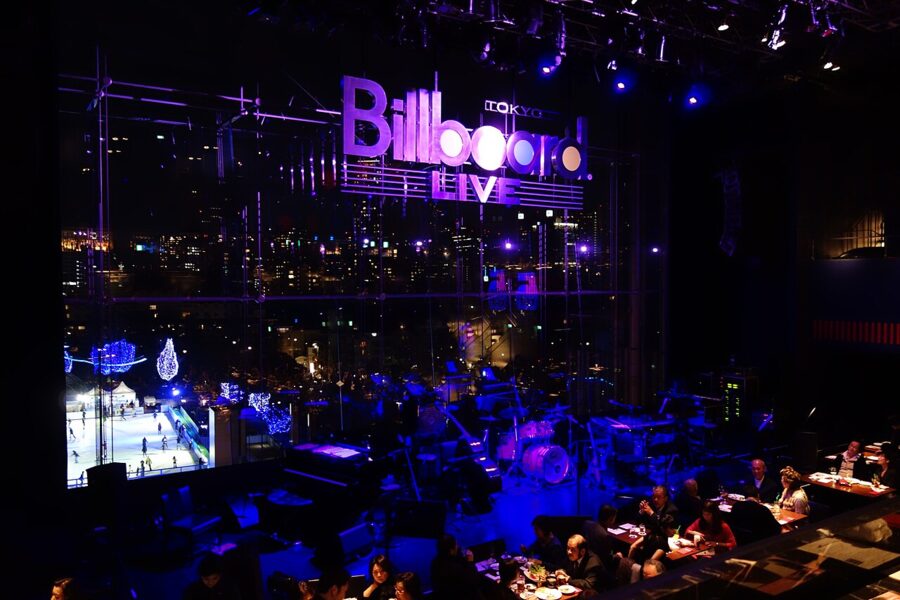
The good version of a Roppongi night is a museum at eight, a drink and a train home. For music, Billboard Live Tokyo is the comfortable seated option, and EX Theater Roppongi, a 920-seat hall near Roppongi Hills opened in 2013, takes concerts and stage shows. For one quick drink, the area has its share of tachinomi, or standing bars, cheap, fast and nowhere near a tout.
One correction to older guides: the Tokyo International Film Festival, long centred on the Roppongi Hills cinemas, now runs in Hibiya, Yurakucho, Marunouchi and Ginza. Its 39th edition was held there from 26 October to 4 November 2026.
Living or working nearby
The offices
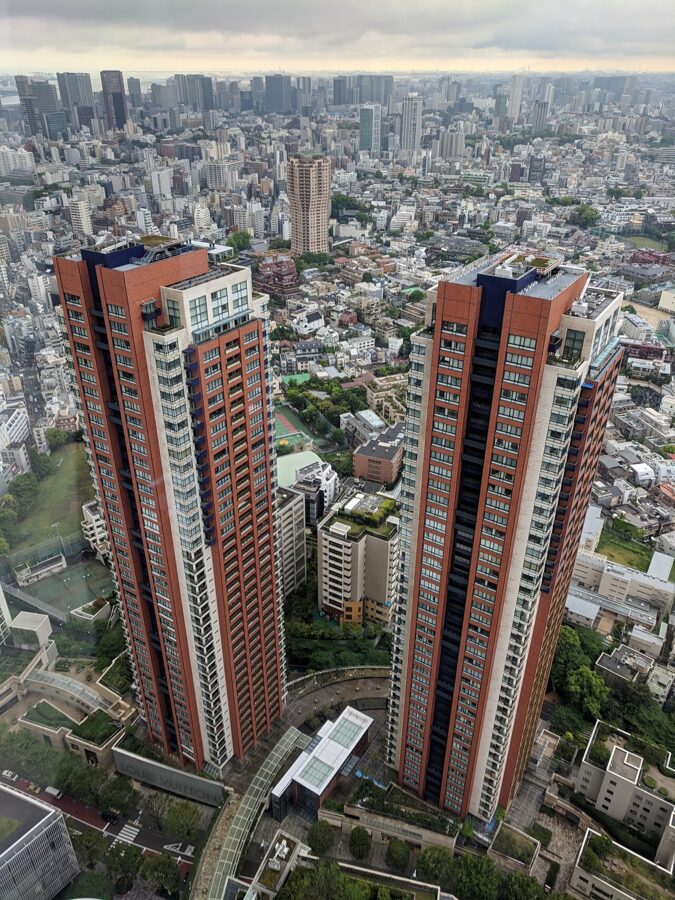
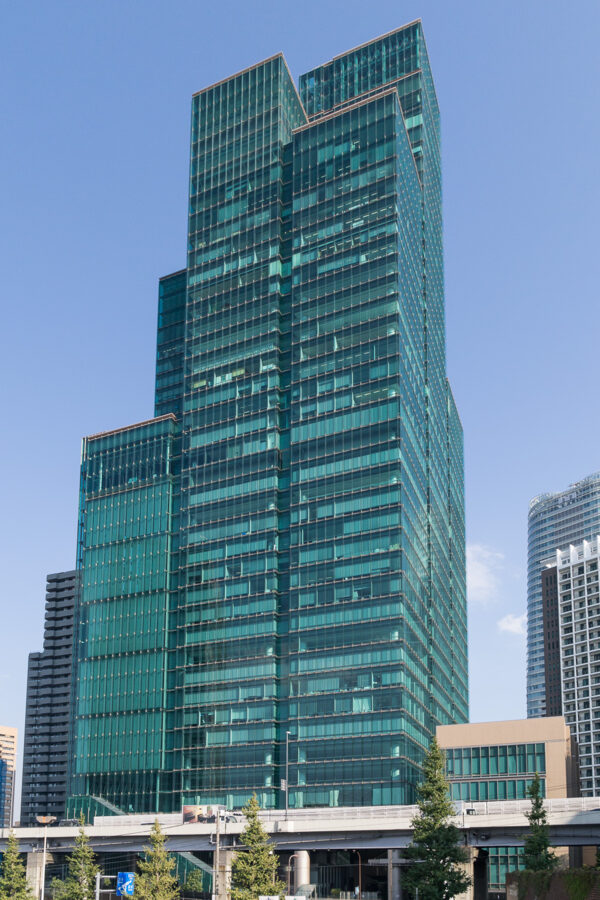
A job “in Roppongi” is most likely in one of a handful of towers: Mori Tower, Midtown Tower, Izumi Garden Tower at Roppongi 1-chome, the Ark Hills buildings or Mori JP Tower. They lean towards finance, technology, media and the Japan offices of foreign companies. Several connect directly to a station, which matters in a district of hills and rain.
The lunch rush in the Hills and Midtown basements runs from about noon to one, and by seven the crowd heading for the station meets the one heading out. If the area is your office rather than your neighbourhood, the main daily decision is which exit keeps you out of the weather.
What it costs to rent here
A Roppongi address mostly means a tower flat or an older apartment block on a side street. These are average asking rents for apartment buildings near each station, on listings as of 10 October 2026:
| Near | Studio | 1LDK, 2K or 2DK | 2LDK, 3K or 3DK |
|---|---|---|---|
| Roppongi | ¥123,000 (about $770) | ¥266,000 (about $1,660) | ¥470,000 (about $2,940) |
| Azabu-Juban | n/a | ¥246,000 | n/a |
| Ebisu | ¥121,000 | ¥231,000 | ¥348,000 |
| Naka-meguro | ¥98,000 | ¥202,000 | ¥304,000 |
Three bedrooms or more near Roppongi Station average about ¥996,000 a month, which says more about the towers at Roppongi Hills and Azabudai Hills than about family housing. Wards further west, such as Suginami, cost far less. Many people who work here live down the Hibiya Line toward Naka-meguro, or beyond it on the Toyoko Line in places like Jiyugaoka, and trade a change of trains for floor space.
Schools, embassies and the expat infrastructure
Schools bring many foreign families to this side of the city. The British School in Tokyo moved its primary years, Nursery to Year 6, into a campus at Azabudai Hills on 28 August 2023, and the American School in Japan runs its Early Learning Center for nursery and kindergarten at Roppongi 6-chome. Nishimachi International School, founded in 1949 and teaching through grade 9, is a short walk south in Moto-Azabu. Fees are high at all three, so ask whether a school allowance is in the package before you sign.
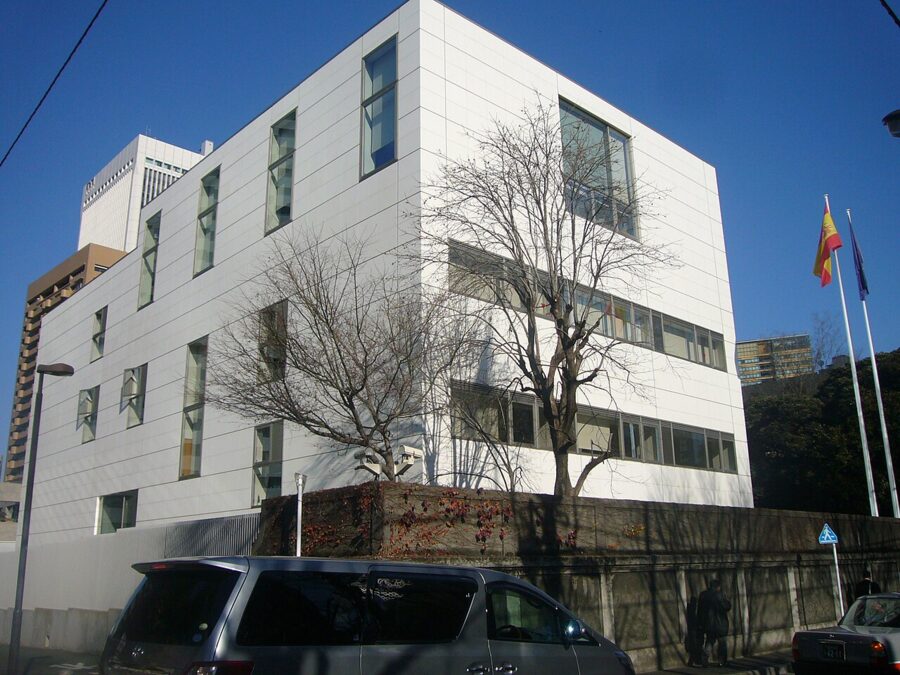
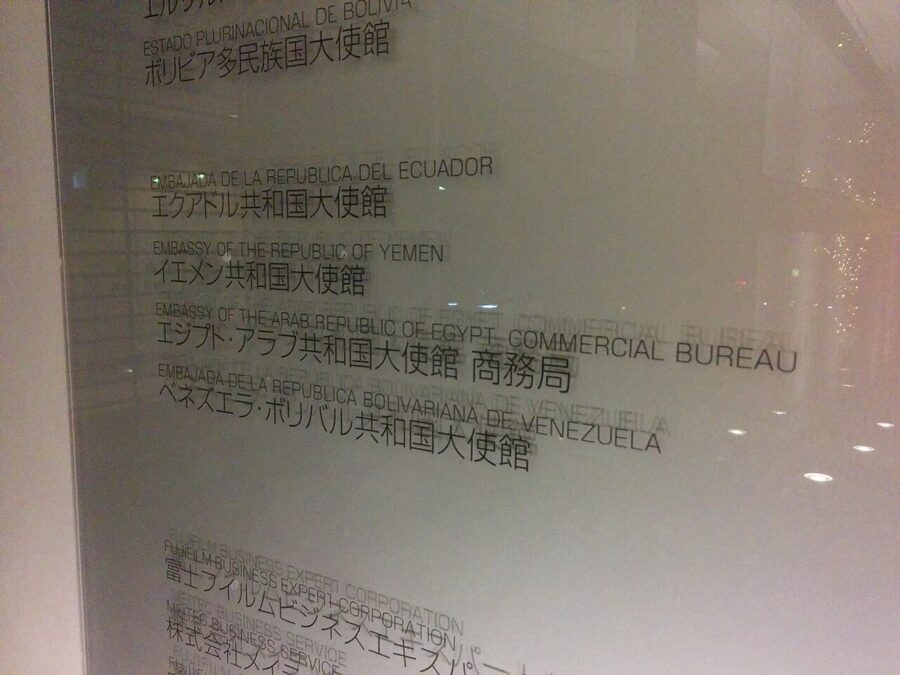
Embassies are part of the street furniture. Spain’s is at Roppongi 1-chome, and in Nishi-Azabu some office buildings list embassies by the door where others list dentists.
What is about to change
Mori Building and Sumitomo Realty plan to rebuild about ten hectares of Roppongi 5-chome, east of Roppongi Hills, with towers of 327 and 288 metres. The city plan was approved in April 2024, and the area includes the International House of Japan on Toriizaka. In May 2026 Mori Building said completion would slip past the fiscal 2030 target, so expect hoardings on that side of the crossing for years.
A weekday evening and a weekend day
Weekday: after work, any night but Tuesday
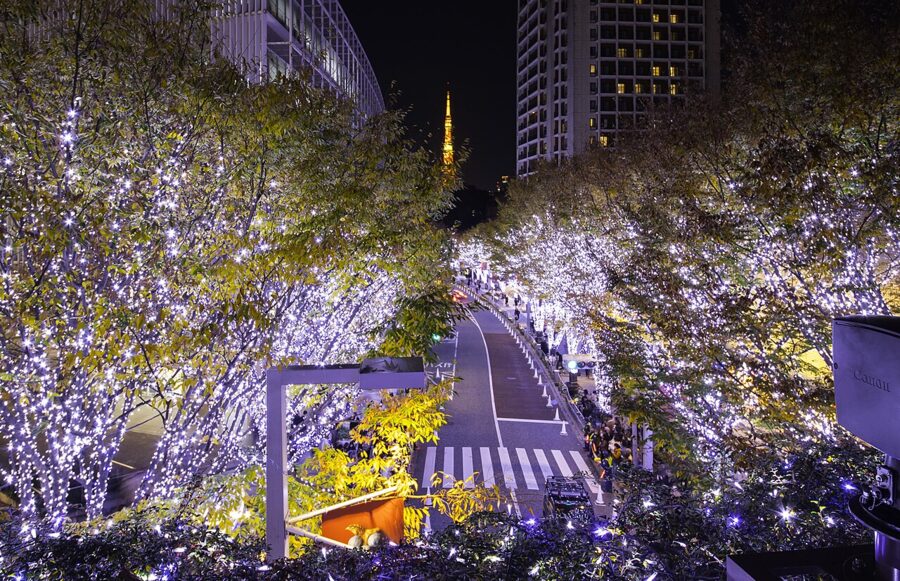
Take the Hibiya Line to Roppongi and leave by exit 1C at about seven. With the combined ticket bought online, go up to the Mori Art Museum first, then down one floor to Tokyo City View; last admission for both is 21:30. Come down by ten, walk Keyakizaka-dori and back past Mohri Garden, and finish at a standing bar near the crossing before the Hibiya Line home.
On a Friday, swap the first half for the National Art Center, open until 20:00, and end with a late show at Billboard Live.
Weekend: a Saturday on foot
Start at Roppongi-itchome Station with Hills Marche at Ark Hills. Walk past the Spanish embassy to Sen-oku Hakuko Kan, which opens at 11:00, then to Azabudai Hills for the orchard slope and lunch from the market; if you booked teamLab Borderless, this is the time.
In the afternoon, walk down to Azabu-Juban for coffee, climb Toriizaka past the International House of Japan, and cross Roppongi-dori to the National Art Center. Finish in the Midtown garden and Hinokicho Park as the light goes, and take the Oedo Line from exit 8. On the fourth Sunday of the month, swap Ark Hills for the antique market at Nogi Shrine, near the National Art Center.
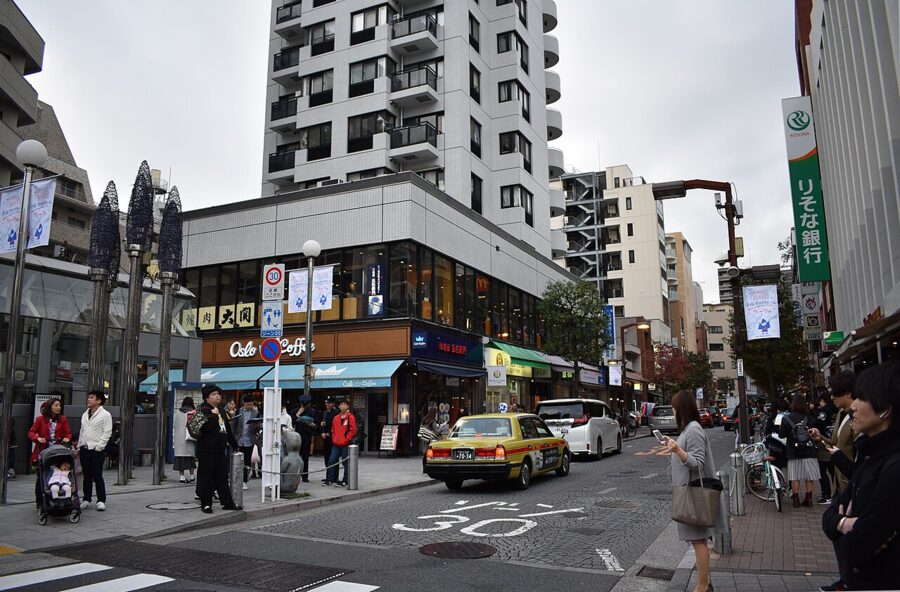
Quieter streets close by
Roppongi sits on a ridge, and almost every way out of it is downhill. The slopes are where the old residential district survives.
Nogizaka and Nogi Shrine
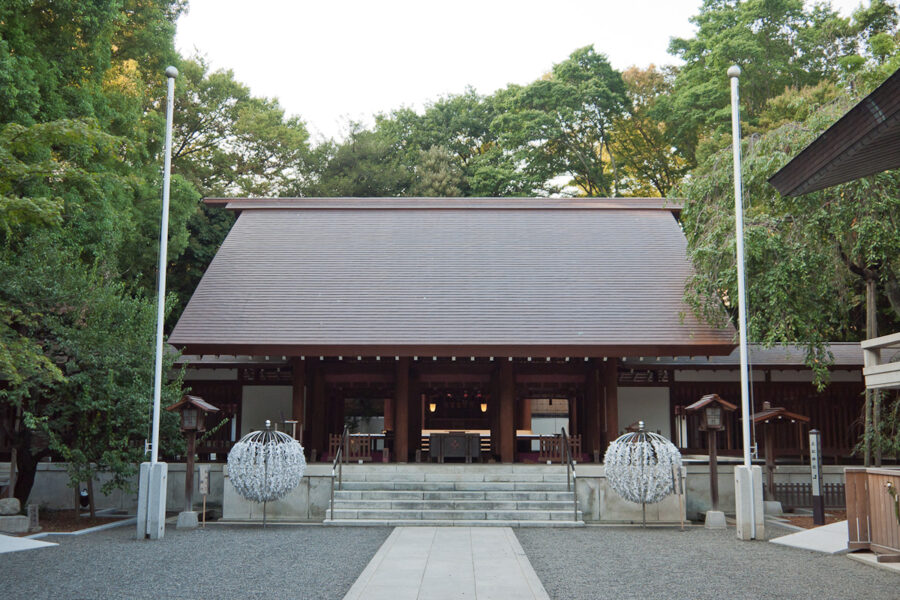
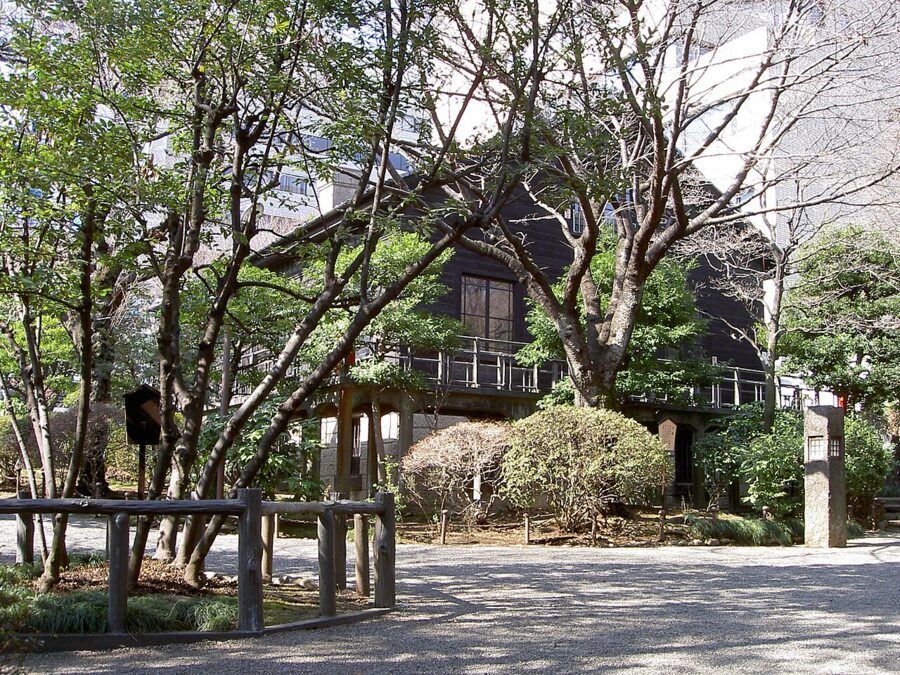
North of the National Art Center, Nogi Shrine honours General Nogi Maresuke, born on the land that is now Mohri Garden. On 13 September 1912, the day of the Emperor Meiji’s funeral, Nogi and his wife Shizuko killed themselves in their house here to follow the emperor in death. The shrine’s antique market fills the grounds, in principle on the fourth Sunday of each month from 9:00 to 16:00, except in rain.
Hinokicho Park
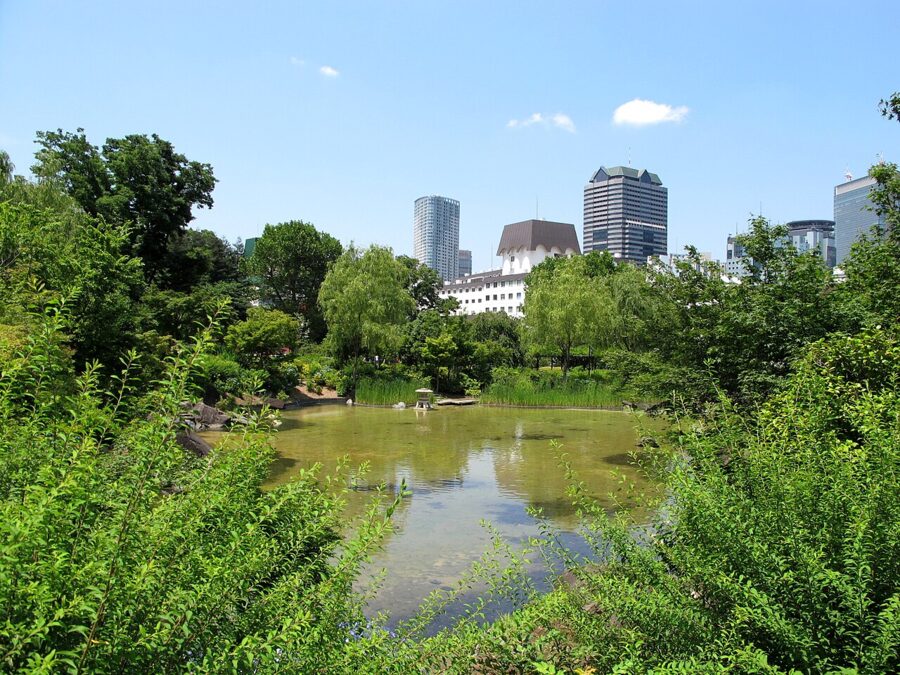
Behind Midtown, Hinokicho Park is a Minato ward park, not part of the development, and it feels like it. There is a pond garden, a playground, a basketball court and benches far enough from the shops to hear yourself think. It is the first place I would send anyone who says Roppongi has no quiet corners.
Toriizaka and Imoarai-zaka
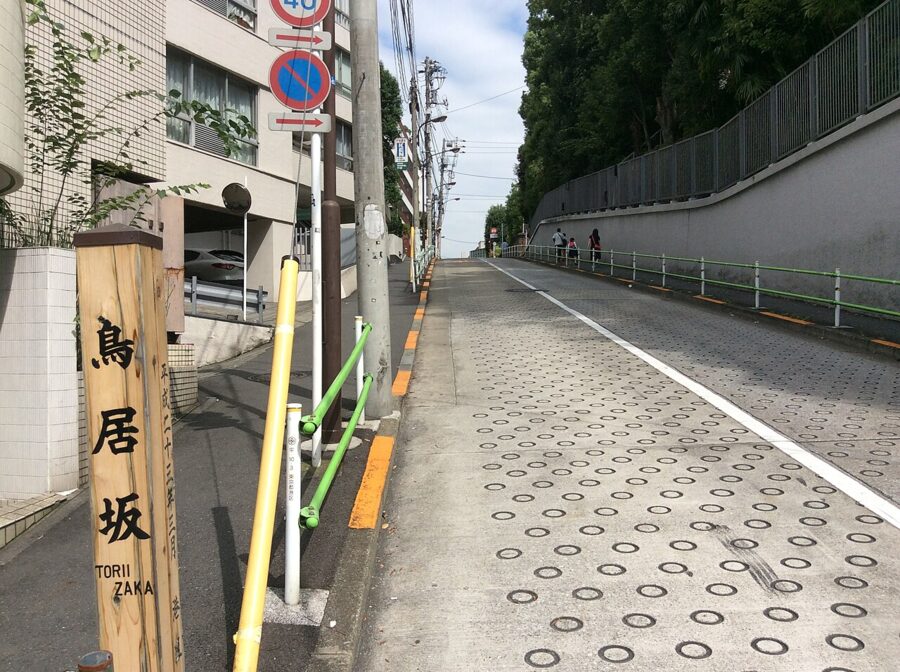
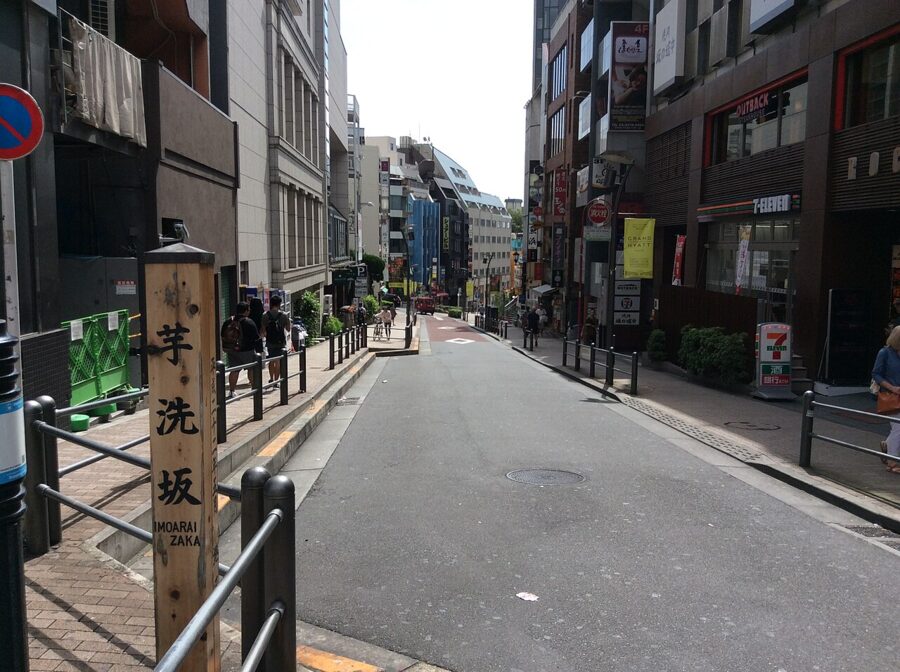
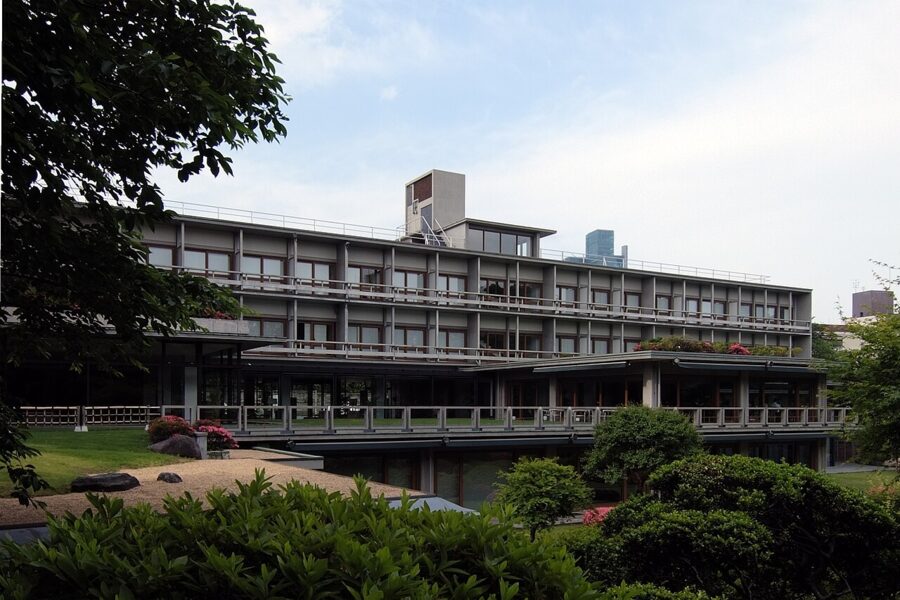
Toriizaka is the gentlest way down to Azabu-Juban. Halfway along is the International House of Japan, by three leading post-war modernists, Maekawa Kunio, Sakakura Junzo and Yoshimura Junzo. Imoarai-zaka, the “potato-washing slope”, is the busier way down from near the crossing, lined with small restaurants. Both end at the Azabu-Juban shopping street, where Roppongi turns back into a neighbourhood.
Roppongi 1-chome
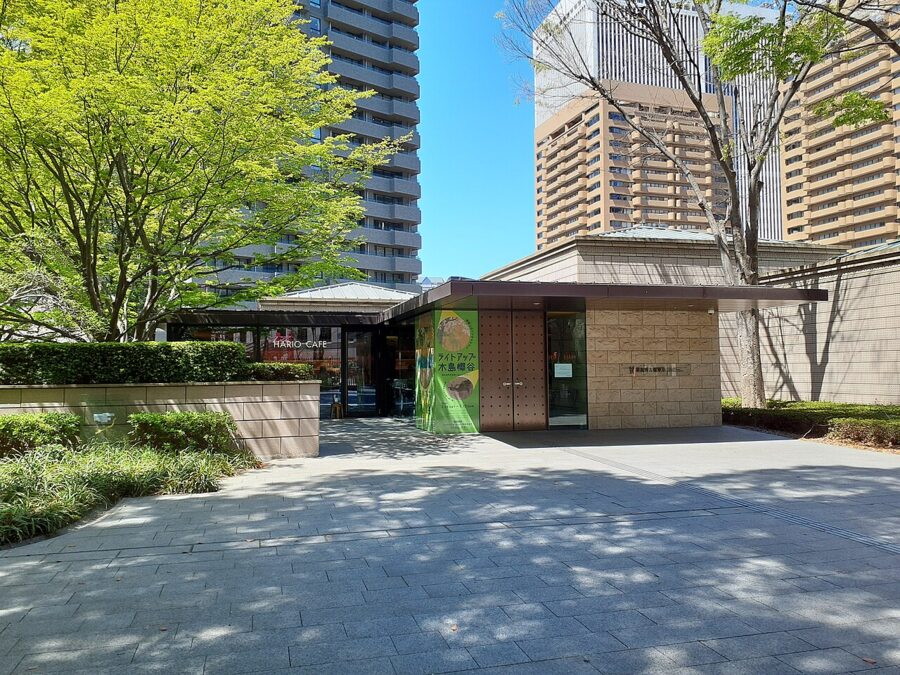
The north-east corner around Roppongi-itchome Station is offices, embassies and Ark Hills, and at weekends it goes very quiet. The lanes behind the Spanish embassy, Sen-oku Hakuko Kan and the Ark Hills gardens make a good hour’s walk. Suntory Hall, one of Tokyo’s main concert halls, is part of Ark Hills, and an evening concert there is another use of the district that has nothing to do with clubs.
Dates for the calendar
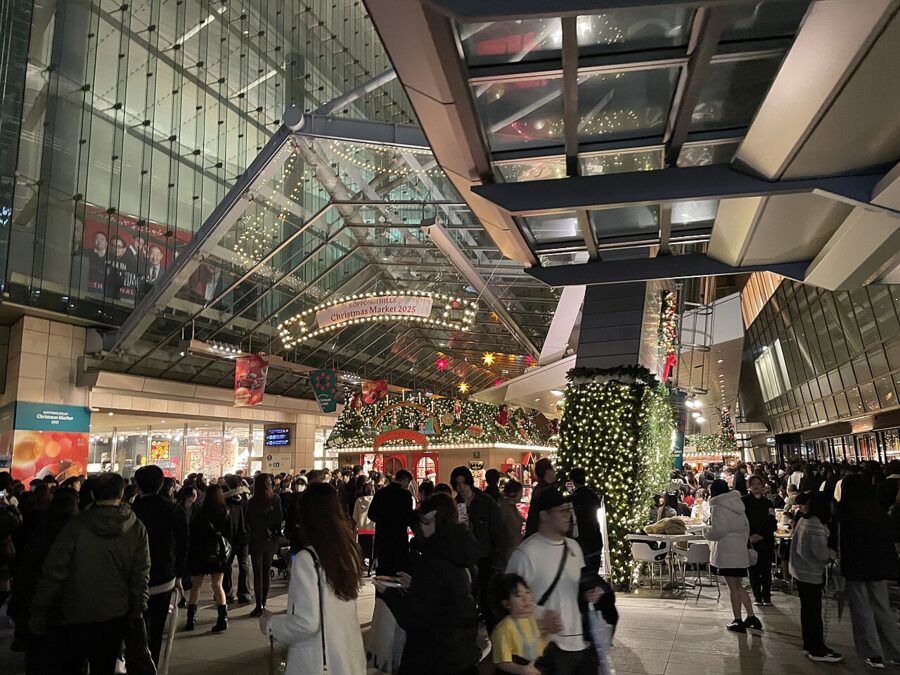
These are the organisers’ dates as of November 2026:
- Keyakizaka illumination: 5 November to 25 December 2026, 17:00 to 22:00.
- Roppongi Hills Christmas Market: 21 November to 25 December 2026, 11:00 to 21:00, at O-yane Plaza, in its twentieth year.
- Midtown ice rink: 5 December 2026 to 23 February 2027.
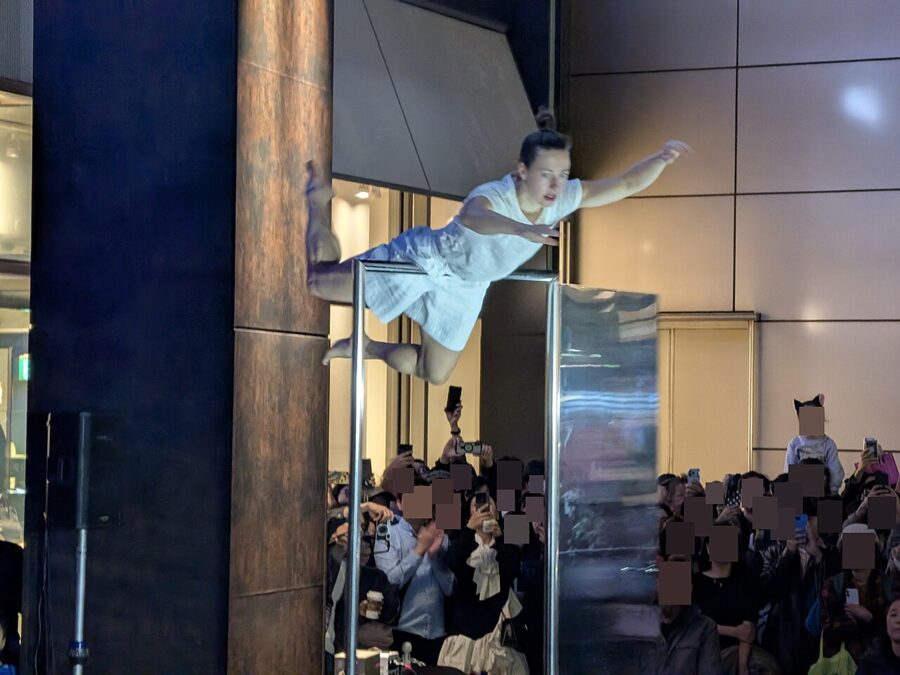
- Roppongi Art Night: the 2026 edition ran from 17:00 on 31 October to 6:00 on 1 November; the next date is not yet announced.
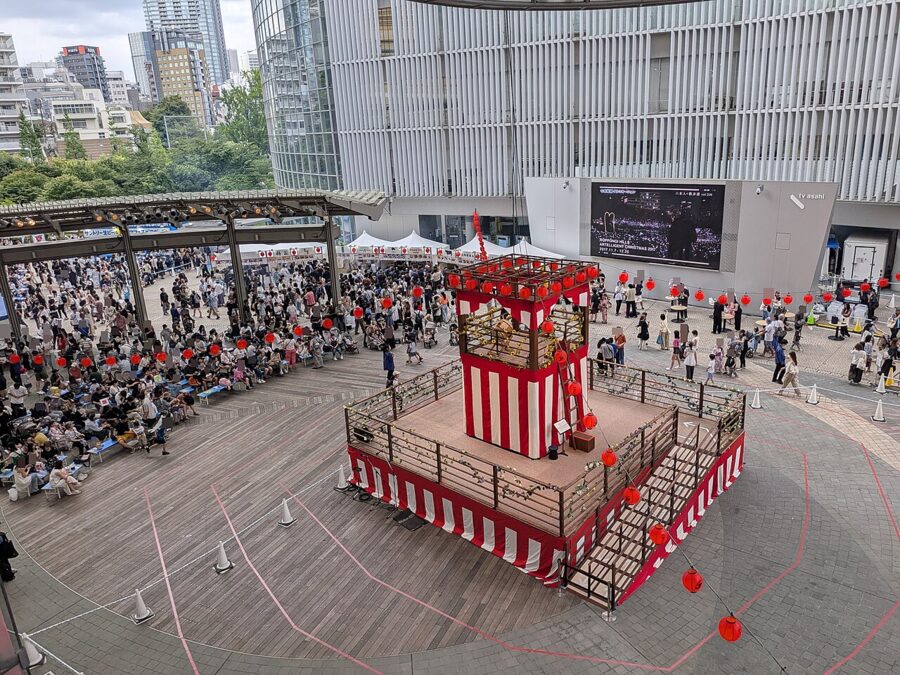
- Roppongi Hills Bon Odori: late August, at Roppongi Hills Arena.
- Mori Art Museum: closed for renovation from September 2027 to April 2028.
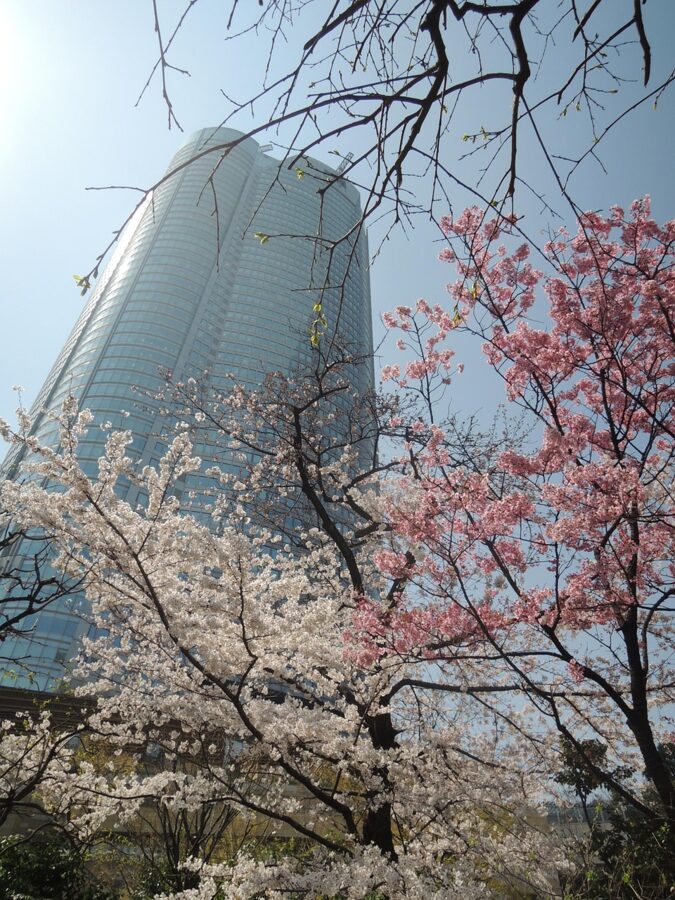
In spring, the cherry trees in Mohri Garden, along Roppongi Hills’ Sakurazaka and around the Midtown garden usually bloom in late March or early April. The weekday lunch hour beats the evening crowds.
That night in October is the exception. On an ordinary Wednesday the museum on the 53rd floor closes at ten, which is late enough. Go up after work, come down when they turn the lights off, walk to the station the long way past Mohri Garden, and leave the other shift to the people on the pavement.