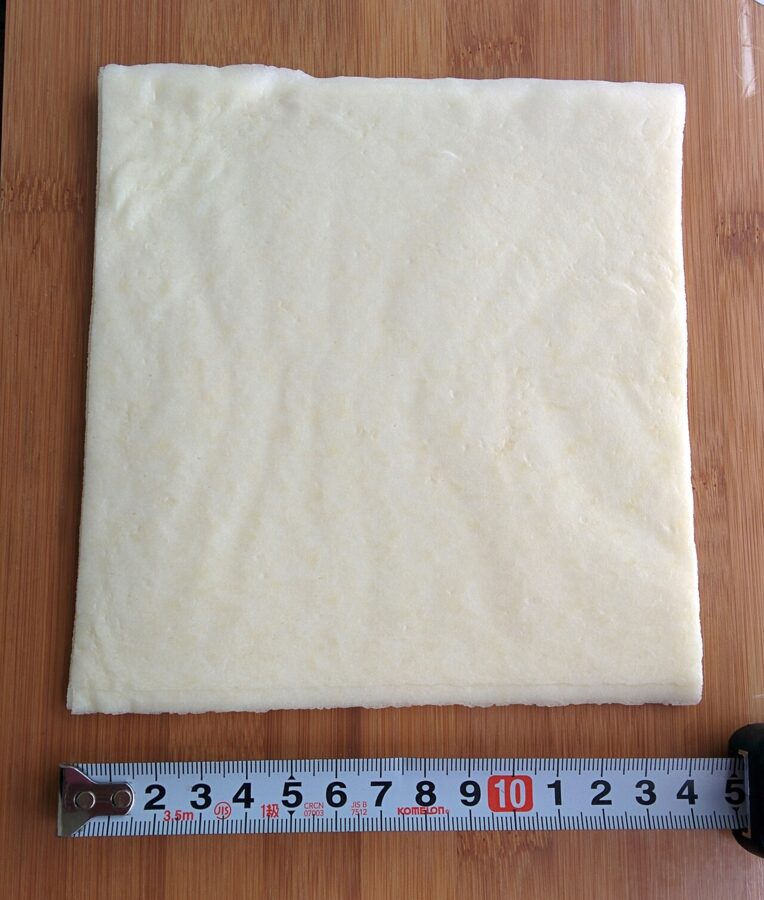
Japanese supermarkets sell spring roll wrappers in chilled packs of ten, in the case beside the gyoza skins, and the standard Japanese home recipe makes ten rolls to match. That tells you what harumaki (春巻き, “spring rolls”) are here: a weeknight dish, made at home, with a filling you could put together from one trip down the aisles.
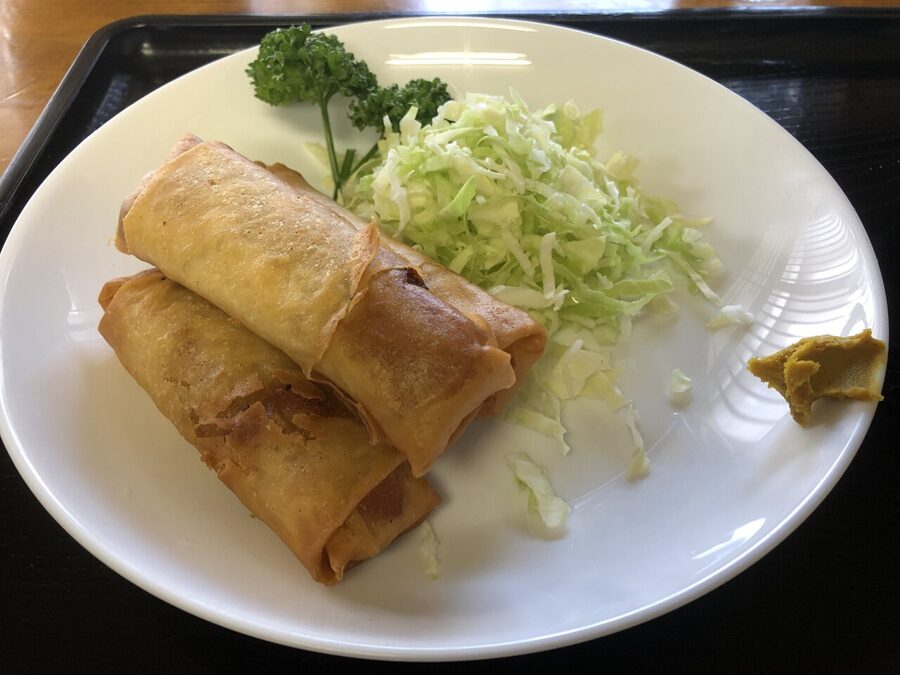
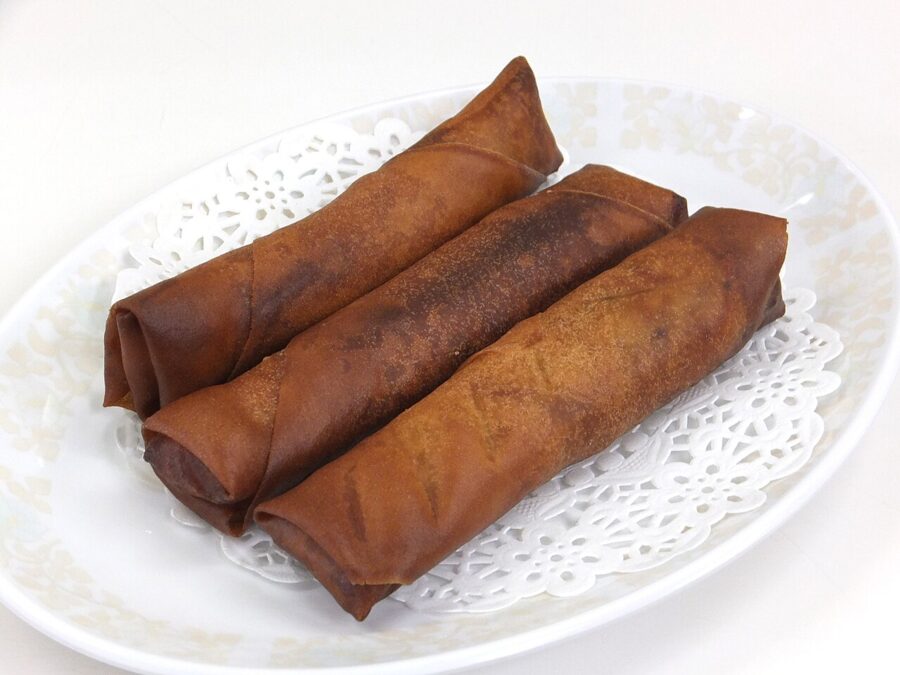
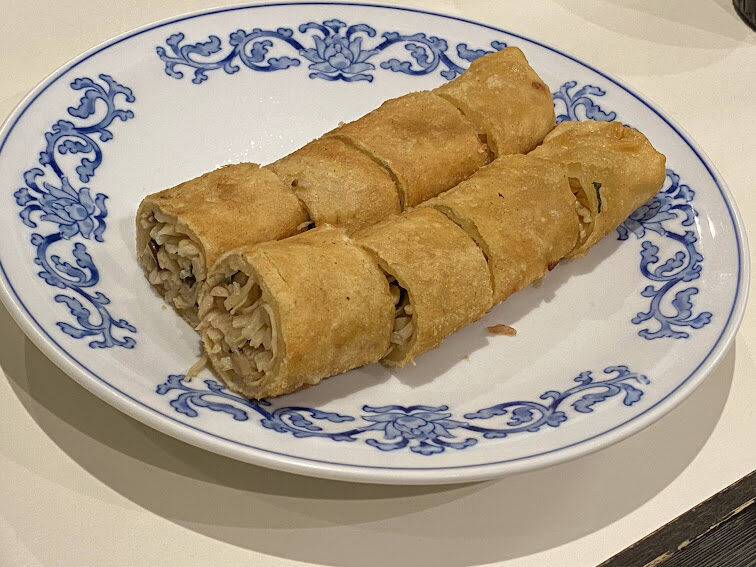
They came from China and changed on the way. The Japanese version is a thin, shattering wheat wrapper around stir-fried pork, bamboo shoot, shiitake and glass noodles, all bound in a glossy sauce thickened with potato starch. You bite through the crackle and the middle is hot, soft and saucy.
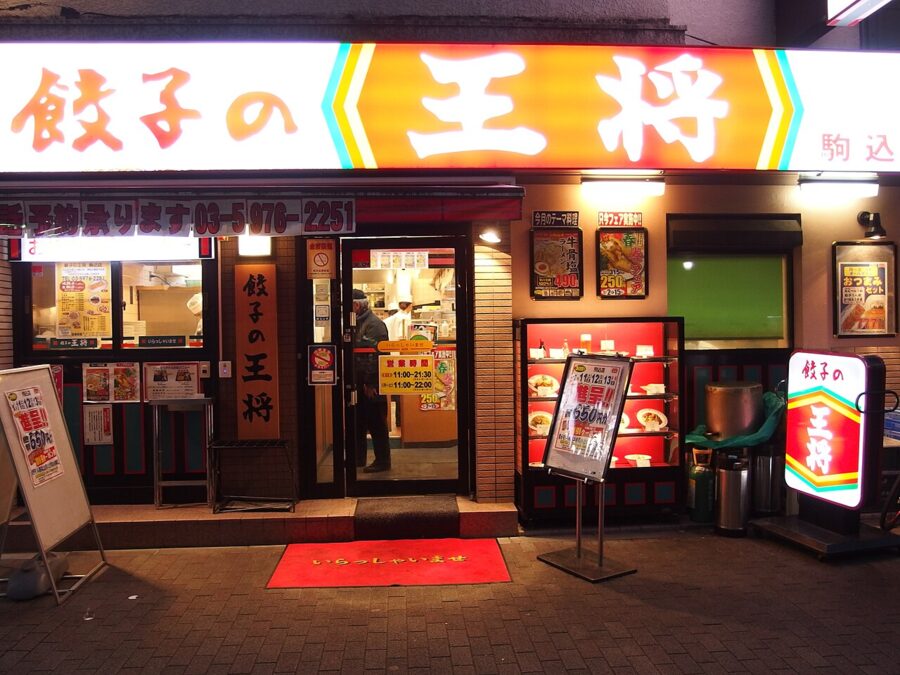
You will eat them long before you make them. They sit in supermarket bento, in set meals at the local Chinese diner, and on the menu at Gyoza no Ohsho, where a plate costs ¥352 (about $2.20) including tax on its eastern Japan menu as of November 2026. The ones you fry at home, in about an hour, beat all of them.
In this article7 parts
What makes them Japanese
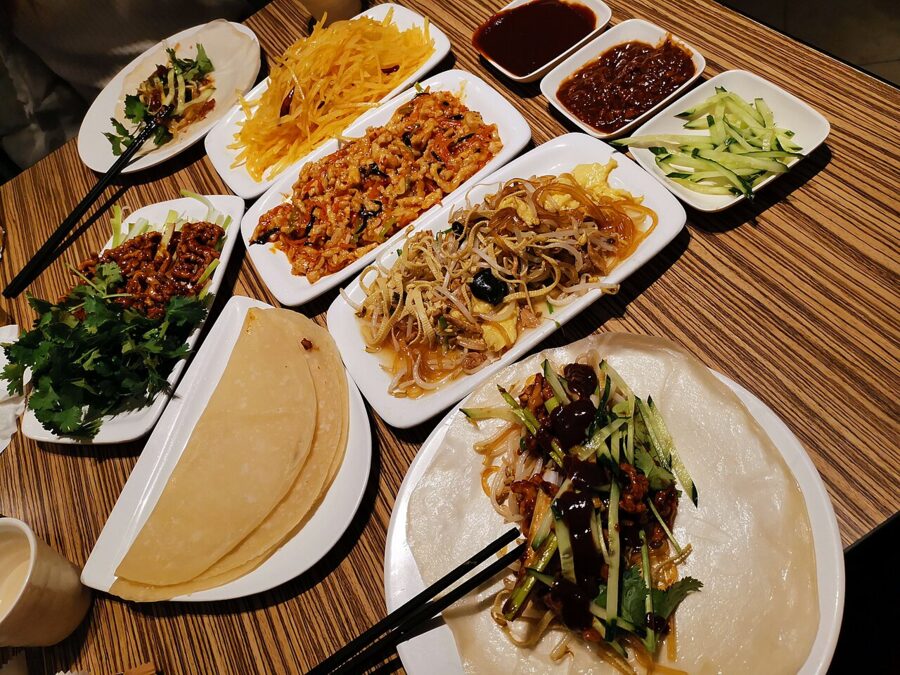
The name is a straight reading of the Chinese chunjuan (春卷). Japanese reference works link the dish to chunbing (春餅), thin pancakes rolled around fillings and eaten in China at lichun, the start of spring in early February, though nobody is sure how one became the other. In Japan the seasonal link has gone, and harumaki are a year-round side dish.
Against the Chinese originals
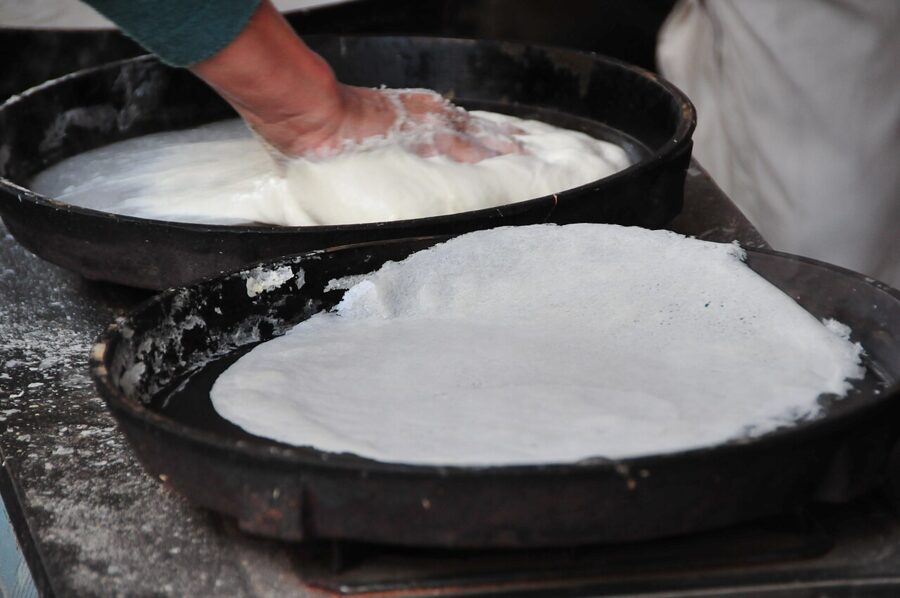
China has dozens of spring rolls. Dim sum rolls in Guangzhou and Hong Kong are slim and filled with shredded pork, bamboo shoot, shiitake and yellow chives. In the north you will find sweet ones filled with red bean paste. In Fujian and Taiwan the closest relative, runbing, is not fried at all, and its wrappers are made by hand by rubbing a wet ball of dough across a hot iron plate.
The Japanese harumaki is closest to the Cantonese roll, with three changes. It is fatter, sized to that standard square sheet. Green nira (garlic chives) or long onion usually replace the yellow chives. And the filling leans hard on two things: harusame glass noodles and an an (餡), the starch-thickened sauce that turns loose vegetables into a filling you can scoop.
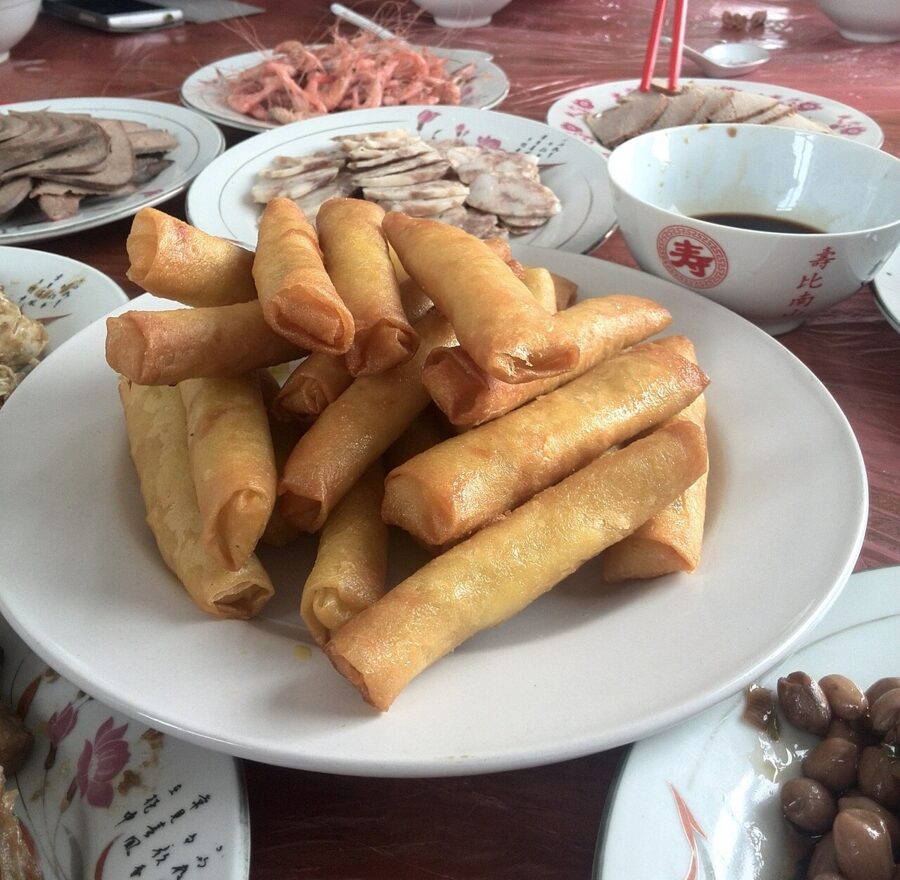
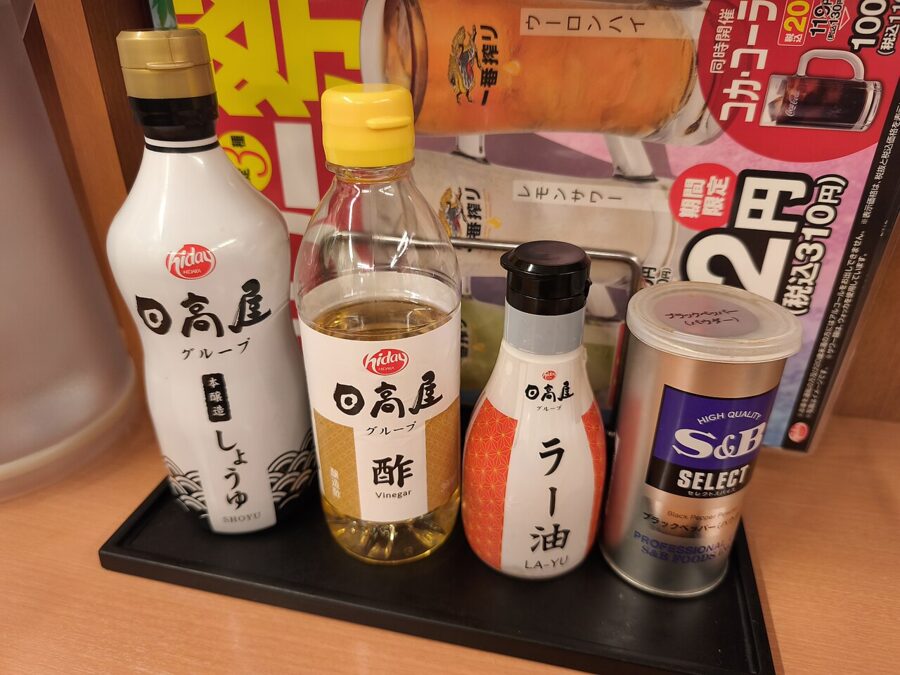
The sauce on the side changes too. Japan dips its harumaki in vinegar and soy sauce, with hot karashi mustard and sometimes a few drops of chilli oil. Plenty of people eat them plain, because the seasoning is already inside.
Egg rolls and the Vietnamese namesakes
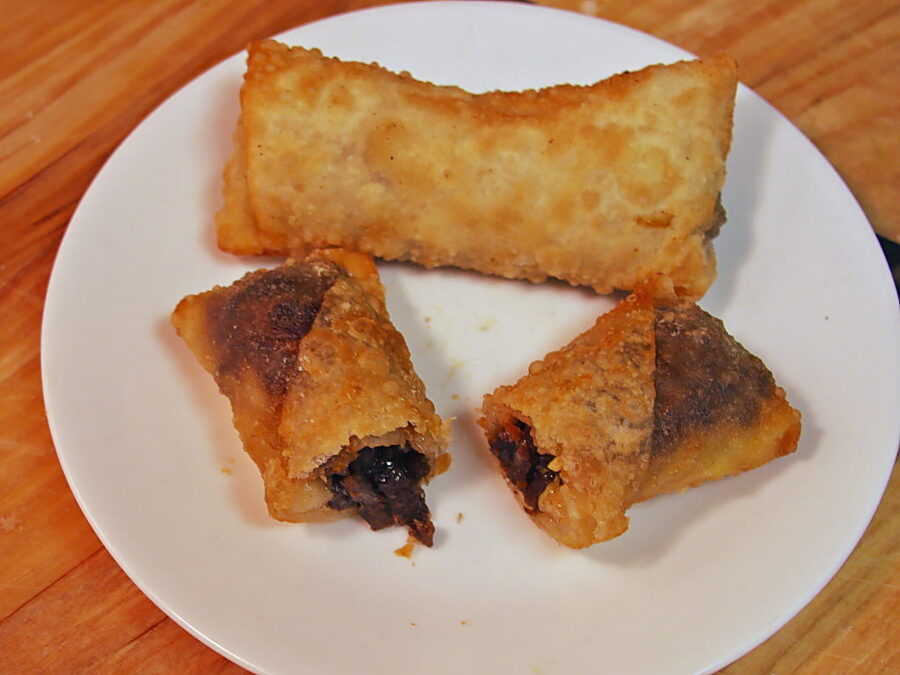
If you grew up with the American egg roll, the harumaki will seem small and delicate. The egg roll’s wrapper is thicker and fries into bubbles, the filling is mostly cabbage, and it comes with duck sauce or sweet-and-sour. A harumaki wrapper fries flat and thin and breaks like filo pastry, and the inside is wetter.
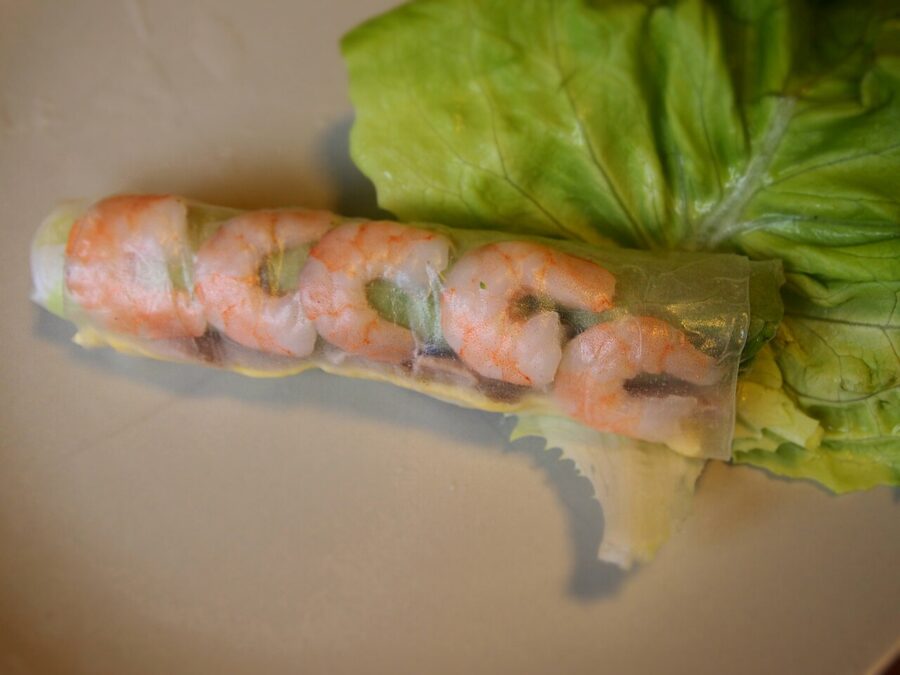
Vietnamese food borrows the same word in Japan. Nama-harumaki (生春巻き, “raw spring rolls”) are the rice-paper rolls of shrimp and herbs, eaten cold with a fish-sauce dip or a peanut sauce. Age-harumaki (揚げ春巻き) on a Vietnamese menu are fried rice-paper rolls. Neither uses wheat sheets, so check the pack says 春巻の皮, not ライスペーパー.
The Kyoto exception
In Kyoto, many of the old Chinese restaurants wrap their harumaki in a thin crepe of flour and egg, fill it with plenty of bamboo shoot, and cut it into bite-sized pieces. The egg wrapper came from a Chinese dish and spread mostly around Kansai, and the Kyoto kitchens made it lighter. Order it if you are in the city; it is a different dish under the same name.
The shopping list
Everything below is in an ordinary Tokyo supermarket. Japanese recipes use a 15 ml tablespoon, a 5 ml teaspoon and a 200 ml cup, smaller than an American cup. This makes ten rolls.
| What to buy | Label | Amount | Where it is |
|---|---|---|---|
| Spring roll wrappers | 春巻の皮 | 1 pack of 10 | Chilled case, next to the gyoza skins |
| Thin-sliced pork (leg or offcuts) | 豚もも薄切り / 豚こま | 150 g | Meat counter |
| Boiled bamboo shoot | たけのこ水煮 | 100 g | Vacuum packs, in the vegetable section or near the tofu |
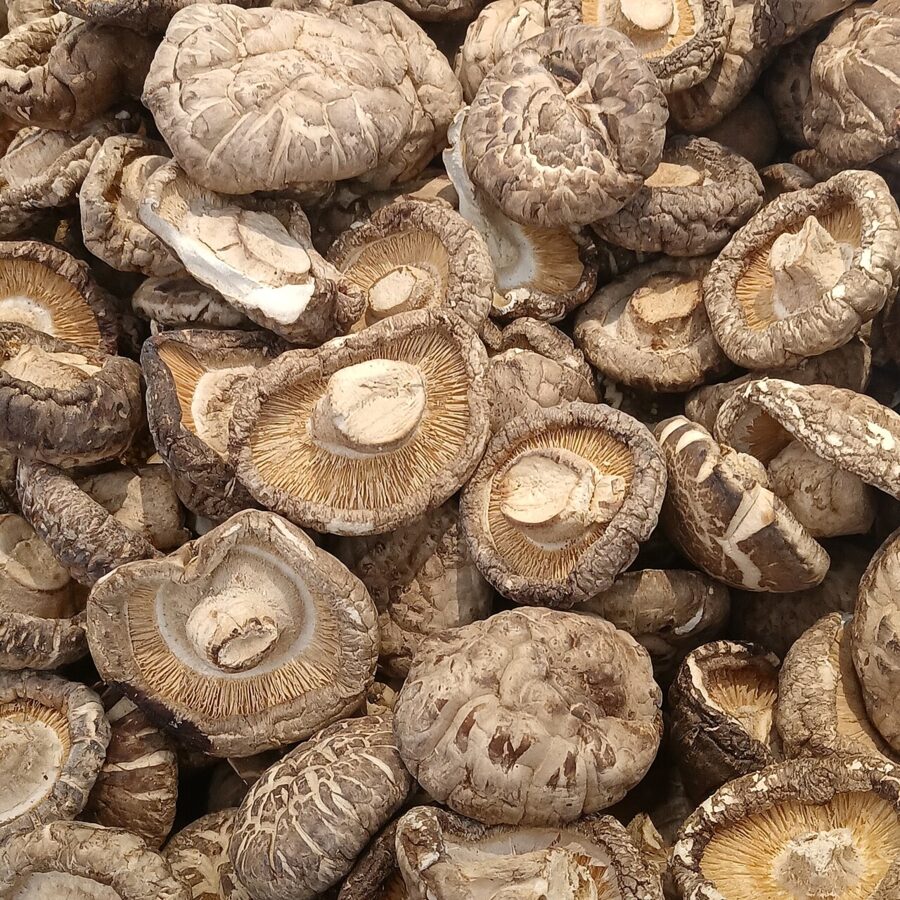
| Dried shiitake | 干し椎茸 | 3 | Dried goods aisle (or 3 fresh shiitake) |
| Carrot | にんじん | 1/3 (about 50 g) | Vegetables |
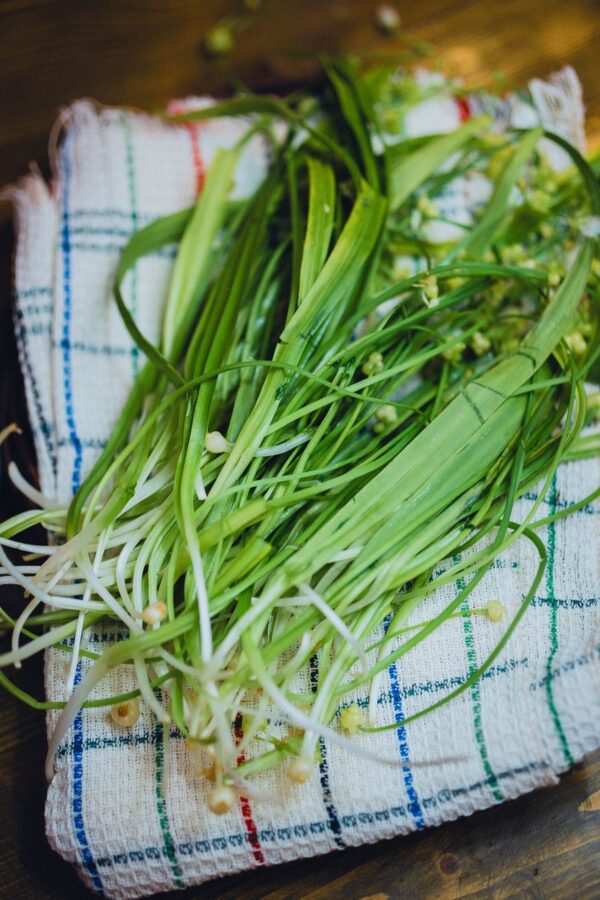
| Garlic chives | にら | 1/2 bunch (about 50 g) | Vegetables |
| Glass noodles | 春雨 | 20 g dry | Dried goods aisle |
| Ginger | しょうが | 1 tsp grated | Vegetables, or a tube from the spice shelf |
| Potato starch | 片栗粉 | 1 tsp + 1 Tbsp | Flour and baking shelf |
| Oyster sauce | オイスターソース | 1 Tbsp | Chinese seasonings |
From the cupboard: sesame oil (1 Tbsp), soy sauce (1 Tbsp plus 1 tsp, and more for dipping), sake (1 tsp), sugar (1 tsp), salt, white pepper, plain flour (1 Tbsp), vinegar, a tube of karashi, and vegetable oil to fill a frying pan 3 cm deep. AEON’s own-brand wrappers are listed at about ¥192 (about $1.20) for ten sheets, including tax, as of November 2026. Its best-before date is 30 days from manufacture, so check the date.
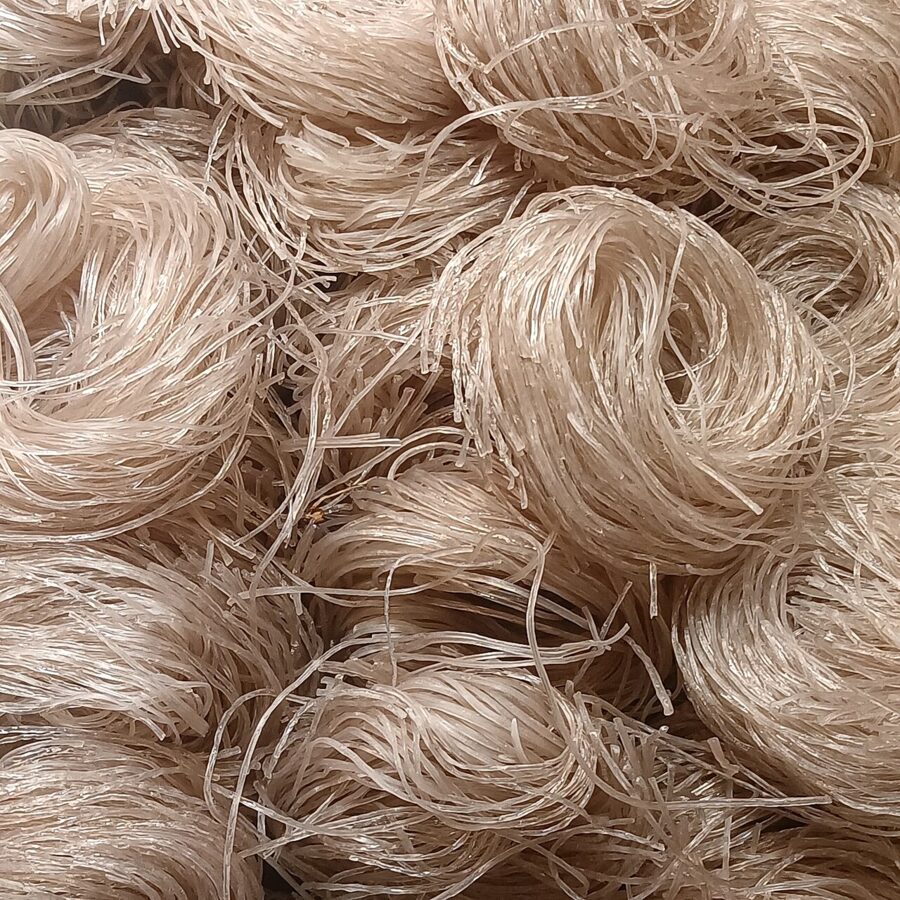
The original Chinese harusame were made from mung bean starch. When Japan began making them in the early Showa period, with technicians from China, makers switched to potato and sweet potato starch because mung beans did not suit the climate, and several of the few domestic makers left are in Nara. Both are on the shelf: 緑豆春雨 (mung bean) stays firmer in a filling, while the domestic kind is softer and soaks up more sauce.
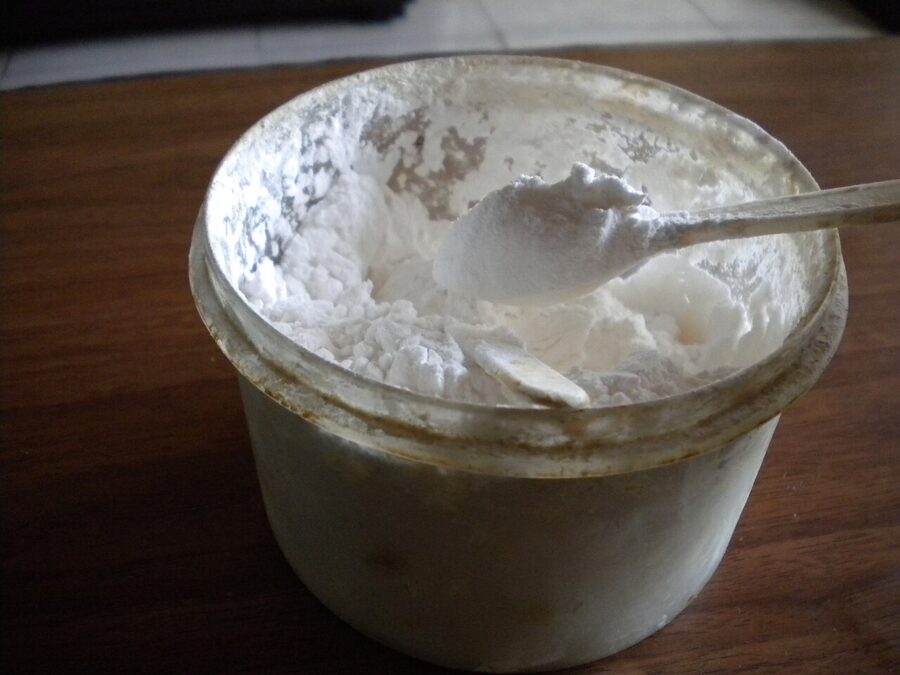
Katakuriko (片栗粉) is named after the dogtooth violet, whose bulbs once supplied the starch. The bag you buy today is potato starch. It thickens clearer and glossier than cornflour, and it is the same powder Japanese cooks use for karaage.
Making the filling
Start the shiitake the night before in 150 ml of water in the fridge; if you forgot, half an hour in warm water will do. Squeeze them out, keep 100 ml of the liquid, cut off the stems and slice the caps thin. Boil the harusame for the time on the bag, drain, and cut it into 4-5 cm lengths with kitchen scissors.
Cut the pork, bamboo shoot and carrot into matchsticks about 5 cm long, and the nira into the same length. With bamboo shoot, slice across the cone and then into strips; the knotted middle crumbles if you cut it too fine. Toss the pork with 1 tsp each of soy sauce, sake and potato starch. Mix the sauce in a jug: the 100 ml of shiitake water, 1 Tbsp soy sauce, 1 Tbsp oyster sauce, 1 tsp sugar, a pinch of salt and white pepper.
Heat the sesame oil in a frying pan over a medium flame and fry the ginger and pork until the meat changes colour. Add the carrot, bamboo shoot and shiitake and stir-fry for a minute or two, then pour in the sauce. When it boils, add the harusame and the nira.
Now the step that makes it harumaki. Stir 1 Tbsp potato starch into 2 Tbsp water, push the noodles to one side of the pan, and pour the slurry into the bubbling liquid on the other side while stirring fast. The noodles clump if the starch hits them first. Mix everything together until no thin liquid runs to the edge when you tilt the pan.
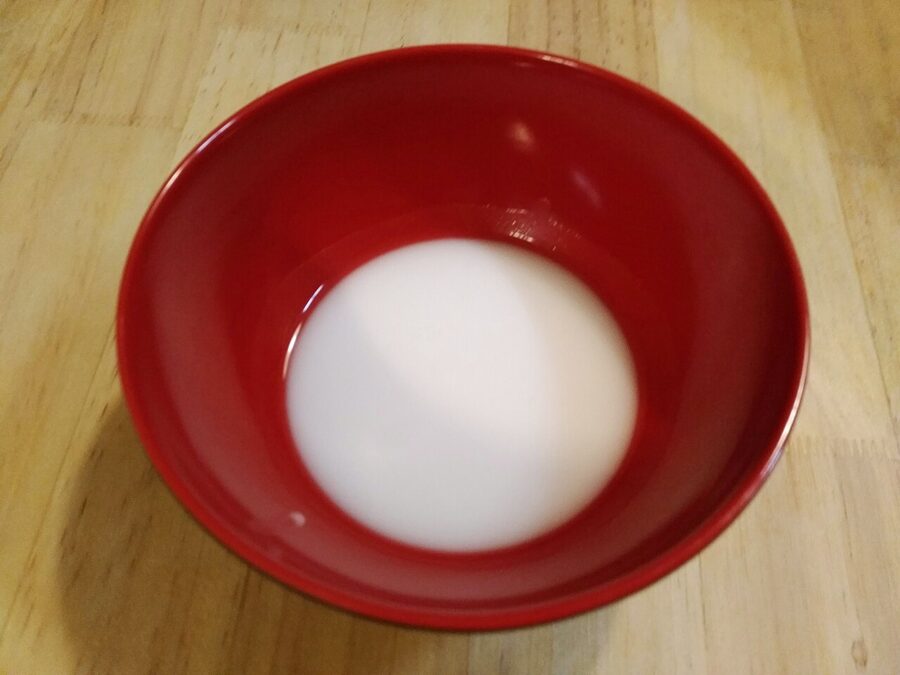
That thickening is not only for texture: bound juices stay in the filling instead of soaking the wrapper, so the rolls do not split or spit in the oil. Spread the filling on a metal tray, cool it completely (five minutes in the freezer helps), and mark it into ten portions. Warm filling makes the wrappers sweat and tear.
Rolling
Peel the wrappers apart one at a time. A Japanese sheet has a smooth face and a slightly rough one: the filling goes on the rough side, so the smooth side ends up outside and fries evenly. It makes no difference to the taste, but it does to the look.
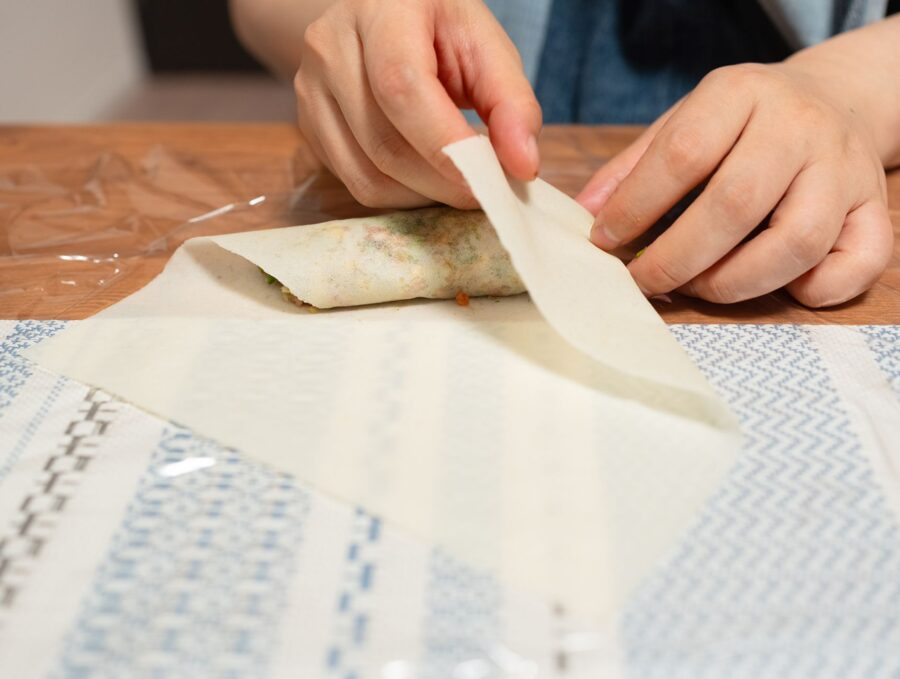
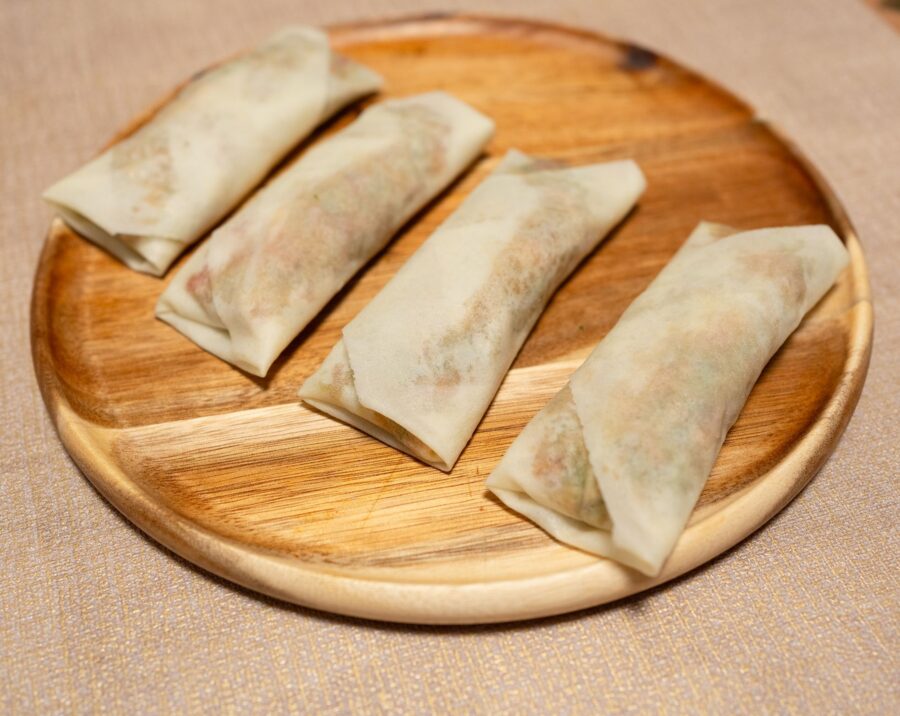
Set the sheet as a diamond with a corner pointing at you. Shape a portion of filling into a log just below the centre, fold the near corner over it and tuck it under. Fold in the left and right corners so the sides run straight, then roll towards the far corner. Mix 1 Tbsp flour with 1 Tbsp water, dab it on the last corner and press it shut.
Roll snugly and press out the air, but do not stretch the sheet; a roll wrapped too tight bursts as the filling heats. Then fry them straight away. A rolled harumaki left on the counter goes soft as the filling’s moisture works into the wrapper, and soft wrappers tear in the oil.
Frying
Japanese home cooks fry in a frying pan, not a deep pot: 3 cm of oil is enough. Heat it to 160-170°C. Without a thermometer, stand a dry wooden chopstick in the oil; when small bubbles rise steadily from the tip, it is ready. Put the rolls in seam side down so the seam sets first.
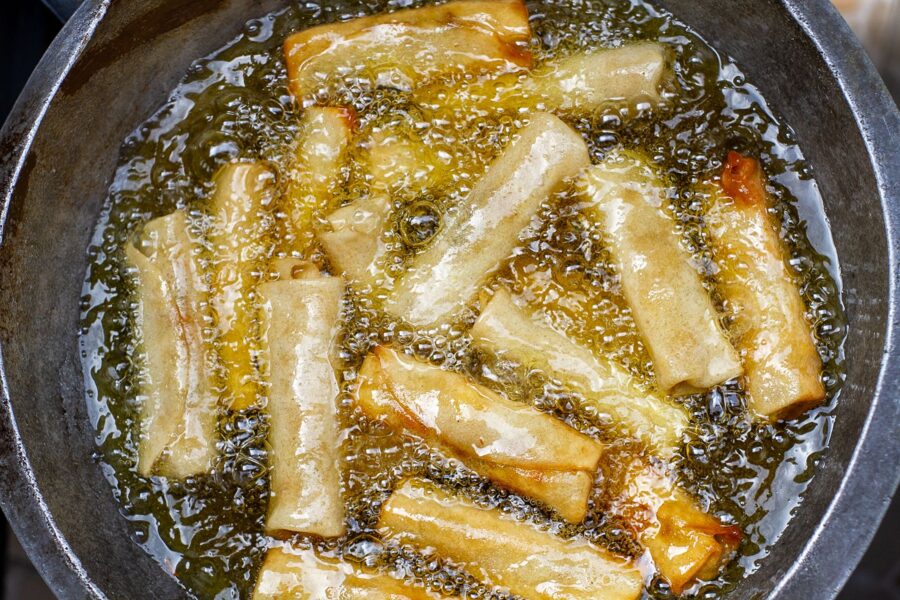
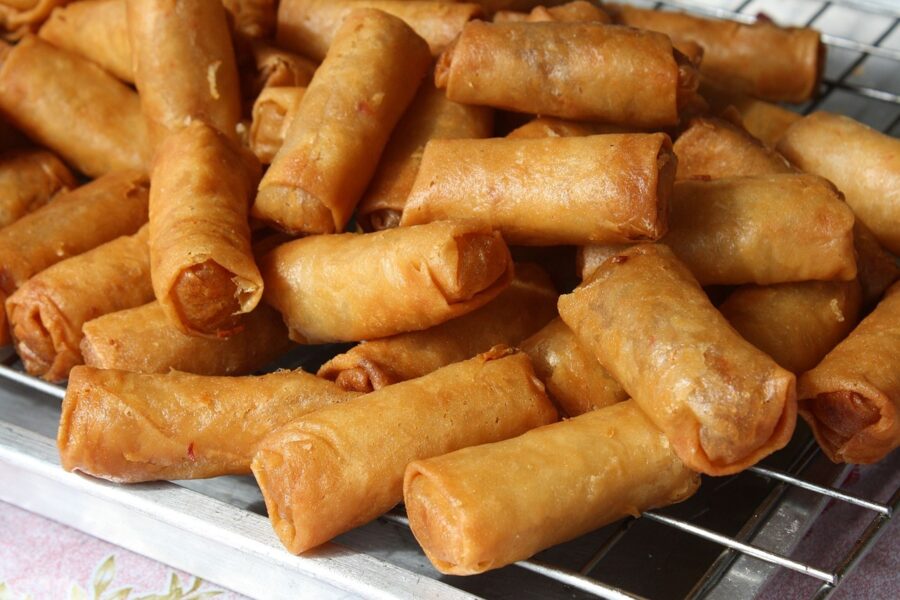
Turn them now and then for four or five minutes until they are an even pale gold. Wrapper and filling are both cooked already, so you are only crisping the outside and heating the middle. Drain them on a rack, or upright in a bowl lined with kitchen paper so oil runs out of the ends.
When you are done with the oil, Shinjuku, Ota, Edogawa and other wards want it soaked into paper or set with a solidifier and put out as burnable rubbish; your ward’s rubbish guide has the exact rule. The metropolitan government’s Tokyo Yuden project also collects household cooking oil at some supermarkets for aviation fuel.
Making them ahead
Freeze rolled, unfried harumaki on a tray until hard, then bag them; they keep for about a month. Fry them from frozen at 160°C for a few minutes longer than fresh ones, without thawing, and brush off any frost first so the oil does not spit. The filling also keeps a day in the fridge. The rolled harumaki do not.
Baked and air-fryer harumaki
Skip the oil and you get a different snack: drier, crunchier at the ends, paler in the middle. Brush every side generously with oil first. A dry wrapper bakes into something like cardboard.
- Oven: 200°C, on baking paper, for 12-15 minutes, turning once halfway.
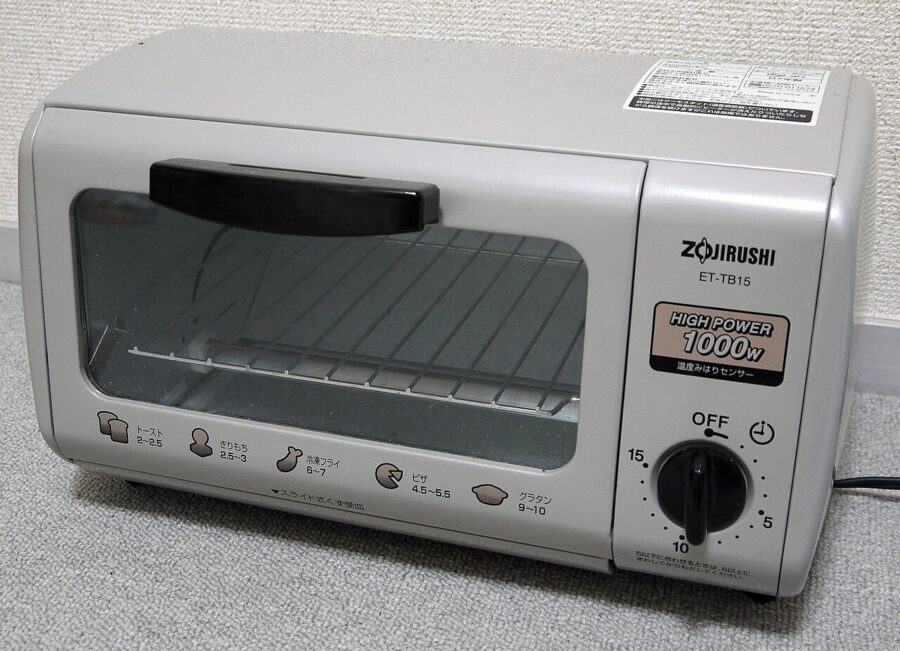
- Toaster oven: the one in most Tokyo kitchens works well. Line the tray with foil, cook for about 8-10 minutes, turn once, and watch the ends, which catch first.
- Air fryer: 180°C for 10-12 minutes in a single layer with gaps between the rolls, turning halfway. Times vary by machine, so check early the first time.
Japanese oven-range makers build this in. One Hitachi model has an automatic harumaki programme that bakes the rolls on the grill tray, and its recipe cooks the filling in the microwave first: the pork, vegetables and seasonings go in a deep bowl for about six minutes at 600 W. Then dry harusame, cut short, are stirred in and soak up the liquid. It is a tidy trick even if you fry.
Shop-bought frozen harumaki are another matter. Follow the bag: some are made for the oil, some come already fried for the oven or microwave, and they do not swap well.
Where you will eat them in Tokyo
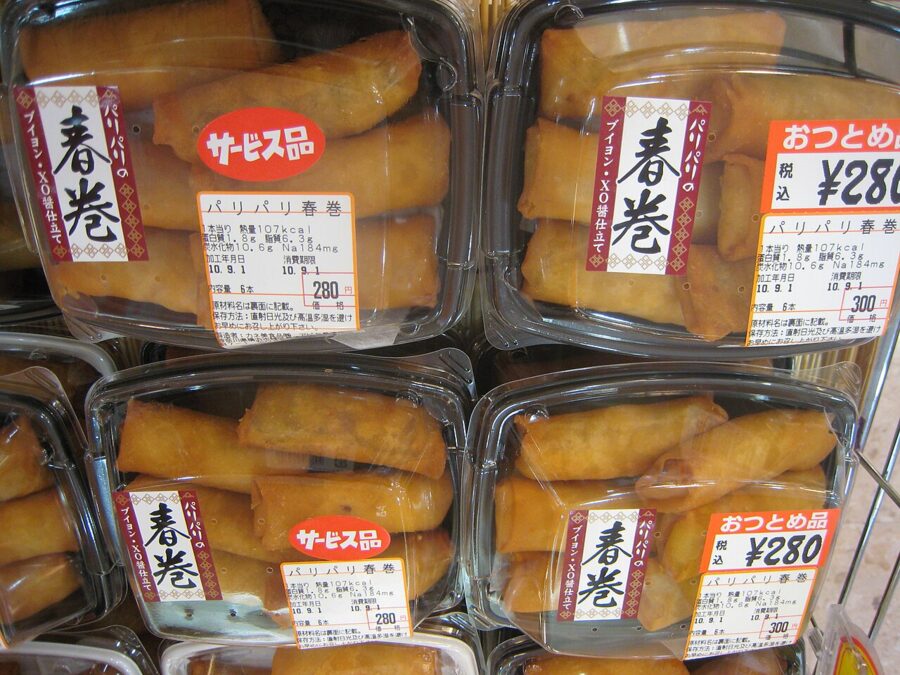
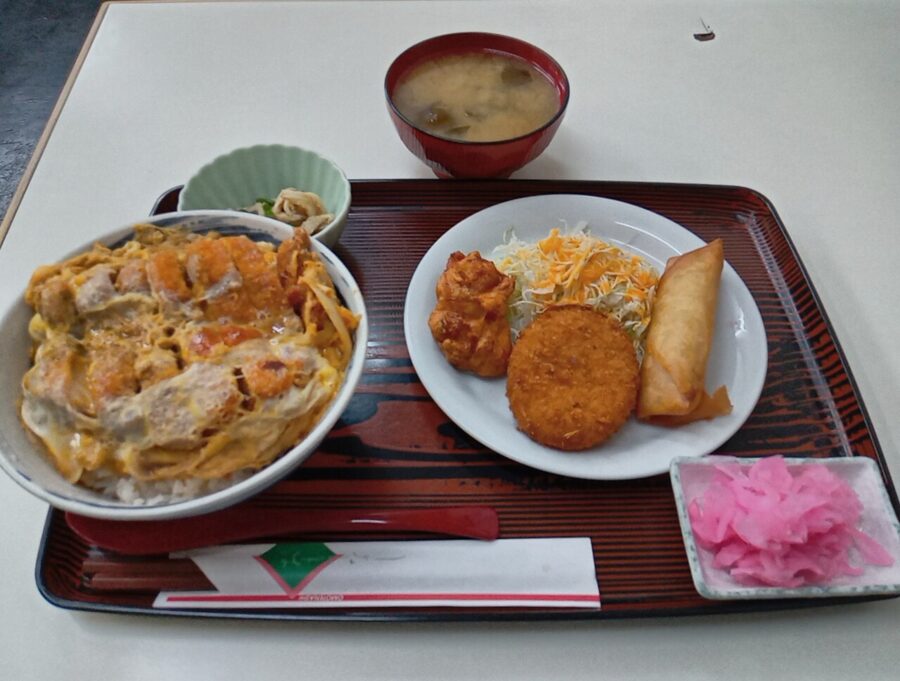
Mostly at lunch, and mostly as a supporting act. Supermarket deli counters sell them in plastic packs, which pick up discount stickers late in the day. They turn up in bento boxes and in the teishoku (set meals) of neighbourhood diners, as one item on a side plate of fried things.
The Chinese chains are where most people order them on purpose. Gyoza no Ohsho lists harumaki among its fried dishes, a few lines below the gyoza.
Hidakaya, the cheap ramen and Chinese chain near many Tokyo stations, lists its gomoku harumaki (five-ingredient spring rolls) among the drinking snacks at ¥350 (about $2.20) including tax as of November 2026. That tells you how they get eaten: with a beer after work.
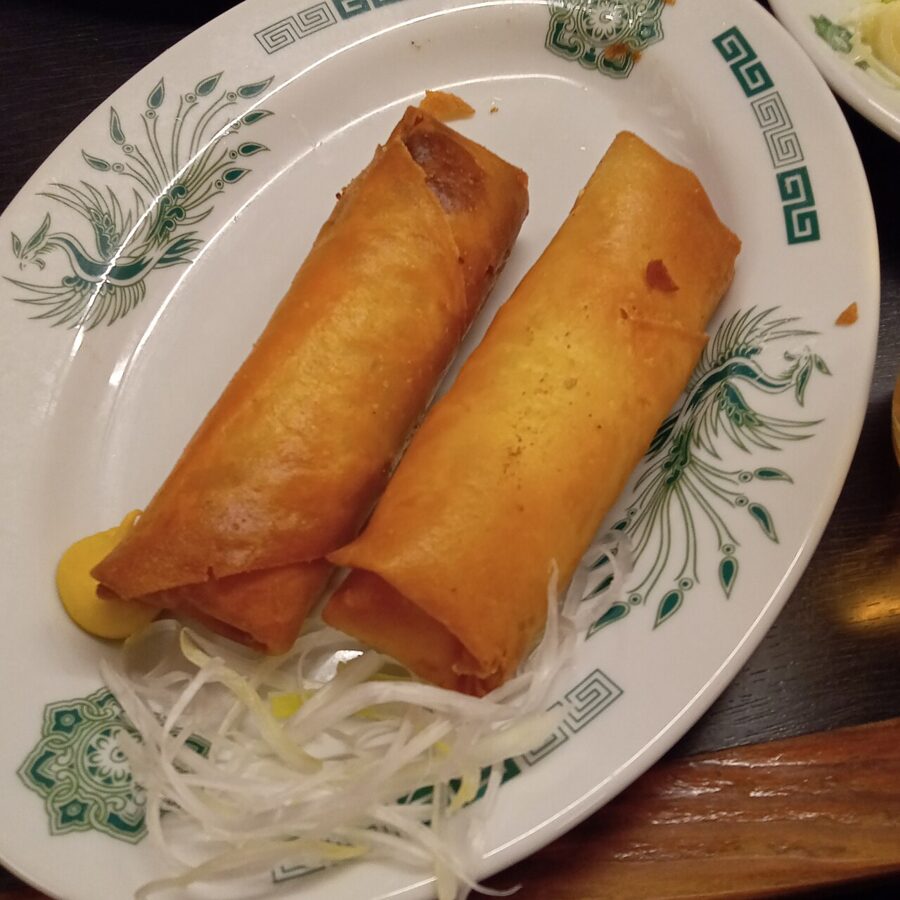
Beyond those, harumaki are a fixture on the menus of machi-chuka, the family-run Chinese diners on most shopping streets. They also turn up at inn dinners and hotel breakfast buffets, because they fry well in batches and hold up on a warming tray.
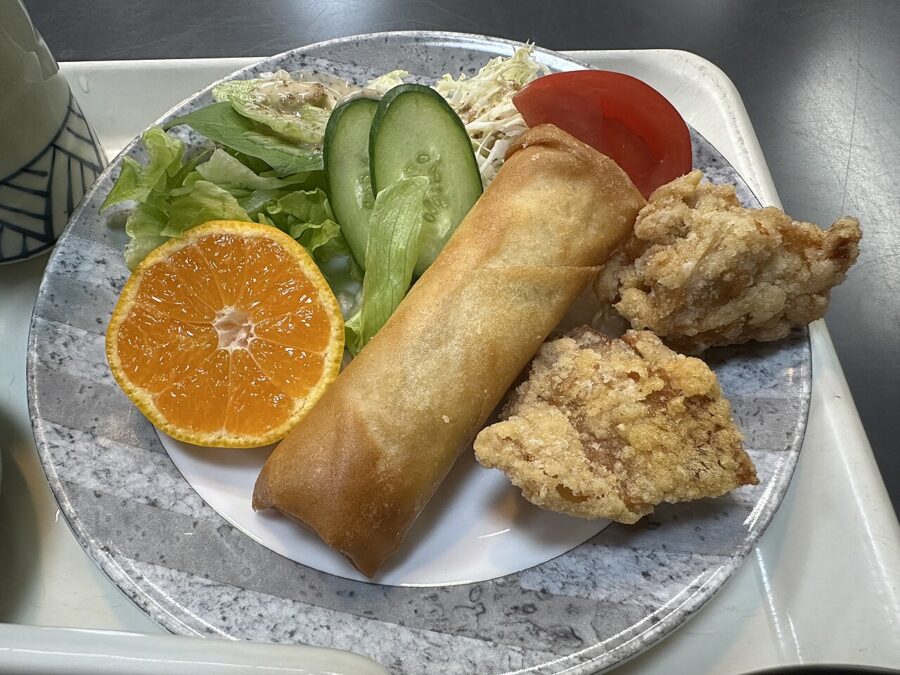
The best ones are still the ones you fry yourself. Ten wrappers, ten rolls: eat eight tonight, straight from the rack, and put the last two in tomorrow’s bento, where they will be soft and still good.