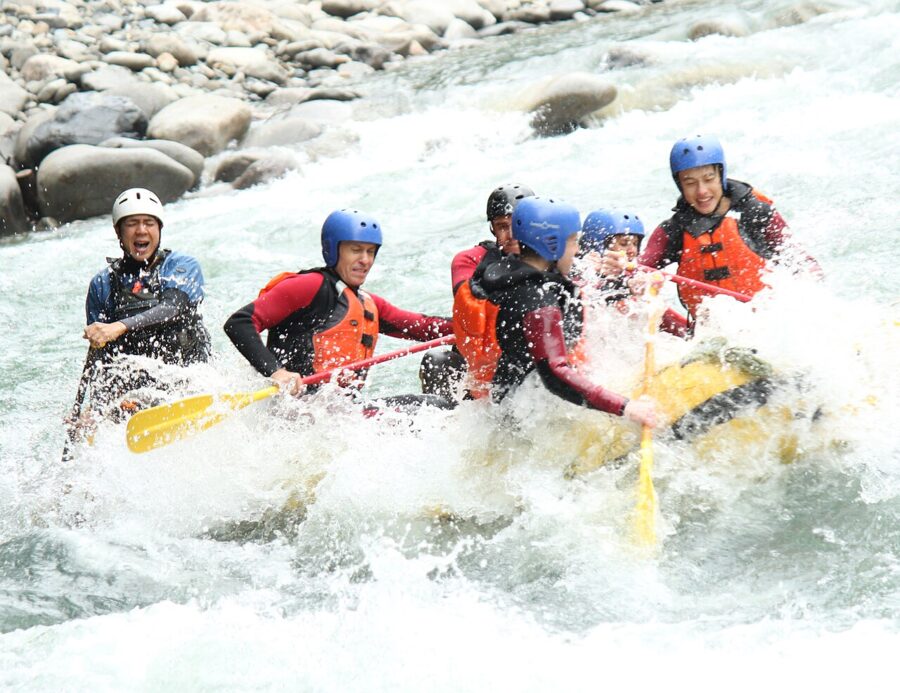
The Tone River at Minakami changes grade with the calendar. In May, with snowmelt still coming off the Tanigawa range, the rapids below the town run at about Grade 4 on the six-step international scale. By August the same water has dropped to about Grade 2, and primary-school children are floating it with their parents. Either version is 64 minutes from Tokyo Station on the fastest Shinkansen.
That is the far end of rafting near Tokyo. The near end is Mitake, on the Tama River inside Tokyo itself, 75 minutes and ¥1,040 (about $7) from Shinjuku, where you can be in a wetsuit by half past nine and back in the city for dinner. Between the two sits Nagatoro on the Arakawa in Saitama, under two hours from Ikebukuro, where the rafts share a rock gorge with wooden sightseeing boats steered by boatmen with long poles.
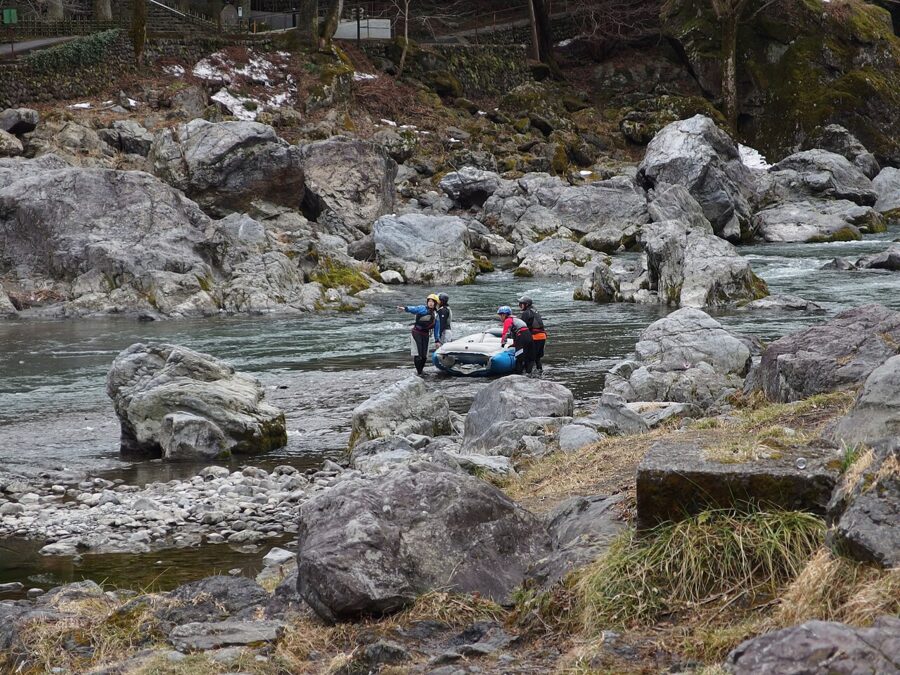
All three run guided half-day trips that take beginners, and you don’t need to be able to swim. What separates them is the water: how much of it there is, how cold it is, and how much the guide has to read it. The month changes all of that again. So does the operator, and since a university student drowned on the Tone in May 2023, there are specific questions worth asking before you pay a deposit.
In this article7 parts
Three rivers within a day of Tokyo
Ask a Japanese colleague where to raft near Tokyo and you will hear the same three names, in roughly this order of effort. Mitake is the one you can decide on the night before. Minakami is the one people plan around the snowmelt. Nagatoro is the one people pick when half the group would rather look at the scenery.
| Mitake (Tama River) | Minakami (Tone River) | Nagatoro (Arakawa) | |
|---|---|---|---|
| Where | Ome City, Tokyo | Minakami, Gunma | Nagatoro, Saitama |
| From | Shinjuku | Tokyo Station | Ikebukuro |
| Fastest train | 1 hr 15 min, ¥1,040 | 1 hr 4 min, ¥5,600 (about $37) | 1 hr 51 min, ¥2,250 (about $15) |
| Season | April to October | April to October, a few winter trips | March to November |
| The water | Short rapids between boulders, pools for jumping | Big and cold April to June, gentle in summer | Rock gorge, rapids between long flat stretches |
| Half-day from | ¥4,500 to ¥6,000 (about $30 to $40) | about ¥9,000 (about $60) before discounts | ¥4,380 to ¥4,980 (about $29 to $33) |
Train times and fares are the fastest routes on a Sunday morning in November 2026, unreserved; prices are operators’ published rates as of the same month. Both change, and weekend and Obon prices often run higher.
Mitake: the Tama inside Tokyo
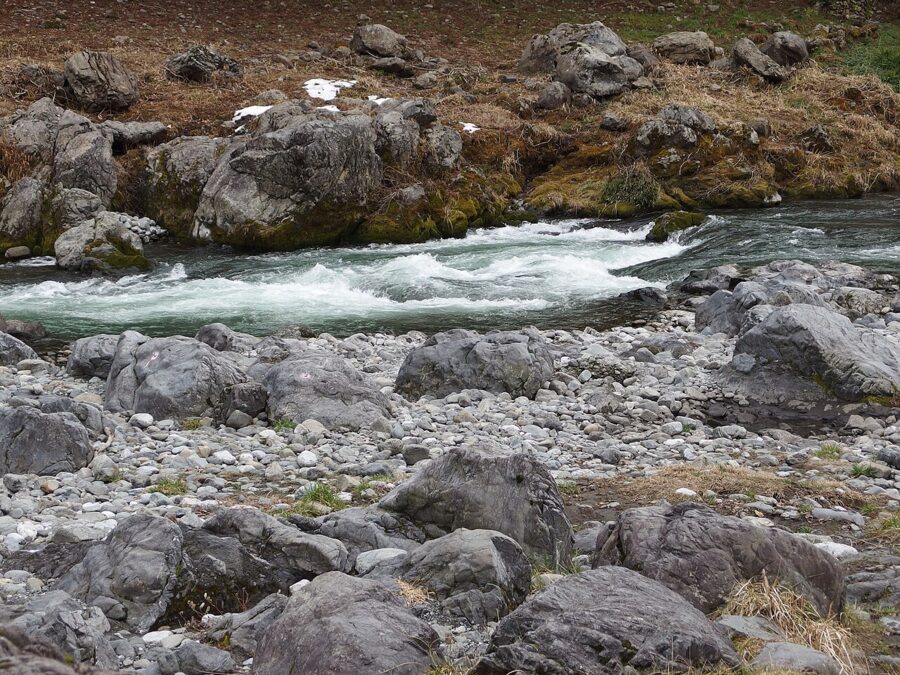
Operators sell this as Okutama rafting, but most trips run a little downstream of Okutama town, through Mitake Gorge in Ome City. The Tama here is narrow and crowded with boulders, some the size of a small car, so the rapids are short and come in quick succession with flat pools in between. On summer trips the guides stop in those pools for swimming and jumps from the rocks. A half-day runs about three hours from the briefing to dry clothes.
The bases sit within a few minutes’ walk of Mitake Station or its neighbours on the Ome Line, which is the whole appeal: no Shinkansen, no pick-up, no car. One operator’s season runs from 1 April to 31 October with starts at 9:30 and 13:30, plus a 15:30 trip from mid-July to mid-September for people who can’t face an early train. Standard trips take children from about seven, with under-12s joined by a parent, and some companies run a calmer lower section for families with children from four.
Upstream, in Okutama town, the river is a different matter. The town bans swimming and diving in the Tama, and the Tokyo Fire Department’s Okutama station says most of its river accidents happen in places where swimming is banned, usually when the water is up. The rock jumps on a rafting trip happen in pools a guide knows, with a life jacket on. Don’t take the idea upstream on your own.
Minakami: the Tone at full volume
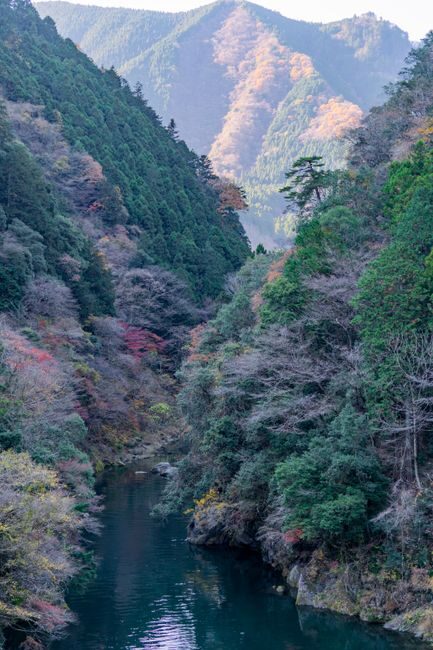
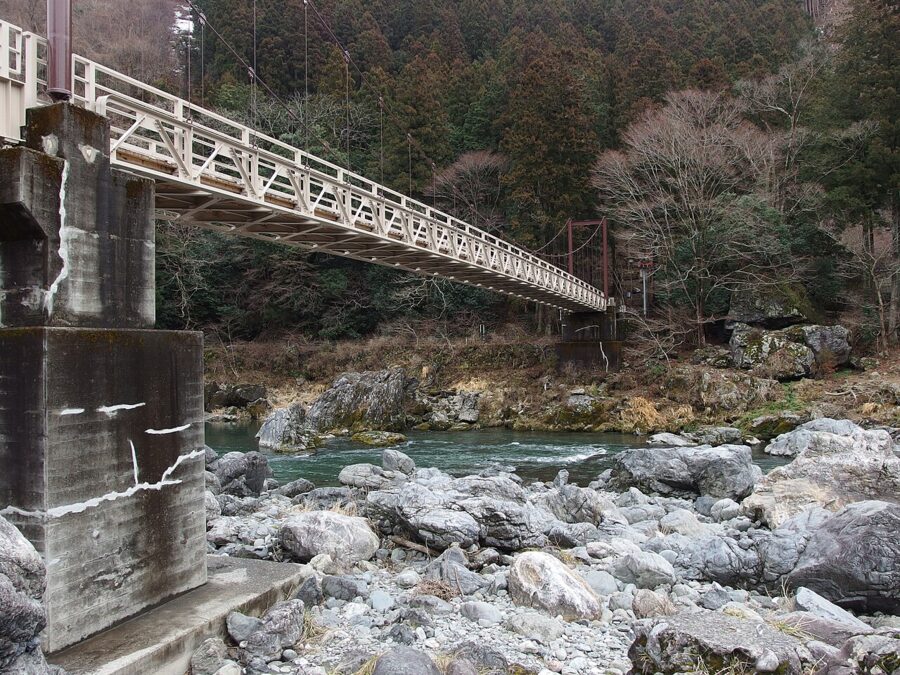
Minakami was the first place in Japan to sell rafting and canyoning to visitors, and in 2023 the town’s rafting union had 17 member companies. The classic run passes through Suwakyo, a short gorge of pale rock just downstream of Minakami Onsen, under the cable-stayed Suwakyo Ohashi bridge. In spring the meltwater from the Tanigawa range makes this the biggest commercial white water within reach of Tokyo.
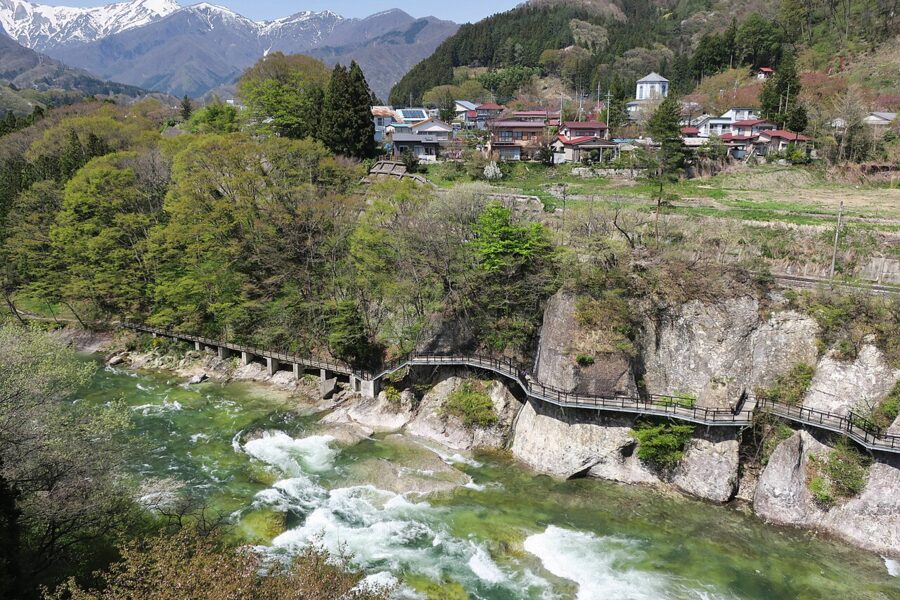
The water is cold then. Police measured it at about 12°C near the river’s Choshi Bridge on the early evening of 5 May 2023, and colder still the next morning, so spring trips come with a thick wetsuit and a splash jacket. By July the snowmelt has gone through, the river drops, and the same companies switch to slower summer trips built around swimming, jumping and splashing other boats. Operators collect from Jomo-Kogen Station on the Shinkansen, from Minakami Station on the Joetsu Line and from inns in town, if you ask for it when you book.
Further down the Tone, around Numata, other companies run other sections, a fallback when Minakami is booked out on a summer weekend. They are a different trip, though, not a cheaper version of Suwakyo.
Nagatoro: rafts in a rock gorge
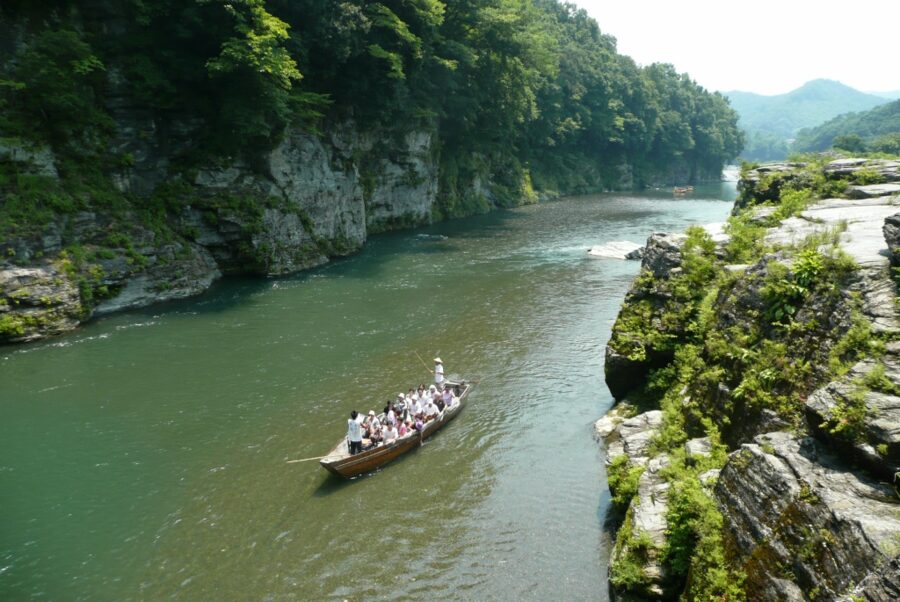
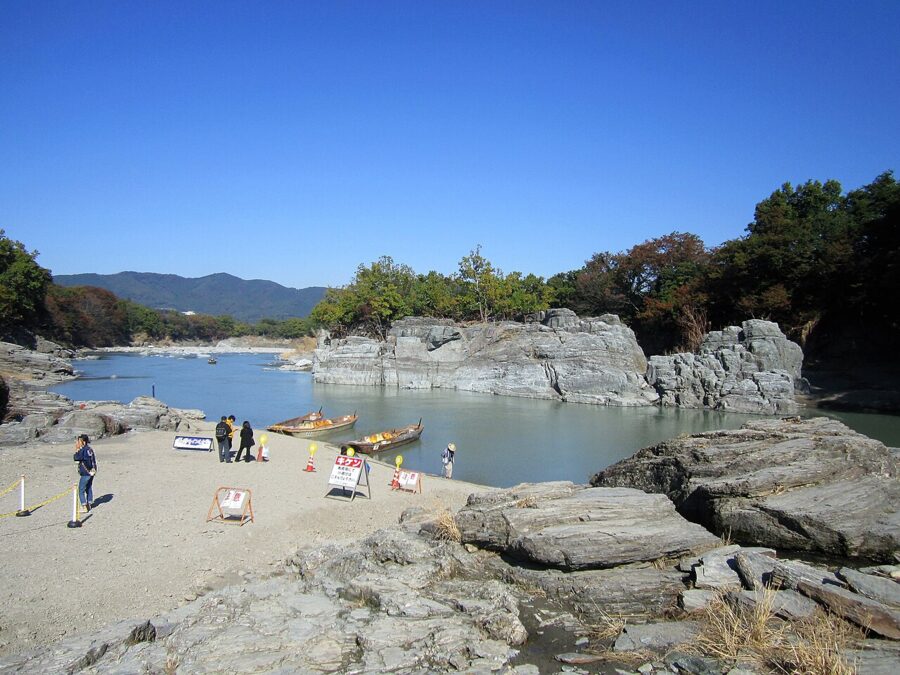
The Arakawa at Nagatoro slides past Iwadatami (岩畳), a long shelf of layered rock on one bank, with the cliffs called the Chichibu Sekiheki on the other. The gorge is a national natural monument, and this is the stretch to choose if half the group cares more about the view than the rapids. Trips mix a few named rapids with long flat runs, and the bases are a few minutes’ walk from Nagatoro Station on the Chichibu Railway.
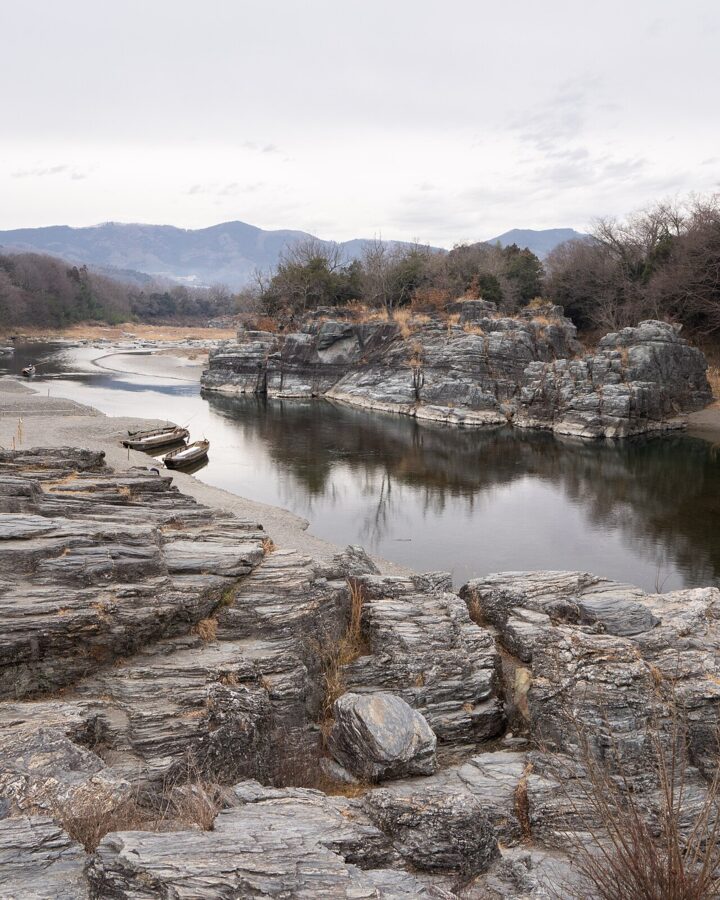
Nagatoro has the longest season of the three, from March into November, and the lowest prices. Its weakness is low water. On 21 November 2026 the Arakawa was too low for the Line Kudari (ラインくだり) sightseeing boats to run their usual course, and they switched to a short loop round Iwadatami. Rafts use the same river, so in a dry autumn a Nagatoro trip is more scenery than spray.
Snowmelt or summer: picking the month
The single question that decides the trip is when you go. On the Tone in particular, May and August are practically two different rivers.
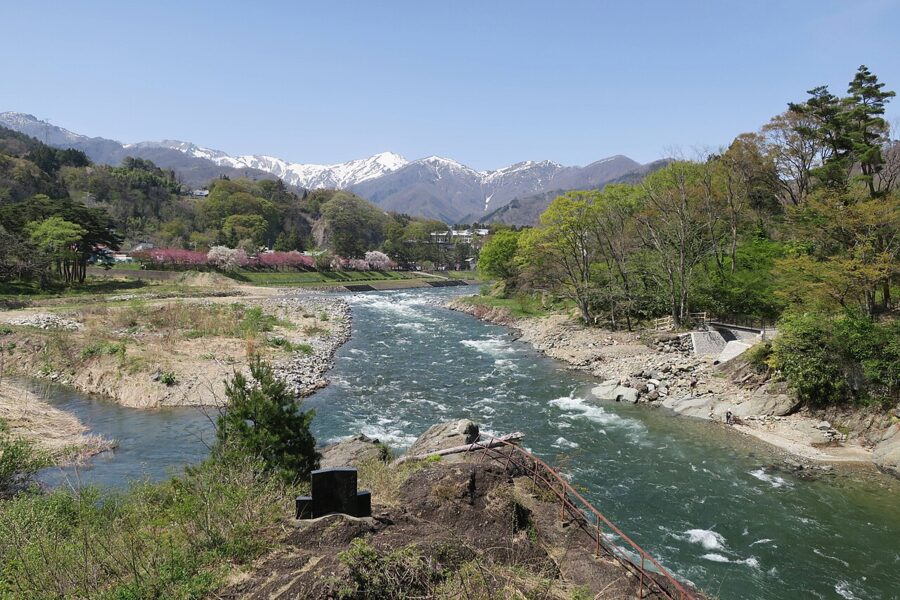
April to June is snowmelt on the Tone. Minakami operators run their longest trips only in this window: one company’s full-day spring run, for junior-high age and up, was listed at ¥13,900 (about $93) until the end of June. Mitake and Nagatoro open in March and April too, but neither has anything like the Tone’s volume. If you want a raft to feel like it might flip, this is the time and that is the river.
July and August are family months on all three rivers. The water is warm enough to swim, the minimum ages drop, and the trips turn into floating, swimming and jumping. Weekends and the Obon week in mid-August book up early, so treat it like any other summer trip out of Tokyo, the Omagari fireworks included: reserve first, plan the rest after.
September and October are quieter and still warm on a good day, but this is typhoon season. Rain upstream can push a river up within hours, and operators cancel or change the section when it does. Trips do run in ordinary rain; you are wet anyway.
November to March is mostly closed. Nagatoro bases keep going into November, and a few Minakami companies sell winter trips for the snow scenery, but for most people the season ends with the autumn leaves.
Getting there by train
To Mitake
Take the JR Chuo Line from Shinjuku towards Tachikawa and the Ome Line on to Ome, where the Okutama-bound local takes over. On a Sunday morning in November 2026 the fastest route was a through train from Shinjuku to Ome and one change there, 1 hour 15 minutes and ¥1,040, a few yen less by IC card. At other times you change at Tachikawa as well, and beyond Ome there are only two or three trains an hour, so check the connection before you leave.
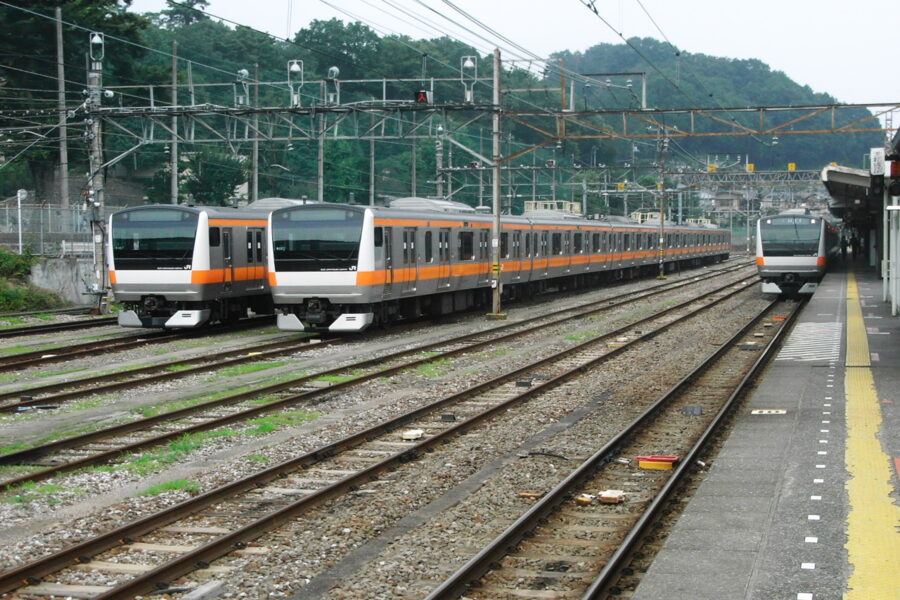
Mitake Station is the stop for most of the bases. Sawai, one stop back towards Tokyo, is the station for the Sawanoi sake brewery. JR has announced midday closures between Ome and Okutama on 11 December 2026 and on 14, 15, 18 and 19 January 2027, from about 8:50 to 14:30, with no trains on that stretch.
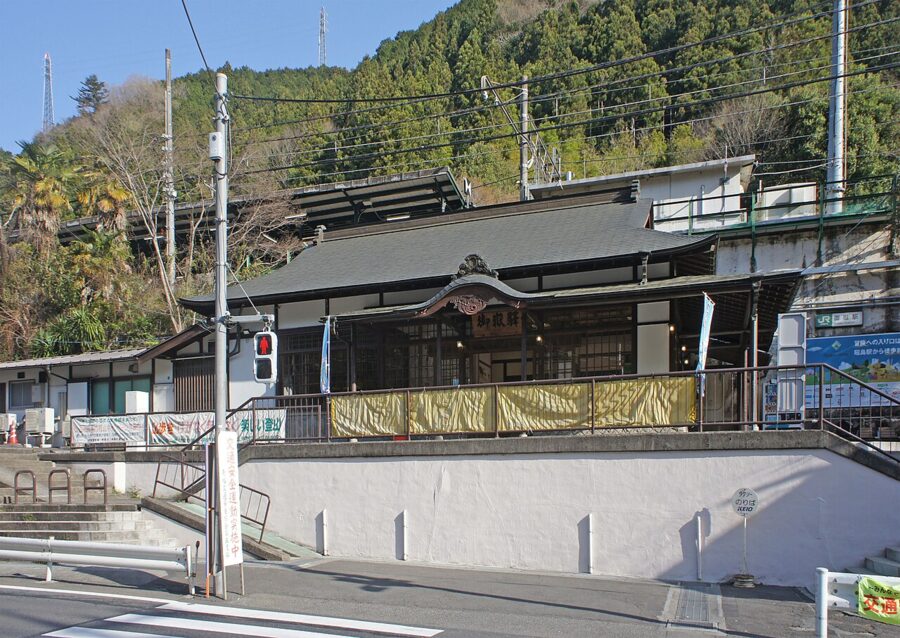
To Minakami
The Joetsu Shinkansen from Tokyo or Ueno reaches Jomo-Kogen in 64 minutes on the fastest trains, for ¥5,600 one way unreserved as of November 2026; a reserved seat costs a little more. Jomo-Kogen is a plain station outside town, and the operators’ vans meet the trains you tell them about. The other way is the Shinkansen to Takasaki and the Joetsu Line local to Minakami Station, about two hours from Tokyo in total for ¥5,700 (about $38).
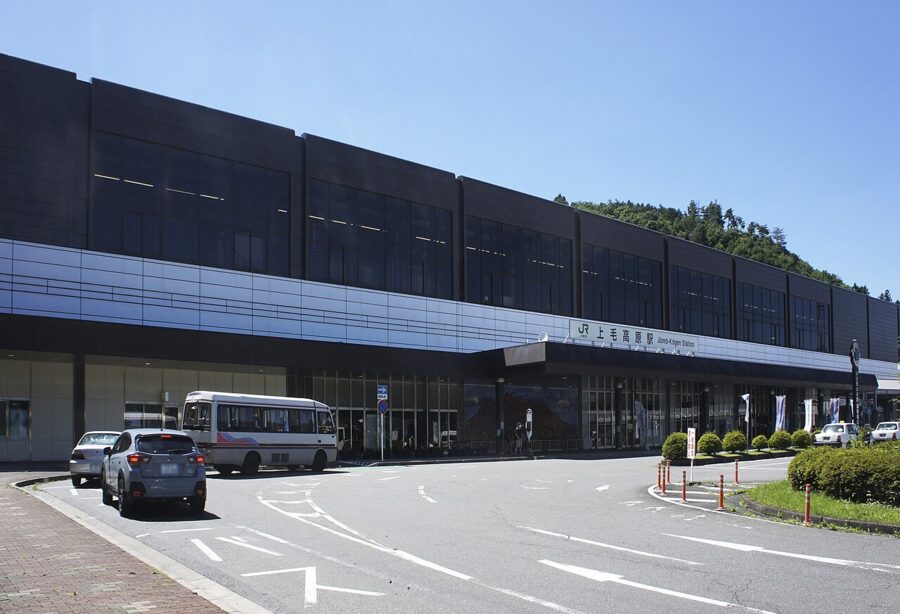
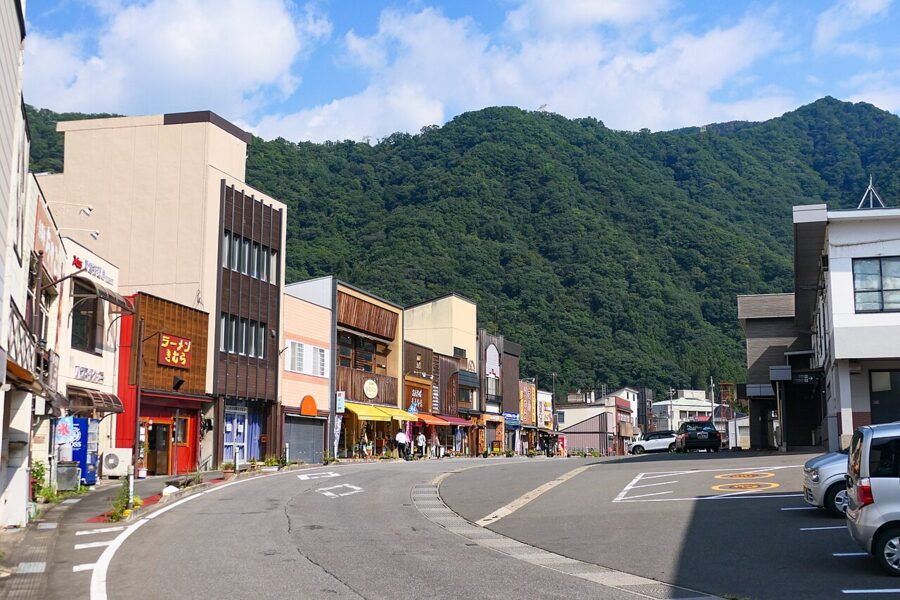
That box matters more than it should. Take a weekday for the river and you come back owing the team omiyage, a box of local sweets to share, and the shops opposite Minakami Station exist largely to sell them.
To Nagatoro
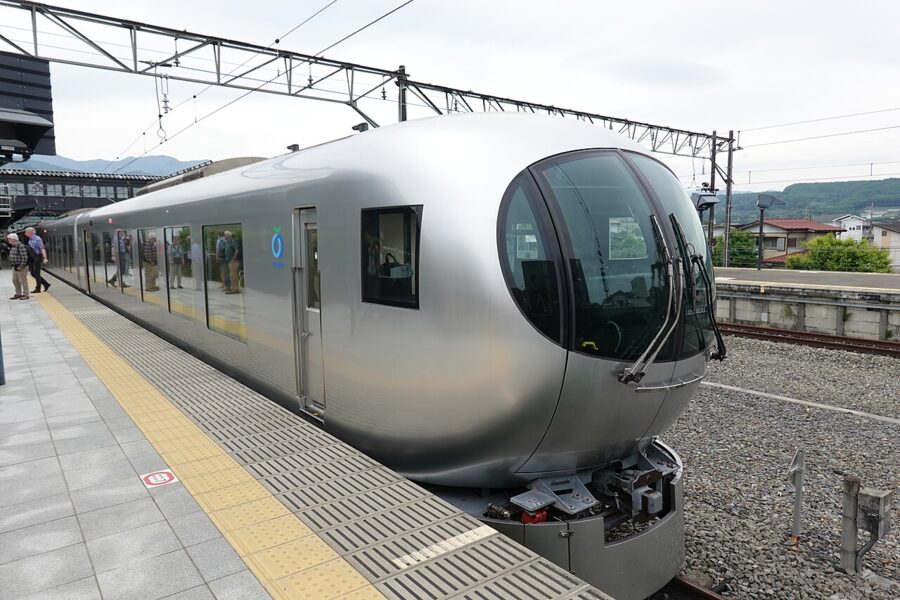
From Ikebukuro, the quickest way is the Seibu Laview limited express to Seibu-Chichibu, a short walk to Ohanabatake Station, and the Chichibu Railway on to Nagatoro: 1 hour 51 minutes and ¥2,250 including the limited express ticket. Without the limited express, local Seibu trains get you there for ¥1,350 (about $9) in about 2 hours 20, and the Tobu Tojo Line to Yorii with a change to the Chichibu Railway costs ¥1,470 (about $10). From the Ueno side, the Chichibu Railway also starts at Kumagaya.
What a half-day includes, and what it costs
The price covers the guide, the raft and paddle, a life jacket, a helmet and a wetsuit, with a splash jacket when it is cold. Most operators include accident insurance and tax, and many hand over the day’s photos free. The bases have changing rooms, usually showers, and somewhere to leave a bag. Transport, lunch and the barbecue packages most of them sell are extra.
As of November 2026, published half-day prices ran from ¥4,500 to ¥6,000 at Mitake and ¥4,380 to ¥4,980 at Nagatoro. Minakami listed about ¥9,000 for a half-day, with student, early-booking and group discounts bringing some trips down to about ¥6,500 (about $43). Add the train and a Mitake day costs around ¥8,000 (about $53) all in. A Minakami day by Shinkansen is closer to ¥20,000 (about $135), which is the argument for making it a night at an onsen inn.
What to bring:
- A swimsuit, or synthetic shorts and a T-shirt to wear under the wetsuit. Not cotton.
- Shoes with a heel strap that can be soaked; flip-flops come off in the first rapid.
- A towel and a full change of clothes.
- A strap for glasses. Contact lenses are fine, but take a spare pair.
- Sunscreen in summer, and nothing you would mind losing.
The rules are much the same everywhere. You sign a form accepting the risks, minimum ages run from about six to nine depending on the river and the season, pregnant women can’t join, and anyone who turns up drunk is sent home without a refund. One Mitake operator asks for a doctor’s note from anyone with epilepsy.
Choosing an operator by how it runs the river
Free photos, a barbecue deck and a good playlist on the minibus say nothing about what happens when a raft flips. These questions do, and a good operator answers them without fuss.
- Are you registered with the town? In Minakami, a town ordinance in force since April 2013 sets up a register of operators and qualified guides, and safety standards. Ask if they are registered and in the local rafting union.
- At what water level do you stop? In 2023 the union’s limit for the run through Suwakyo was 4.0 metres on the Yubara river gauge. A good answer names the gauge, the number and what they run instead.
- Who carries the phone? And is there a safety boat or kayak waiting below the big rapids?
- How long has today’s guide worked this river? Experience in high water is the part that counts.
- Does the briefing include getting in the water? The better operators make you float in your life jacket before you start, and practise the swimming position.
- Are the life jackets numbered? It sounds fussy. It is how the guides know who is missing.
If the answer to the water-level question is a shrug, book somewhere else. Japanese reviews will tell you which guide was funny. They rarely tell you who cancelled on a high-water morning and who ran anyway.
What went wrong at Suwakyo, and what changed
On the afternoon of 5 May 2023, Golden Week, a Minakami company put 17 passengers in three rafts for the run through Suwakyo. The river was high. The Yubara gauge read about 3.77 metres, under the union’s limit of 4.0, and the trip went ahead. Above the Suwakyo Ohashi bridge the guide of the third raft, carrying six university students, judged that they paddled well enough to take the centre line through Ryugase (龍ヶ瀬), the rapid under the bridge, past the hole in the middle rather than a line that avoided it.
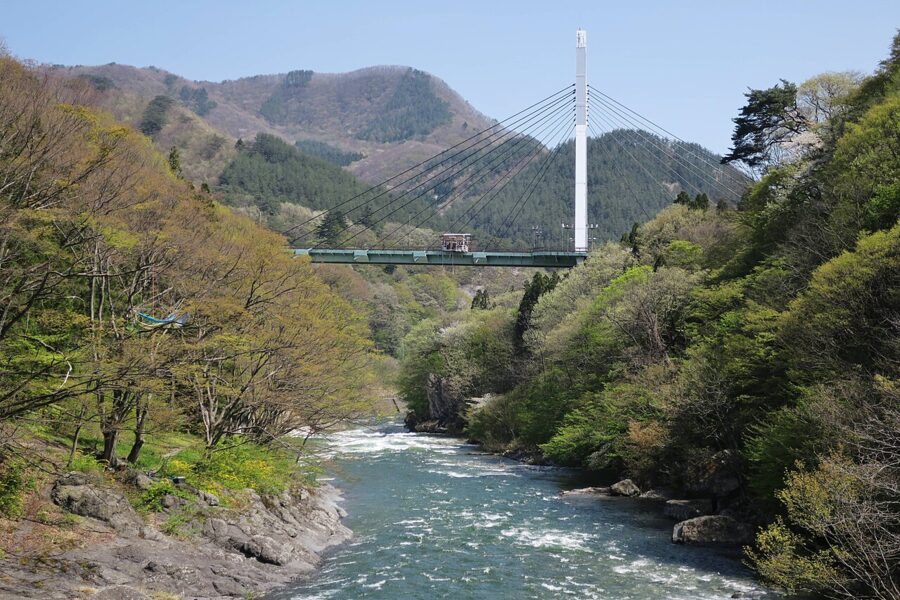
The raft flipped in the hole at the centre of the rapid at about 15:10, and all six passengers and the guide went in. The other two rafts were waiting in an eddy downstream and pulled out three people; others reached rocks or were picked up further down. One 19-year-old student was not found until about 5:50 the next morning, caught on a sunken tree among the rocks downstream. He had drowned, and his helmet and life jacket had probably come off in the rapids.
The Japan Transport Safety Board’s report, published in February 2025, set out the failures it could establish. The lead guide and the guide of the overturned raft carried no phone; the company’s phone was in a bag on another raft, and the first call for help to other operators went out about 33 minutes after the capsize. The life jackets weren’t numbered, so the guides couldn’t immediately tell whose jacket had come down the river empty.
The company stopped operating. The local outdoor federation suspended its registration and the guide’s, lowered the union’s water-level limit for the time being, and set up a record of each registered guide’s experience.
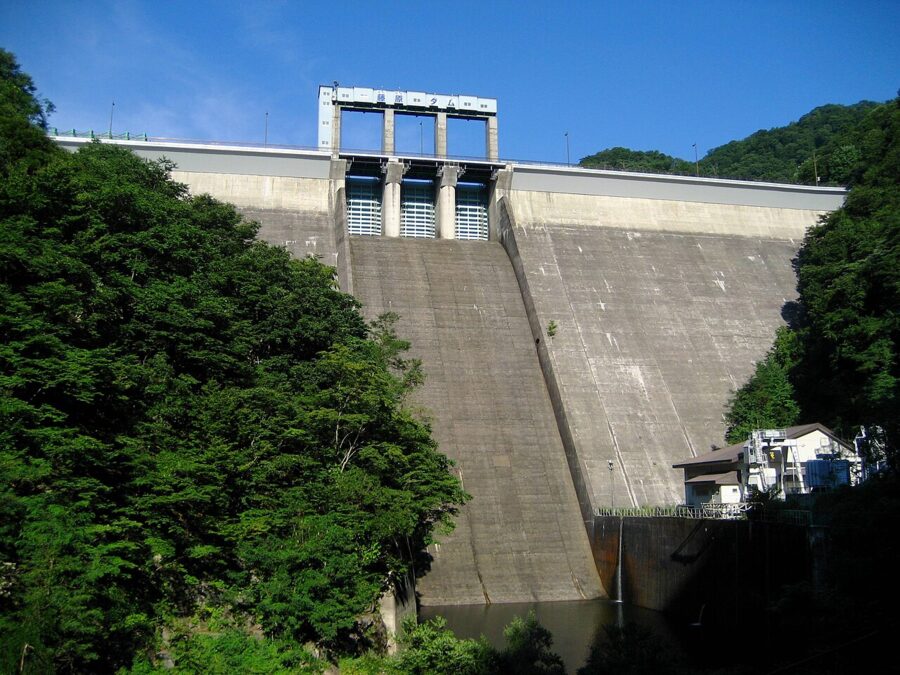
The investigators’ recommendations were practical: choose lines that avoid a capsize as far as possible, write rescue plans for each dangerous spot and drill them, share them between companies on the same river, and make sure someone can always call for help. Minakami’s town office called the operators together in March 2024 to go over the accident and prevention. It was not the river’s first death. Rafting killed three people on the Tone at Minakami in three successive years from 2000 to 2002, and the town’s ordinance came a decade later.
On the Tama, the operators’ union trains with the fire service, and in April 2026 Tokyo’s Okutama Fire Station ran a first-aid course for its members covering CPR, splinting, the 119 call and moving casualties. Every operator’s own briefing tells you what to do if you go in. Lie on your back with your feet pointing downstream and your toes at the surface, fend off rocks with your feet, and never try to stand up in moving water, because a foot caught between rocks under the current can hold you there.
After the river
Mitake: sake and the gorge path
Sawai, one stop towards Tokyo from Mitake, is home to Ozawa Shuzo, the brewery that makes Sawanoi. Its brewery tour takes about 40 minutes and costs ¥700 (about $5) including a tasting and a cup to keep, at 11:00, 12:30 and 14:00 at weekends and at 11:00 and 13:00 on weekdays, with Mondays closed (as of November 2026). The brewery’s riverside garden, Sawanoi-en, sells sake, tofu, soba and oden from 10:00 to 17:00 (closed Mondays), on cash food tickets.
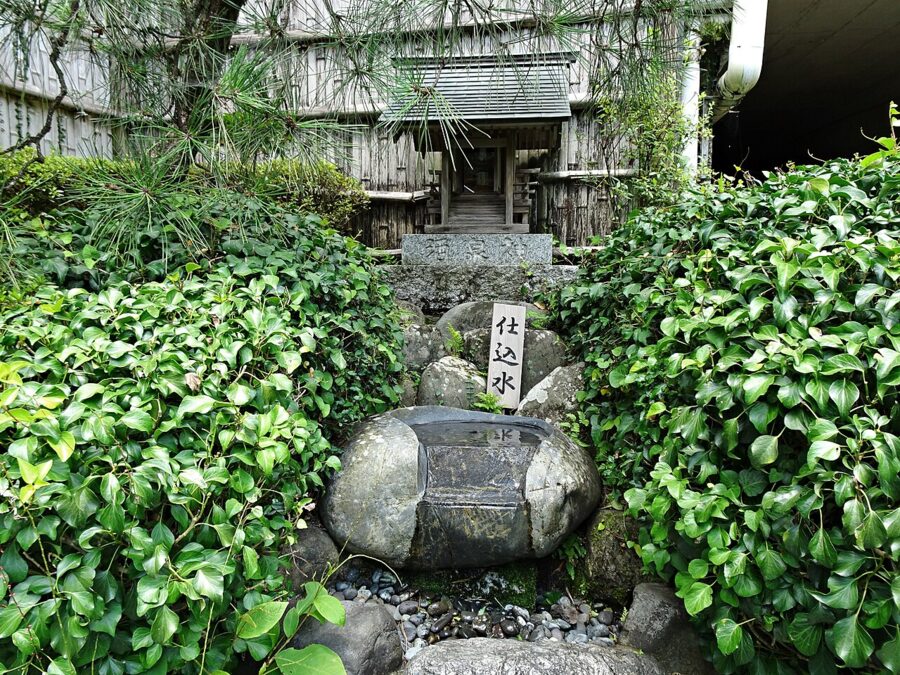
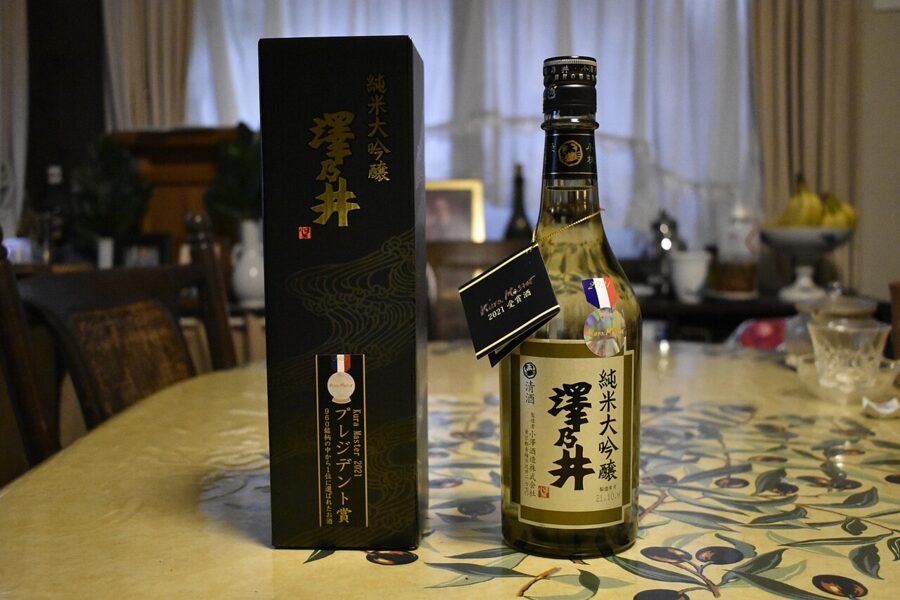
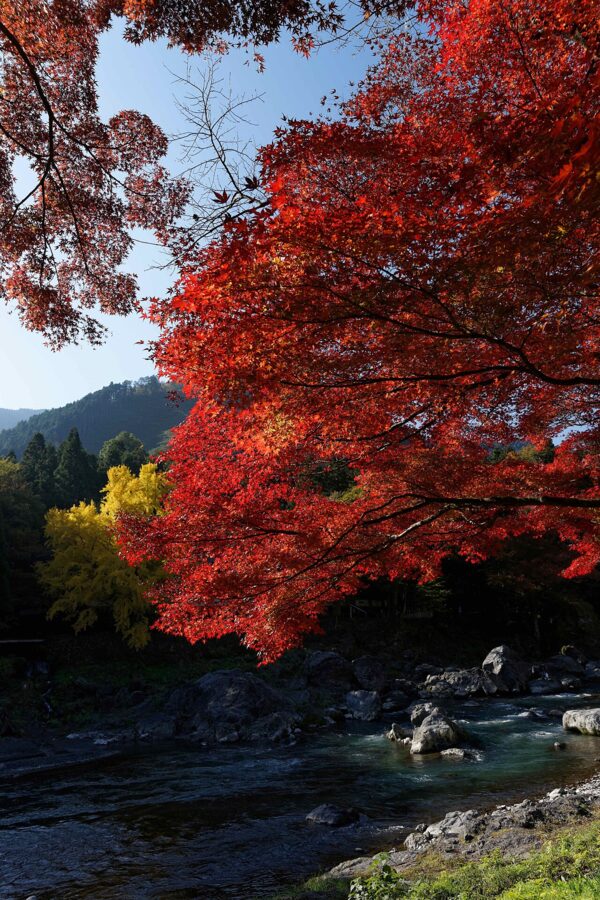
The path along the river from Mitake to Sawai takes under an hour at a stroll and passes the stretch you rafted. In November the maples over the gorge turn, and it is the best walk of the year.
Minakami: a bath in Yubara
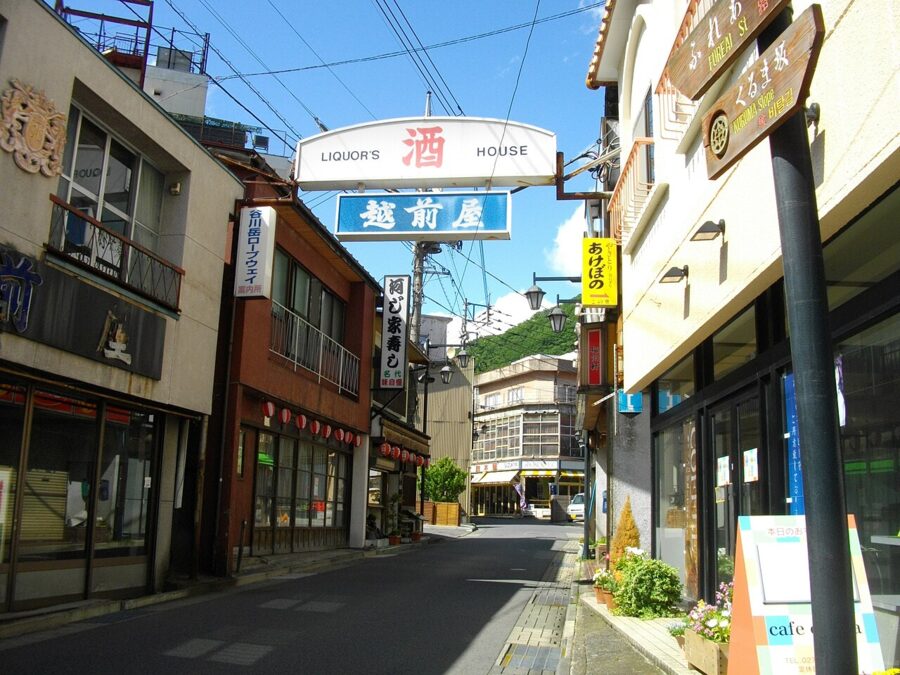
Minakami is an onsen town before it is a rafting town, and a soak after a cold spring trip is the best part of the day. The town runs a day bath in Yubara, the old onsen district near Minakami Station: Fureai Koryukan, open 11:00 to 20:30 with last entry at 20:00, closed on Tuesdays (as of November 2026). Some inns also take day bathers.
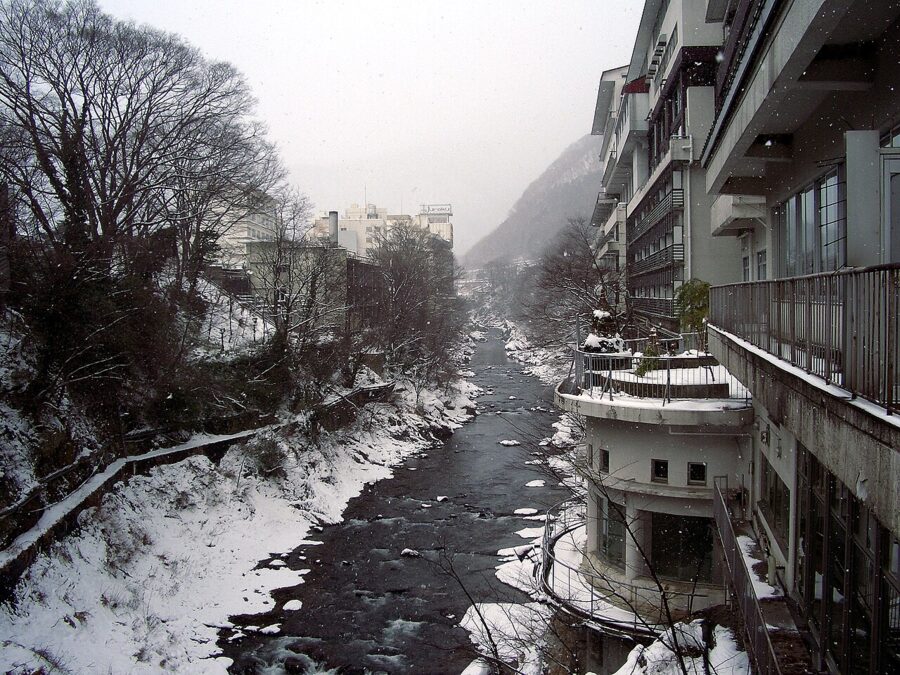
If you stay the night, walk the Suwakyo promenade the next morning and look down on the rapids from above. They look smaller from the cliff than they did from the raft, and calmer than they are.
Nagatoro: boats, rocks and steam
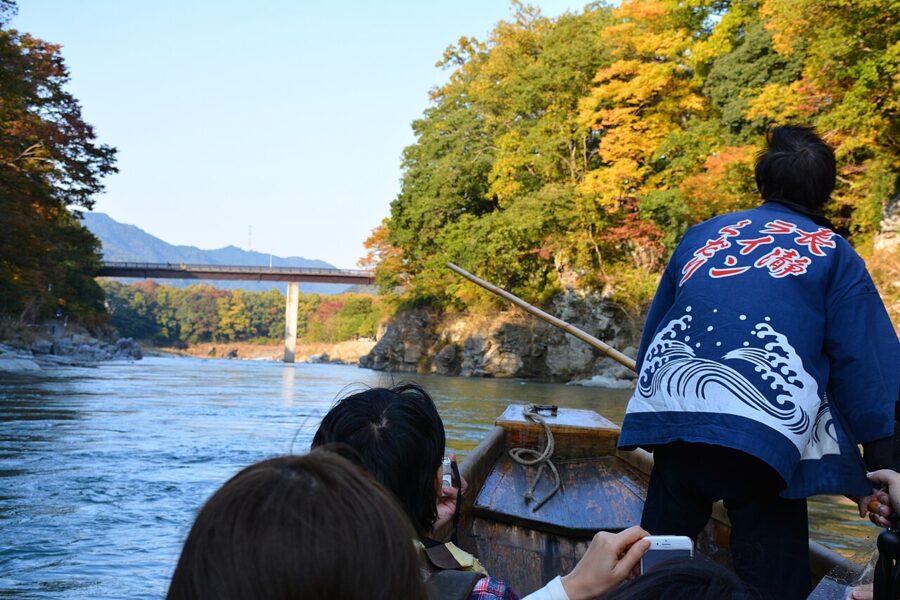
The Nagatoro Line Kudari, the boat ride down the gorge run by the Chichibu Railway, is worth doing even after a rafting trip, because you see the same water from a seat. Course A runs about 3 kilometres from Oyahana Bridge to Iwadatami in around 20 minutes for ¥2,000 (about $13), or ¥2,200 (about $15) at peak times (as of February 2026), with a free bus from the office near Nagatoro Station to the start. The boats run from 10 March to 4 December, with a heated kotatsu (炬燵) boat, a low table with a quilt over a heater, in January and February.
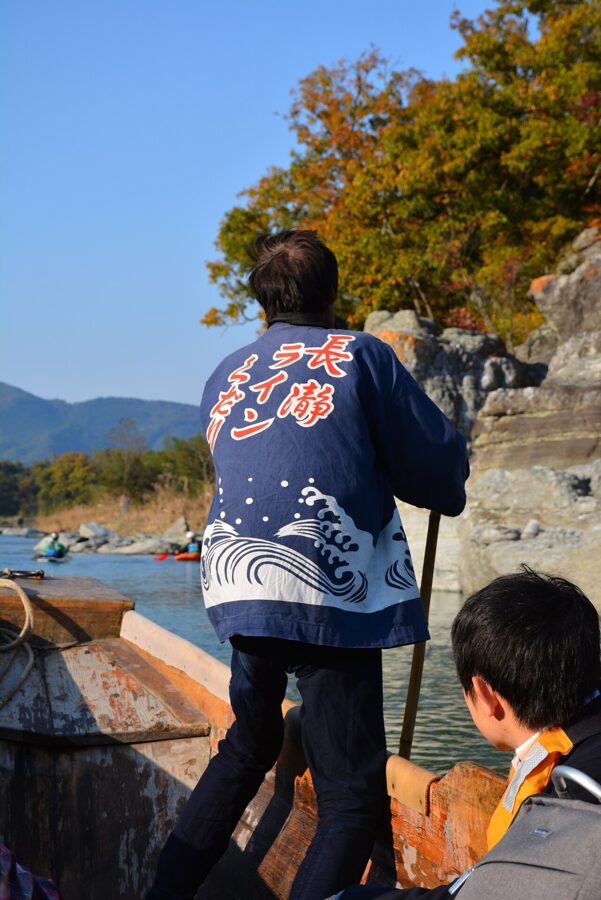
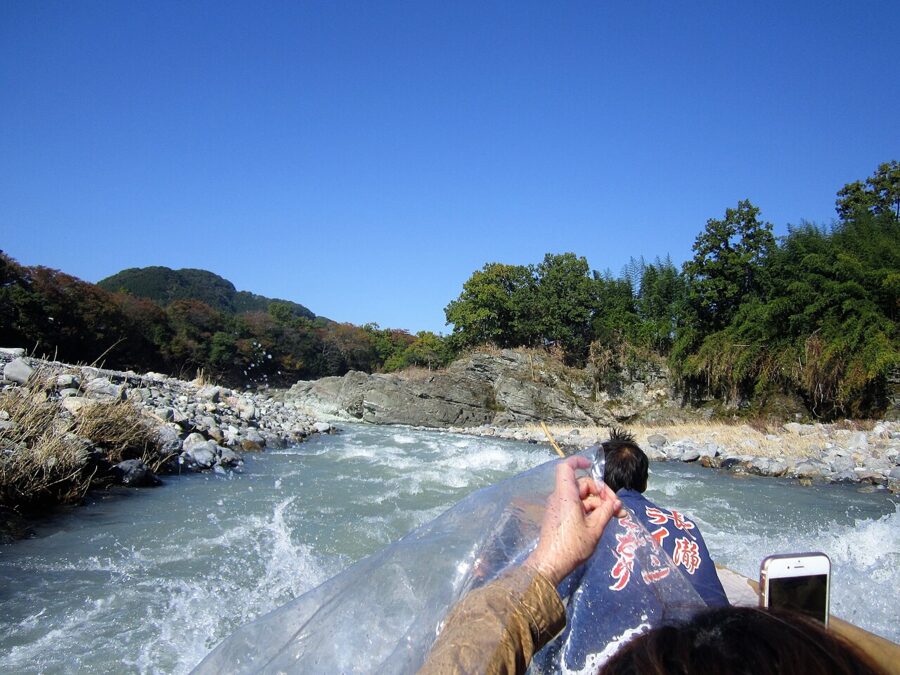
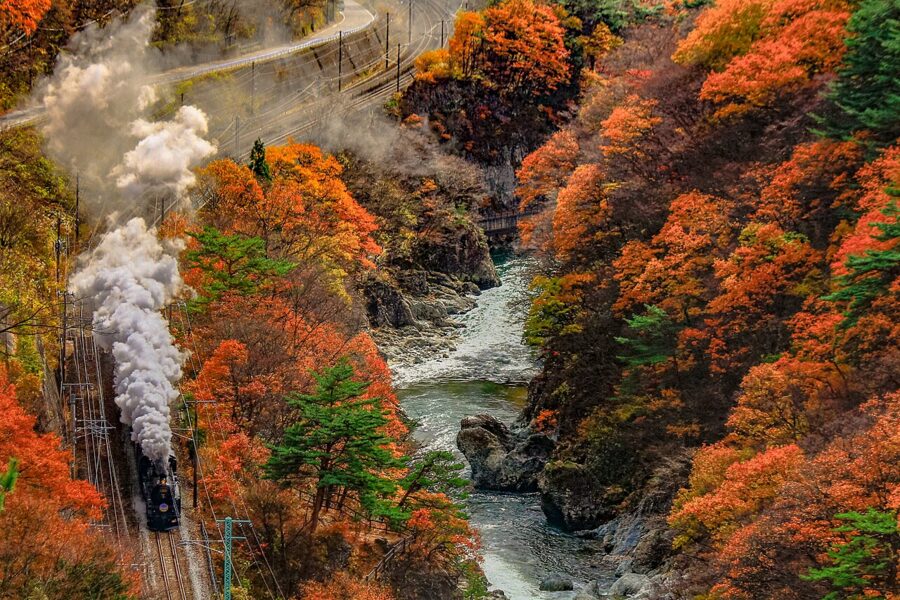
After that, walk out on Iwadatami itself and watch the boats come in. If the Paleo Express is running, time the trip home around it and take the steam train to Kumagaya for the Shinkansen or the Takasaki Line back to Tokyo.
Back on the Tone, the snow will be on the Tanigawa range again by December, and the big water returns with it in April. If that is the river you want, book a May weekday, ask the operator which gauge it watches and at what number it stops, and be on the Shinkansen before eight.