The soy sauce goes in last, poured onto the bare hot metal at the edge of the pan rather than over the mushrooms. For two or three seconds it hisses and catches, and the kitchen smells like a yakitori grill. Then you toss the spaghetti through it, drop in a piece of butter, and dinner is done in the time it took the water to boil.
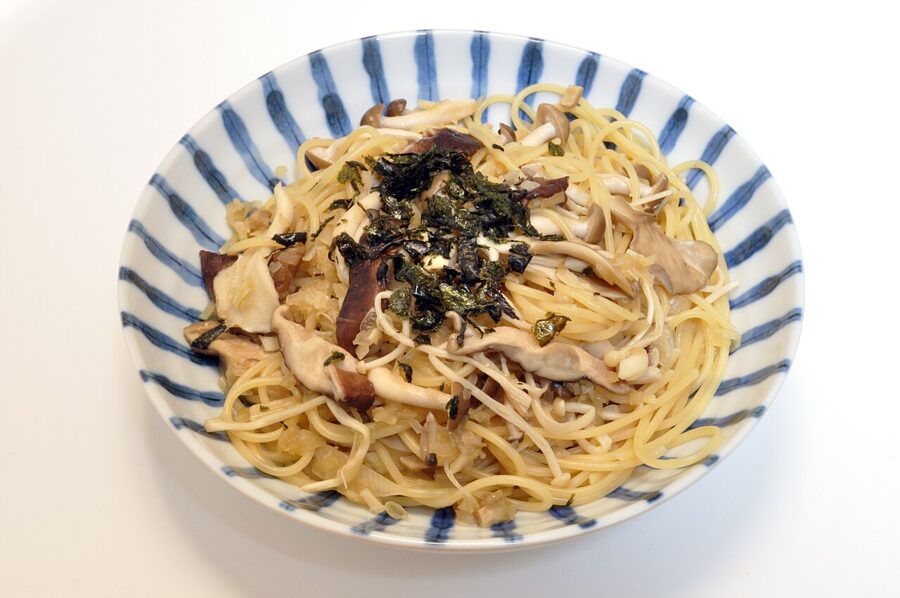
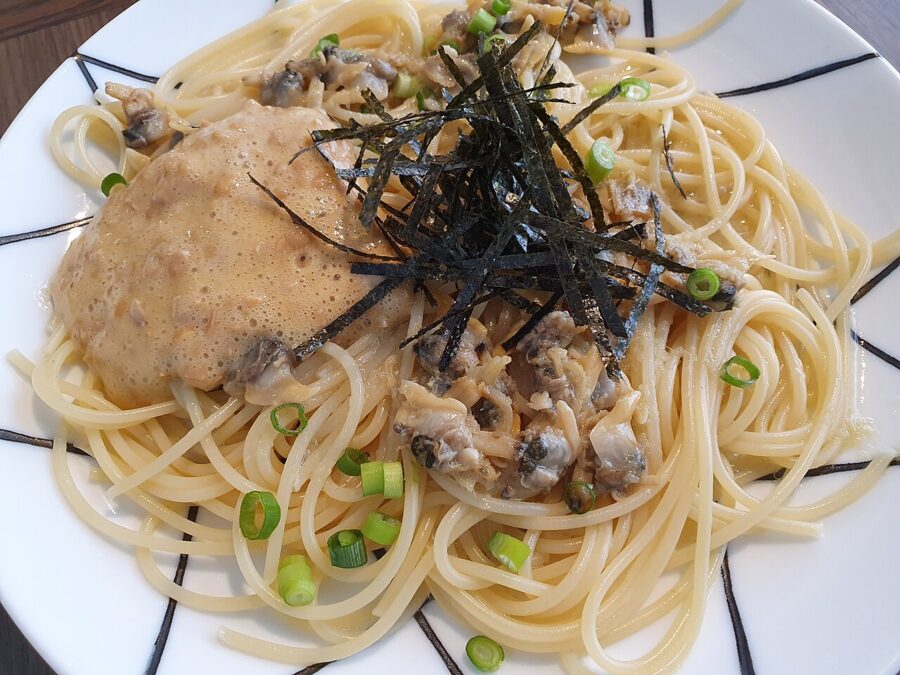
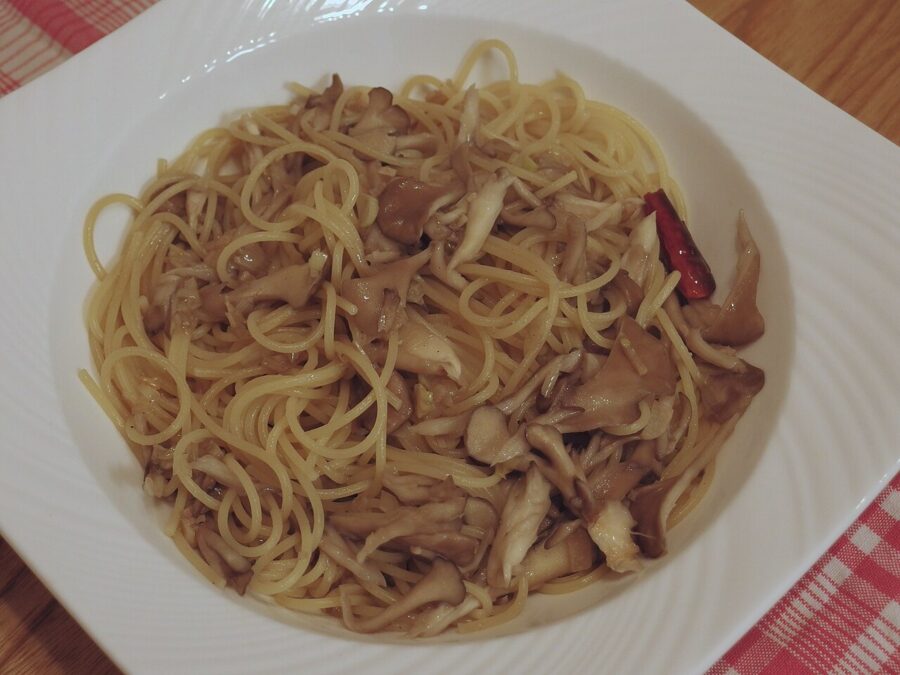
That dish is wafu kinoko pasta (和風きのこパスタ), Japanese-style mushroom spaghetti. Wafu means “Japanese style” and kinoko means mushrooms, and the pairing is so ordinary in Tokyo that it sits on the regular menu of pasta chains and in a great many home cooks’ weeknight rotation. No cream, no cheese, no tomato. The flavour comes from soy sauce, butter and the mushrooms themselves.
If you have just moved here, this is the most useful pasta you can learn. Every ingredient is in the smallest neighbourhood supermarket, and it teaches you the Japanese mushroom shelf. The recipe is below, with metric and US measures, after a short detour through Shibuya in the 1950s.
In this article5 parts
A spaghetti counter, a butler and a horn player
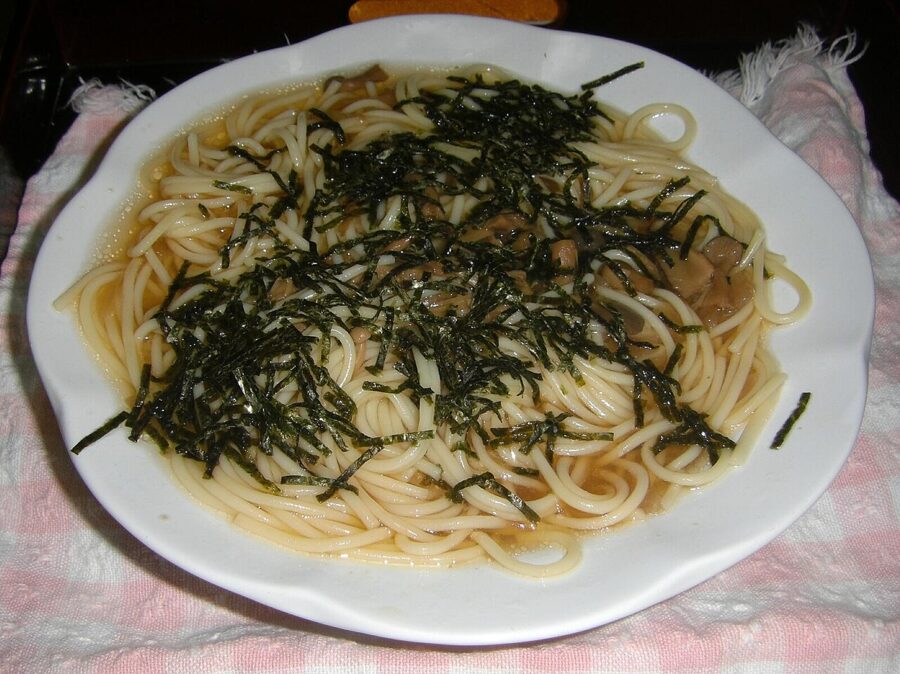
The family tree of wafu pasta starts with Narimatsu Takayasu. By his company’s account, he worked after the war as a butler at the Shibuya house of an American intelligence official named Bloom. In 1953, with Bloom’s backing, he opened a tiny spaghetti shop called Hole in the Wall in Tamuracho, near Shimbashi: about 20 square metres, three cherry-wood tables and a counter.
Spaghetti was mostly hotel and restaurant food in Tokyo then. Narimatsu sold freshly boiled plates in three sizes, and his cheapest cost roughly a tenth of what the Imperial Hotel charged for its spaghetti. A US military newspaper wrote up the bargain, and foreign customers came in numbers.
The building was earmarked for redevelopment and the shop closed in 1958. Narimatsu went off to manage a new ski resort at Bandai, in Fukushima, and that detour is where the Japanese ingredients came in. Watching Prince Takamatsu eat natto on rice there gave him the idea for natto spaghetti, and the company’s own history says the groundwork for its shimeji and shiitake spaghetti was laid in the same period.
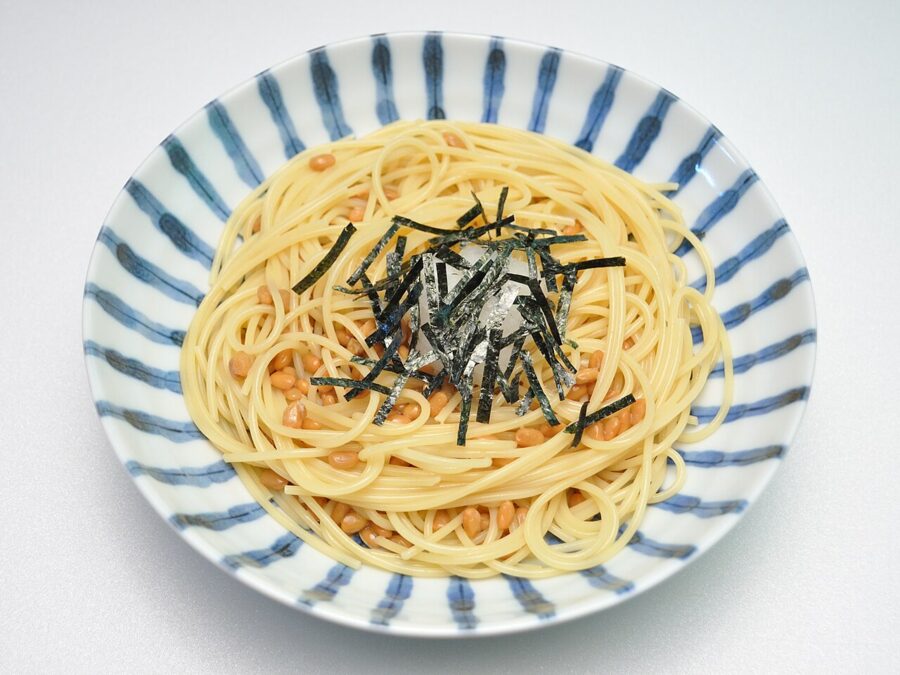
Back in Tokyo he opened Kabe no Ana (壁の穴), the Japanese for “hole in the wall”, in Udagawacho, Shibuya. Sources give 1963 or 1964 for the move; the shop had about 15 counter seats and eventually more than 200 dishes on its menu. The famous one came when a horn player from the NHK Symphony Orchestra brought in a tin of caviar and asked for it on his spaghetti. Caviar was hardly a menu item, so the kitchen tried salted pollock roe instead, and tarako spaghetti was born, topped with nori in the manner of nori chazuke, rice in tea.
Mushrooms had their moment too. The house history describes a plate of spaghetti with five butter-sautéed shiitake laid neatly on top, which a well-known actress named “Chanel No. 5” for its smell. Butter, shiitake and pasta: the core of the recipe below was being served in Shibuya more than half a century ago.
The second name in the story is Yomenya Goemon, a chain that opened in Shibuya in 1976 to make pasta for Japanese tastes, served on Arita porcelain and eaten with chopsticks. Both are still trading (details at the end).
What to buy: the supermarket mushroom shelf
Walk into any Tokyo supermarket and the mushrooms sit together in their own section, many of them in 100-gram packs or small trays. Nearly all are cultivated indoors, on blocks of sawdust or in bottles in climate-controlled sheds, which is why the same varieties are there every week of the year. Autumn adds a few seasonal extras and mixed “kinoko sets”, but you never need to wait for a season to make this dish.
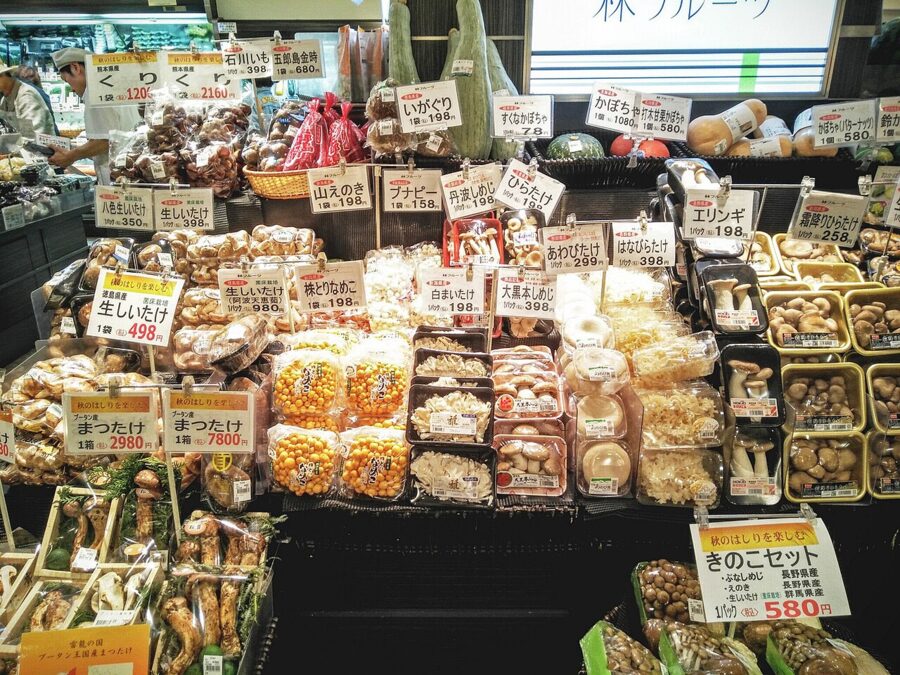
Japan grows a lot of them. Forestry Agency figures for 2025 put enoki at 130,215 tonnes, the largest of any mushroom, with buna-shimeji second at 115,691 tonnes; Nagano and Niigata lead the growers for both. Here is what to look for, with the name on the label:
| Label | Name | In the pan |
|---|---|---|
| ぶなしめじ | Buna-shimeji (brown beech) | The workhorse. Firm, nutty, holds its shape. Use it in every batch. |
| ブナピー | Bunapi (white shimeji) | A white variety of the same mushroom; milder, prettier on the plate. |
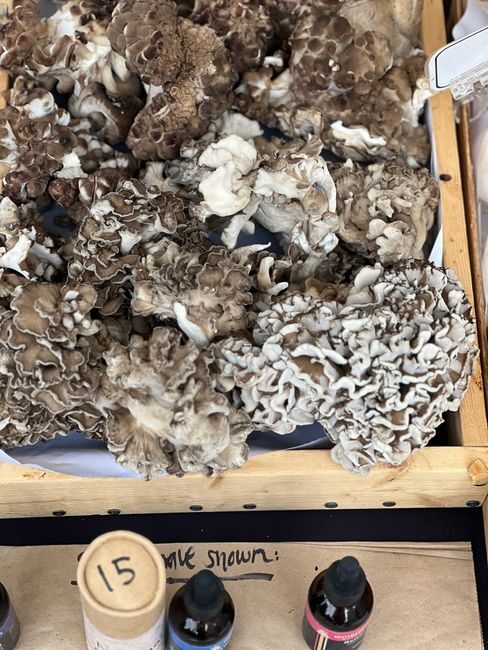
| まいたけ / 舞茸 | Maitake (hen of the woods) | The most flavour per gram, and it browns well. Tear it, never slice it. |
| しいたけ / 椎茸 | Shiitake | Meaty caps and a deep smell once they hit butter. Slice the caps. |
| えのきたけ / えのき | Enoki | Long, thin and slippery; it adds texture rather than flavour. Cut it in half. |
| エリンギ | Eringi (king oyster) | Thick, chewy and mild, like a scallop in texture. Slice into thin strips. |
| なめこ | Nameko | Small and jelly-coated. Better in miso soup than in this pasta. |
| マッシュルーム | Button mushrooms | Fine in a pinch, but the dish loses its point. |
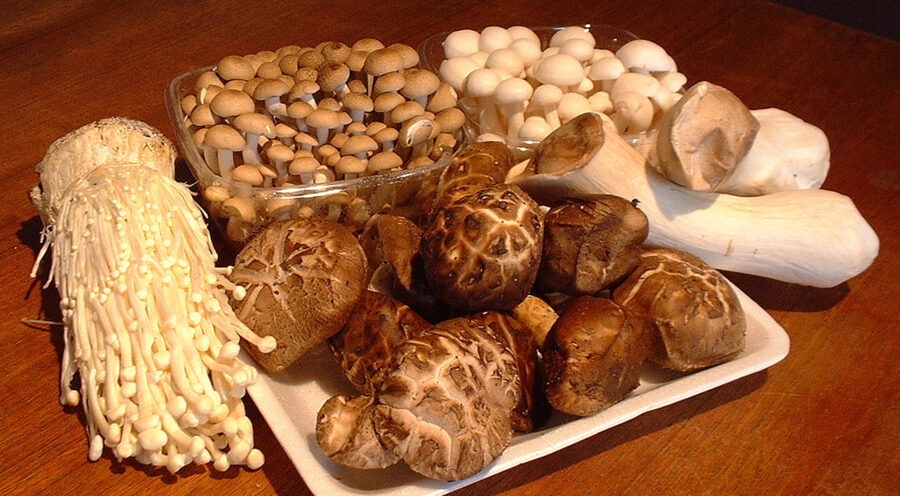
My standing order is one pack of buna-shimeji, one of maitake and three or four shiitake. Shimeji gives bite, maitake gives flavour and shiitake gives the smell. Swap in eringi if the shiitake look tired.
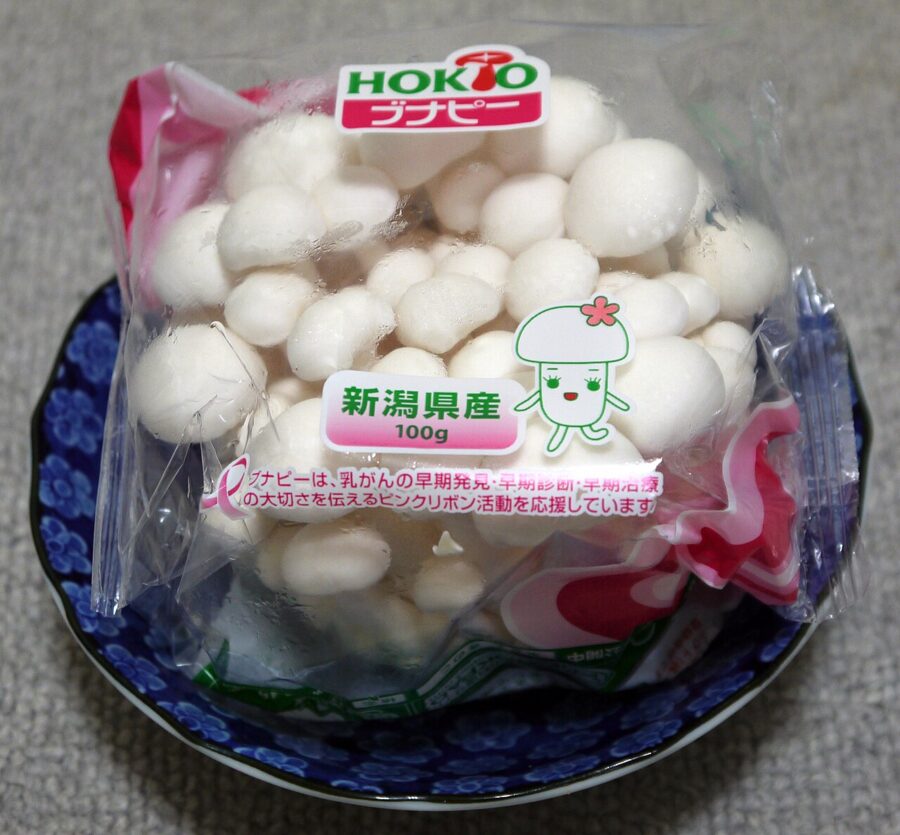
Read the shiitake label. The origin printed on it is where the spawn went into the growing block, not where the mushroom was picked, under a 2022 Consumer Affairs Agency rule. It also says whether the shiitake grew on logs (原木, genboku) or sawdust blocks (菌床, kinsho).
Sawdust-block shiitake are over 95% of the fresh shiitake Japan grows and are fine here. I find log-grown caps thicker and more fragrant, and worth the extra yen.
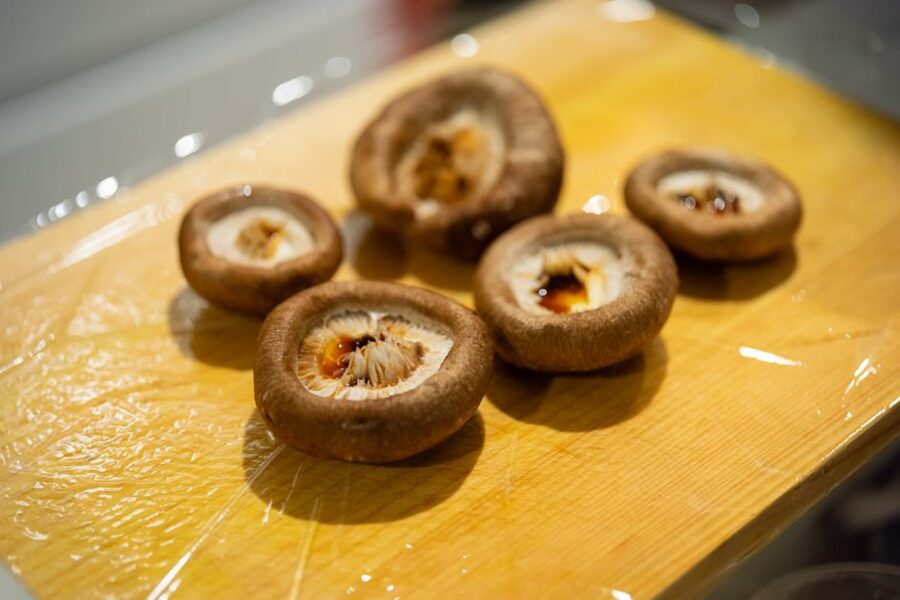
Do not wash them. Water makes mushrooms soggy and stops them browning, and the cultivated kind barely need it. Hokto, which grows around 100 tonnes of buna-shimeji a day, says its maitake can go straight from the pack into the pan, torn by hand. If you see a bit of sawdust, wipe it off with damp kitchen paper.
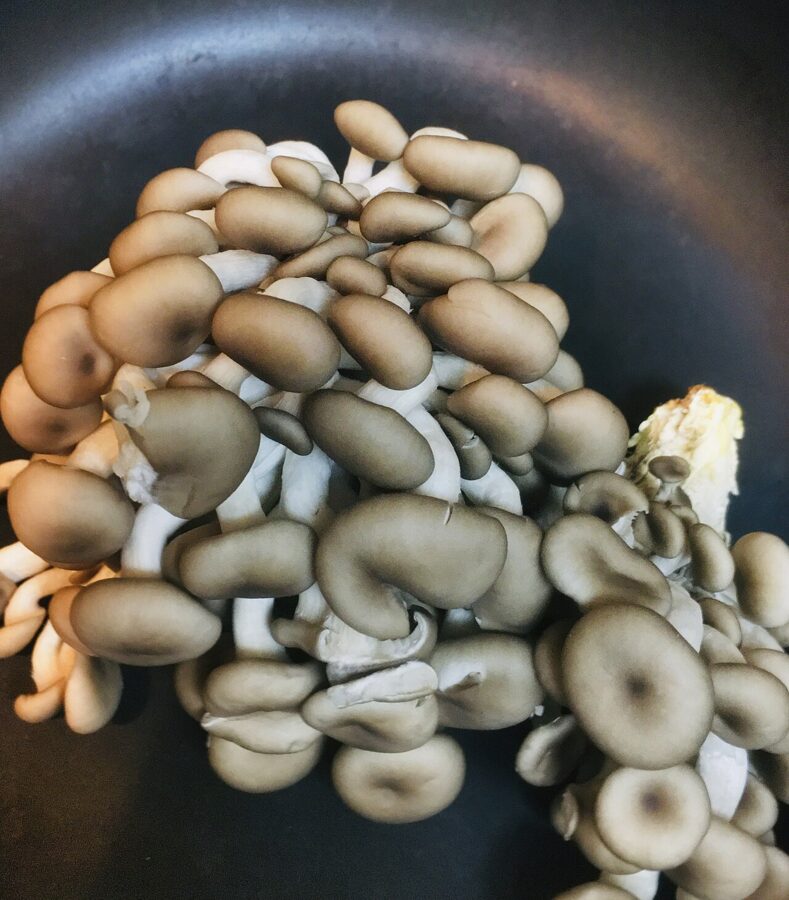
Mushrooms also freeze well raw. Trim them, break or slice them, and keep a bag in the freezer for the nights when the fridge is empty. Cook them straight from frozen over high heat; thawing first leaves them wet.
The recipe
This serves two and takes about 20 minutes, most of it waiting for water to boil. Japanese and US tablespoons and teaspoons are the same size (15 ml and 5 ml), so spoon measures convert directly. The cup does not: a Japanese measuring cup holds 200 ml, a US cup about 240 ml, so check which one is in your kitchen drawer.
Ingredients
| Ingredient | Metric | US |
|---|---|---|
| Dried spaghetti, 1.6 mm | 200 g | 7 oz |
| Mixed mushrooms (shimeji, maitake, shiitake) | 250 g | about 9 oz |
| Garlic, thinly sliced | 1 clove | 1 clove |
| Olive or vegetable oil | 1 tbsp (15 ml) | 1 tbsp |
| Butter | 20 g | 1½ tbsp |
| Soy sauce (koikuchi, the standard dark kind) | 1½ tbsp (22 ml) | 1½ tbsp |
| Sake, or water | 1 tbsp (15 ml) | 1 tbsp |
| Pasta cooking water | 60 ml | ¼ cup |
| Salt for the pasta water | 20 g in 2 litres | 3½ tsp in 2 quarts |
| Black pepper | to taste | to taste |
| To finish: shredded nori, sliced spring onion | a small handful | a small handful |
Standard supermarket butter in Japan is salted, which this recipe assumes. With unsalted butter, add a pinch of salt to the mushrooms. A light (usukuchi) soy sauce is actually saltier than the dark kind despite its colour, so if that is what you have, use a little less.
Method
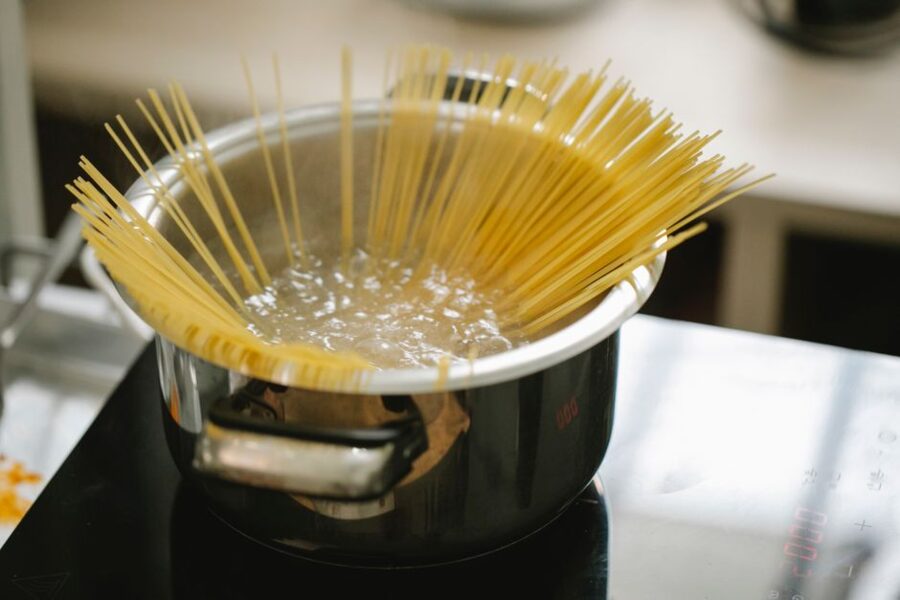
- Boil the water. Bring 2 litres of water to the boil with the salt.
- Prepare the mushrooms. Trim the base from the shimeji and break it into small bunches. Tear the maitake into large pieces. Take the stems off the shiitake, slice the caps about 5 mm thick and shred the stems. If you are using enoki, cut off the root end, halve the bundle and pull it apart.
- Start the pasta. Drop in the spaghetti and set a timer for one minute less than the packet says. It finishes cooking in the pan.
- Brown the mushrooms. Put the oil and garlic in a large frying pan over low heat until the garlic smells sweet and just starts to colour. Turn the heat to high, add the mushrooms and spread them out. Leave them alone for two full minutes so the undersides brown, then turn them and give them another two.
- Season. Add the sake and let it bubble away. Push the mushrooms to one side, pour the soy sauce onto the bare hot surface of the pan, let it sizzle for two or three seconds, then stir it through.
- Bring it together. Add the pasta water and the drained spaghetti and toss over the heat for about 30 seconds until the liquid clings. Take the pan off the heat, add the butter and keep tossing until the sauce turns glossy. Grind over black pepper.
- Finish at the table. Plate it, then scatter the nori and spring onion on top just before eating. Nori goes limp within a minute of meeting steam.
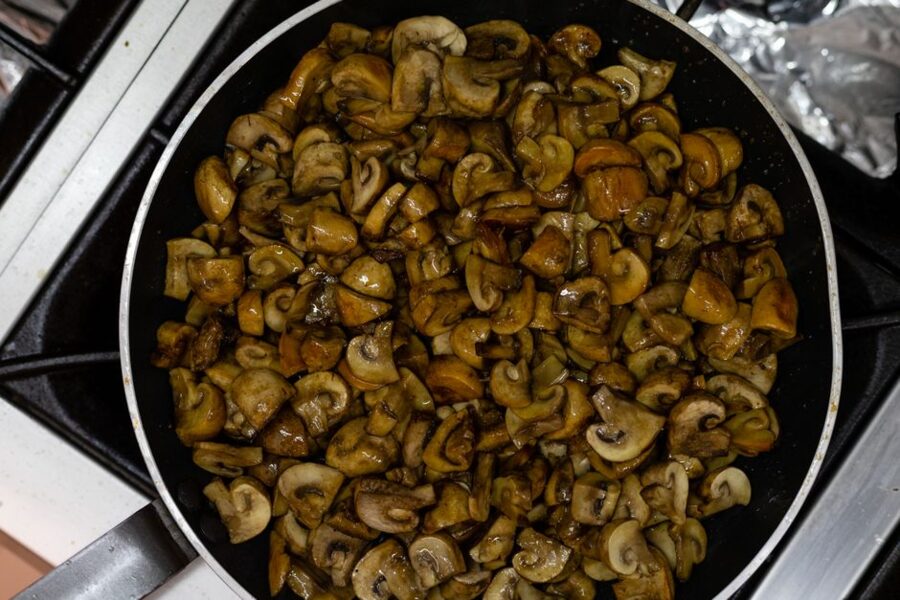
The step that matters is the soy sauce hitting hot metal. Japanese recipes say to pour it onto the nabehada (鍋肌), the “skin” of the pan, and it caramelises the sugars in the soy so you get a toasty, slightly smoky edge instead of a flat salty one. The butter goes in off the heat for the opposite reason: you want it to melt into the starchy pasta water and make a light sauce, not to brown and split.
That emulsion is also the answer if you have wondered whether mushroom pasta needs cream. It doesn’t. Butter and pasta water coat the strands, and the soy gives depth that cream would only dull. An Italian cook would call a dish like this pasta ai funghi; the Japanese version just swaps the parmesan for soy sauce and nori.
Changing it up
Once the basic version is in your hands, the variations depend on what is in the fridge.
Mentaiko or tarako
Tarako is salted pollock roe; mentaiko is the same roe marinated with chilli, a Fukuoka speciality now sold in most supermarket fish sections. Either one turns this into a richer dish. Slit one sac (about 40 grams), push the roe out with the back of a knife and mix it with the butter in a bowl. Make the mushroom pasta as above, leave out half the soy sauce, and toss everything with the roe butter off the heat.
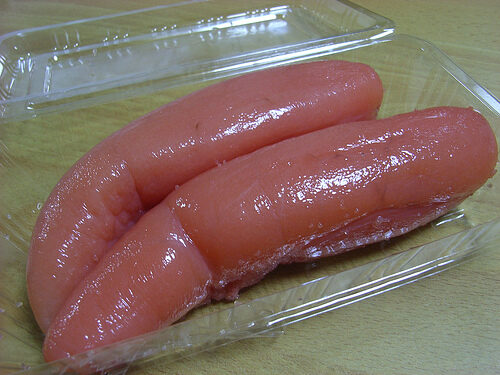
Keep the roe off direct heat. It goes from soft and coral-pink to grainy and grey within seconds in a hot pan, and the whole point is that it barely cooks in the warmth of the pasta.
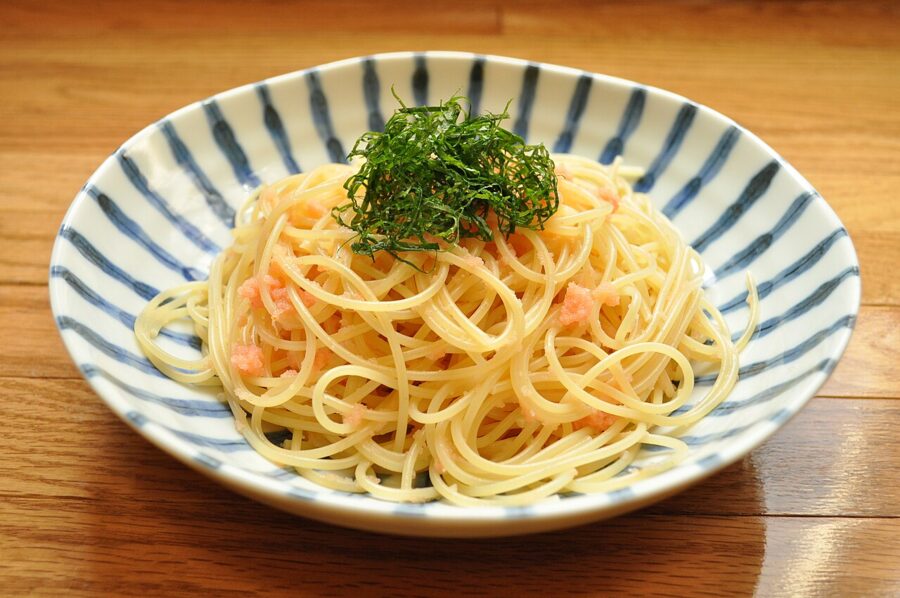
Shiso
Green shiso is sold in supermarkets as ooba (大葉), in small packs of about ten leaves beside the herbs. It tastes somewhere between mint, basil and cumin, and it cuts through the butter. Stack five leaves, roll them up tightly and slice across into thin threads, then pile them on the finished plate. Never cook them; heat dulls the smell and turns the leaves dark.
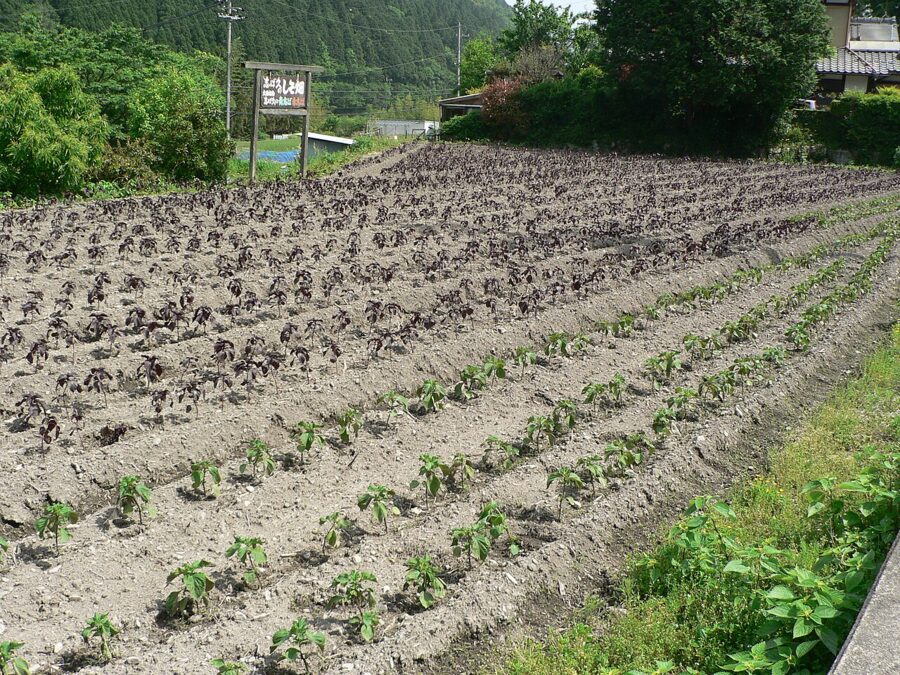
Shiso with mentaiko is a standard pairing: Goemon’s regular menu has mentaiko, prawn and shimeji with green shiso. If you have a jar of umeboshi, the sour pickled plums, one stoned and chopped with the shiso makes a sharp summer version that needs only half the butter.
Nori, and what else goes on top
Shredded nori, sold as kizami nori (刻み海苔) in small bags near the dried goods, is the default finish and the reason the dish looks Japanese at a glance. If you only have sheets, cut them into thin strips with scissors. A spoonful of shio kombu, salted kelp strips, stirred through at the end adds a sea-salt savoury note that some cooks prefer to soy.
Bacon, natto and the rest
Bacon is the usual addition: two rashers in strips, fried before the mushrooms go in, so you can skip the oil. Natto, Narimatsu’s original Japanese-style topping, goes on at the end with its own sachet of sauce. It divides people; I like it with shiso.
Where to eat it in Tokyo
You can, of course, order it instead. Both names from the history above were open with current menus as of November 2026.
Kabe no Ana
The main shop, Kabe no Ana Shibuya Dogenzaka-koji Honten, is at 2-25-17 Dogenzaka, on the ground floor of the Kasumi Building, in the lane of bars and restaurants known as Dogenzaka-koji on the Dogenzaka side of Shibuya Station. As of November 2026 it opens 11:30 to 16:00 (last order 15:00) and 17:00 to 22:00 (last order 21:00) on weekdays, and 11:30 to 22:00 (last order 21:00) on weekends and holidays, with irregular closing days.
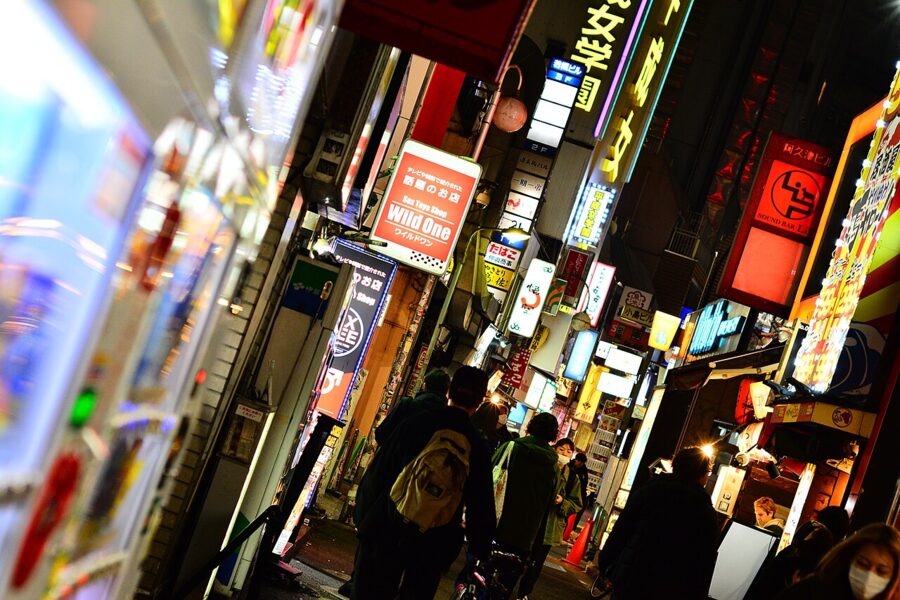
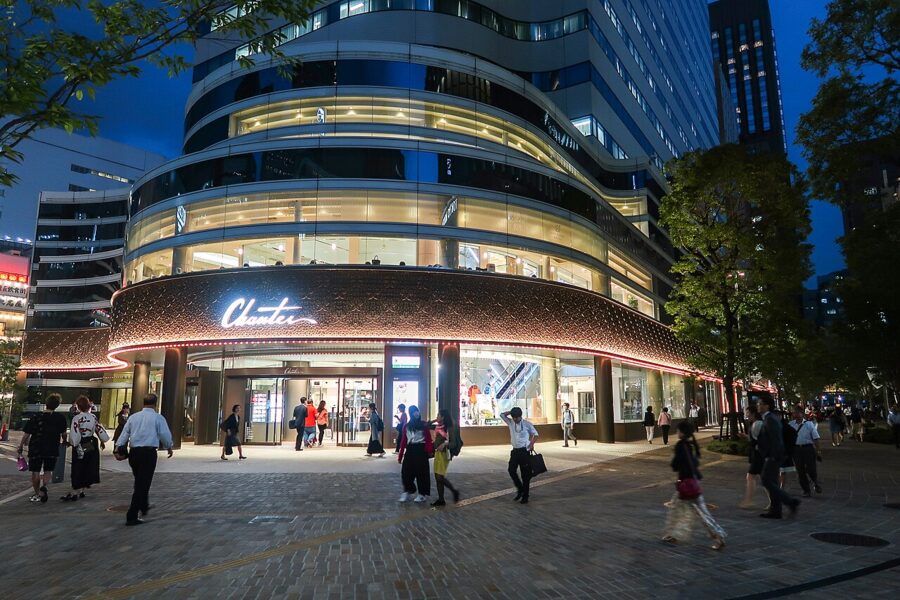
The shop runs a seasonal menu alongside the regular one. Its autumn 2026 list, which started on 16 September, leaned on maitake and a mix of six kinds of mushroom, so ask what is on. The group also runs Kabe no Ana branches in Hibiya Chanter, in Yodobashi Camera in Ikebukuro, in Jiyugaoka and in Tamagawa Takashimaya.
Yomenya Goemon
Goemon is the chain to know if you want wafu pasta near the office, with branches across the city. Its standing menu includes kinoko to bekon no wafu bata shoyu, mushroom and bacon in butter and soy sauce, which is close to the recipe above with bacon added. Its autumn 2026 menu, from 8 September, added a pork and mixed-mushroom spaghetti in soy butter. Not every branch serves every dish, so check the menu where you sit down.
The Shibuya Honten is on the 8th floor of 23-3 Udagawacho and, as of November 2026, opens 11:30 to 23:00 (last order 22:00). Shinjuku ward alone has nine branches, from the underground malls around Shinjuku Station to Takadanobaba and Ichigaya. Use the chopsticks: it is easier than it sounds, and it is how Goemon has served pasta since 1976.
Still, the best version is the one in your own frying pan at eight on a Tuesday. Buy the shimeji and maitake on the way home, put the water on before you take your coat off, and let the soy sauce hit the side of the pan.